
Why Industry-Specific CNC Machining Is More Important Than Ever
In modern manufacturing, the success of a product largely depends on precision, reliability, and production speed. This is why industry-specific CNC machining has become an indispensable manufacturing foundation—it supports the development of automotive innovation, medical breakthroughs, aerospace reliability, and high-performance industrial applications.
Each industry has distinct requirements for tolerances, regulations, materials, and operating conditions, and 'general machining' cannot meet these differentiated needs.
Whether you need automotive CNC machined components, high-precision medical components, aerospace-grade structural parts, or high-standard metal part assemblies, choosing a CNC machining supplier that truly understands industry requirements is key to achieving product stability, safety, and functional performance.
Automotive Parts CNC Machining: Designed for Strength, Repetition, and Efficiency
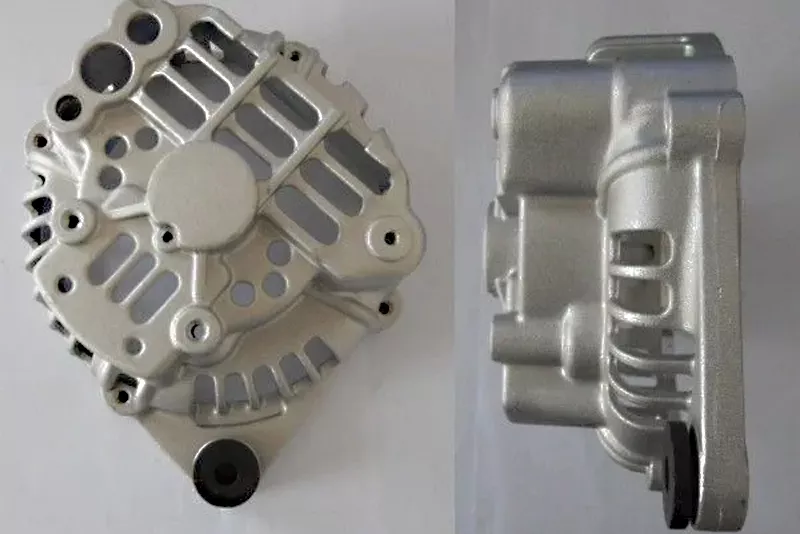
The production pace in the automotive industry is tight, and part tolerances are even more stringent. Whether it's powertrain housing, transmission covers, sensor brackets, manifolds, valve bodies, or cooling modules for new energy vehicles, automotive CNC machined components must meet three strict standards:
A. High dimensional accuracy
Car parts are often combinations of multiple components, and even a deviation of 0.01 mm can lead to noise, vibration, leaks, or wear. CNC machining can ensure consistency across thousands of parts.
B. Material properties can withstand extreme operating conditions
Automotive parts need to withstand high temperatures, pressure, corrosion, and impact for a long time, so commonly used materials include: Aluminum alloy (widely used in lightweight structures of new energy vehicles), stainless steel (used in exhaust systems and fuel systems), brass (used in fluid fittings), and engineering plastics (used in lightweight functional components).
C. Economically Efficient Small-Batch Customization
Especially during the rapid iteration phase of electric vehicle platforms, auto machining (automotive part machining) provides high flexibility and cost advantages for prototype development and small-batch production.
Advanced automotive CNC machining ensures stable performance, high cost-effectiveness, and high repeatability, serving as a crucial foundation of the automotive industry.
2. Medical Device Manufacturing: Precision Matters for Life
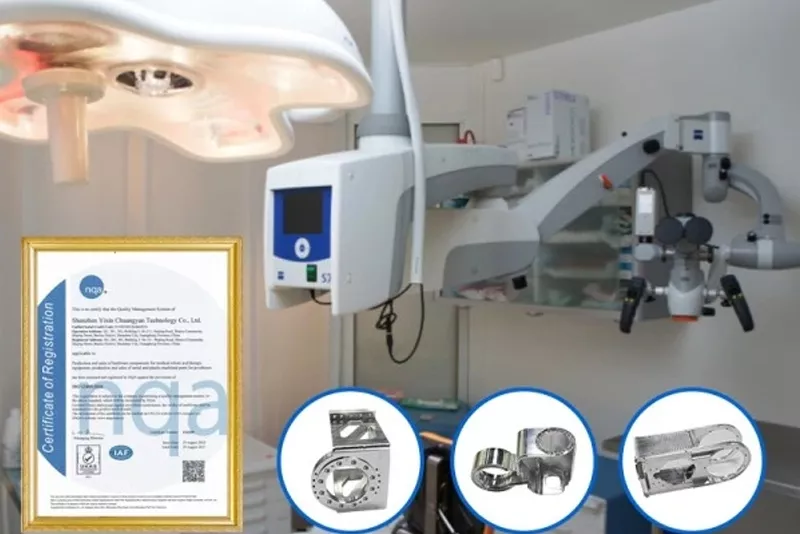
The requirements for medical parts are entirely different—they require cleanliness, biocompatibility, micrometer-level tolerances, and full traceability throughout the process, none of which can be missing. Medical device CNC machining typically involves extremely small features, sharp edges, and burr-free surfaces, and it comes into direct contact with the human body or the interior of medical equipment.
The core characteristics of medical CNC machining include:
Strict Tolerance Control: ±0.005–0.01 mm
Extremely High Surface Finish to Prevent Contamination
Biocompatible Materials: Titanium Alloy, Stainless Steel 316L, PEEK, Medical-Grade Plastics
Must Comply with ISO 13485 System and Material Traceability
Capable of Machining Extremely Small Structures: Threads, Grooves, and Profiles Smaller Than 0.5 mm
Medical CNC machining is suitable for: surgical instruments, orthopedic implants (such as titanium plates and screws), dental instruments, and precision casings for medical electronics.
In the medical industry where 100% reliability is required, CNC machining is the only manufacturing method capable of ensuring safety and consistency.
3. Aerospace CNC Machining: Maintaining Super Reliability in Extreme Environments
The aerospace industry has the most stringent requirements for materials and manufacturing precision among all industries. Components must be able to withstand vibrations, impacts,
vacuum environments, extreme temperature changes, and prolonged mechanical loads.
Therefore, aerospace CNC machining typically involves:
A. Difficult-to-process materials
Titanium alloy
Heat-resistant stainless steel
Aerospace aluminum 7075 / 6061
High-performance engineering plastics
B. Multi-axis (especially five-axis) machining capabilities
Aerospace parts typically feature complex curved surfaces, hollow structures, and lightweight geometries, which require advanced five-axis CNC machining.
C. Extremely stringent inspection and documentation systems
Almost all aerospace parts require:
First Article Inspection (FAI)
Three-coordinate full-size inspection reports (CMM)
PPAP or AS9100 traceability
Aerospace applications include:
Turbine components
Fuel system components
Sensor housings
Structural brackets
Unmanned aerial vehicle (UAV) structural parts
CNC machining is an important guarantee for ensuring flight safety and long-term durability.