
Why has 'German Manufacturing' remained at the pinnacle of the manufacturing industry?
When it comes to 'German manufacturing,' from small items like nail clippers to large ones like cars, it seems that any product made in Germany is highly favored by people. According to a survey conducted by the statistics website Statista and market research company Dalia Research among 43,000 global consumers, 'German manufacturing' ranks first in terms of consumer preference (followed by Swedish manufacturing and European Union manufacturing). Among these, unlike Sweden's 'status symbol' and 'authenticity,' the common labels for German products are 'quality' and 'safety.
While marveling at the excellent reputation of German products, the author couldn't help but ponder: why has the reputation of German manufacturing become so outstanding today? Why has their product quality consistently remained at the forefront of the industry?
Generation after generation, focusing on doing one thing well. In Germany, many companies are family-owned businesses, often small and slow-paced 'small companies' or 'slow companies' that specialize in a particular field or product. Through generations of technical accumulation and perseverance, they continuously refine their focused products to perfection. These are mostly world-famous companies with over a century of experience, highly emphasizing product quality and value, also known as 'hidden champions'. Over the past 25 years, Hermann Simon, who proposed the concept of 'hidden champions', has collected data on 3,000 hidden champion companies worldwide, with Germany having 1,307, the largest number of any country. Most hidden champion companies are unknown to the general public because they do not have direct contact with end consumers. However, in the eyes of their clients, they enjoy supreme reputation and an irreplaceable position. For example, in the machine tool industry, German hidden champions include Klingelnberg Group, TRUMPF Group, Index Werke, and EMAG GmbH.
An important reason why Germany has so many hidden champions is that Germans think about products not just in terms of 'making the product', but more often from the user's perspective. Take machine tool production, for example. A typical manufacturer's approach is to assemble purchased components and parts according to their company's style, ensuring sufficient machining accuracy. In contrast, the German approach is: if I were the user, when operating this machine tool, apart from needing to achieve the desired precision, what else would I need? For customers, a product that helps solve their problems and makes them money is a good product. Excellent companies not only help customers solve the problems they originally intended to address but also assist them in resolving unforeseen troubles.
Take Germany's Wurth company as an example. Wurth is the world's top-selling fastener company, and it has a small but innovative invention: in construction, a large number of screws and screwdrivers are used, but finding the exact right size can be very time-consuming. Therefore, they introduced an innovation by attaching small labels of the same color to screws and screwdrivers of the same size. These are not high-tech at all, yet they provide tremendous value to customers. There are many more German companies similar to Wurth that, through generations of accumulation, continuously improve their focused products to offer users a better experience.
According to investigations, German companies often specialize in a particular niche, pooling the efforts and wisdom of generations to make a single product better. At the recently concluded 2018 Lijia International Intelligent Equipment Exhibition - the first Domestic Machine Tool Enterprise Story Salon, General Manager Wang Chuanhong from Chongqing Honggang CNC Machine Tool Co., Ltd. also addressed the question of \"Can Chinese people make good machine tools?\" He stated, \"If we can do well with one machine tool product through generations of effort, then we will succeed.\
Looking far ahead to exchange profits for higher quality. German products often command higher prices than those of their industry peers. While other manufacturers rely on low prices to attract customers, German companies choose instead to focus on enhancing product quality and reliability. They attract clients through superior product performance, quality, and service. In their development, German enterprises prioritize long-term, sustainable issues.
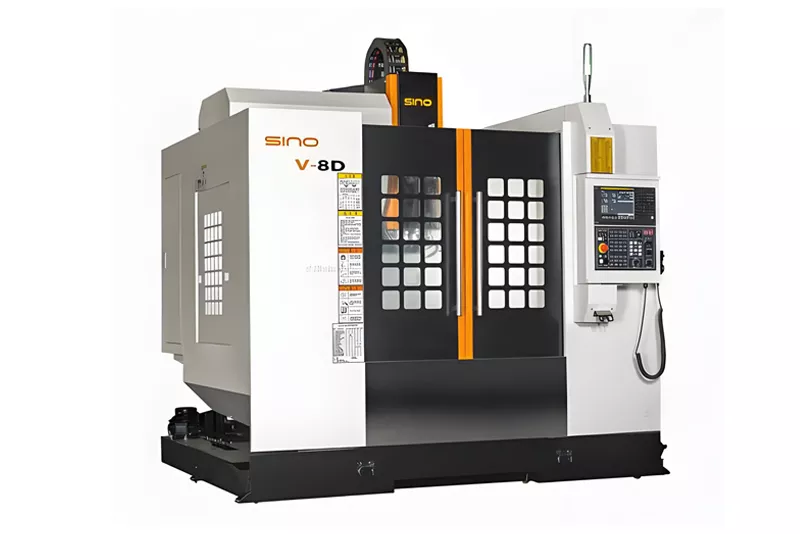
The advantage of 'German manufacturing' does not lie in price but in its quality, proprietary problem-solving technologies, and excellent after-sales service. Most German-made products are at world-leading levels. As pointed out by Professor Li Gongzhen, a professor at the School of History of Wuhan University in the book 'State-Owned Enterprise Report', over 30% of Germany's exported goods are unique products with no international competitors. From large underground excavation machines to small staplers used in work, German industrial products are world-leading in terms of quality. In the machine tool industry, German-made machine tools are synonymous with quality and stability. When industry insiders mention German machine tools like Hamer's five-axis vertical machining centers, Gildemeister's five-axis联动 machining centers, and Index's lathe machines, they often praise their high precision and stability. Even today, many manufacturers are willing to pay to purchase used machines of these brands for production.
Domestic machine tools often suffer from poor reliability, frequent minor issues, and instability. Compared to the decades-long stability of German machine tools without failures, domestic machine tools indeed have a long way to go. All intelligent manufacturing ultimately depends on stable and reliable machine tools. A good machine tool is the foundation, accounting for 80% of the basics. Only with a solid foundation can one build tall buildings.
Social Differences: Why German Workers Can Focus on Their Work
Germany's social environment respects skilled and diligent blue-collar professions; pursuing higher education is not the only path, and attending vocational schools is not shameful. German blue-collar workers graduate from vocational schools, intern in major factories, gain extensive practical experience, and earn substantial incomes after graduation. A skilled technical worker can easily support their family, and it is common to see workers in work uniforms on the streets and roads. Furthermore, many of Germany's \"small and medium-sized enterprises\" are willing to train more technical workers for related jobs, allowing many young people with aspirations in this field to find suitable positions. This is another reason why Germany does not lack excellent craftsmen and can produce high-quality products.
In contrast, China's current social situation presents workers with numerous issues such as low wages, high work intensity, low social status, and narrow career advancement paths. The ranks of mechanical technical workers are facing a generational gap. Technicians, in a sense, are the source of manufacturing. When a major river's source dries up, the impact on the entire river is As can be imagined
(self-evident).
To do a good job or produce quality products, we cannot do without outstanding talent. We praise the craftsman spirit, indicating growing attention to manufacturing. Promoting the \"craftsman spirit\" also requires genuinely improving workers' treatment and status. We must ensure our craftsmen lead a dignified and decent life so they can focus on (striving) without worries and solve more manufacturing challenges. With improved social status and guaranteed salaries, Germans in technical positions naturally feel more secure in their jobs, enabling them to research and produce more high-quality products.
Chinese manufacturing can also shine brightly. For Chinese manufacturing enterprises at this stage, I believe the focus should be more on learning from the Germans' emphasis on product quality and their attitude towards technical workers, rather than aimlessly pursuing 'Industry 4.0'. Products that truly earn a good reputation will always be those that excel in quality, not those that rely on low prices to capture the market. Intense homogenization and price wars lead to vicious competition, which only plunges the entire industry into endless internal strife.
In addition to improving product quality, Germany's emphasis on technical workers is also worth learning from China. While大力 promoting the 'craftsman spirit', I believe it is even more important to genuinely improve workers' salaries and social status, ensuring they feel a sense of happiness and encouraging young people to stay in the machine tool industry. This will provide sustainable development power, preventing stagnation on the path to achieving 'Made in China 2025'.
Only through hard work can a nation thrive. Enterprises can ensure lasting vitality through continuous technological innovation and stable personnel turnover. As the saying goes, 'Among three people walking together, one of them will be my teacher.' Germany's manufacturing success must have many aspects worth our learning. Currently, many Chinese machine tool enterprises are actively transforming and continuously striving in the high-end machine tool sector, such as Baoji Machine Tool, Dalian Guangyang Group, HuaYu Laser Group, and Huazhong CNC. These companies are diligently improving their products and services. Setting aside social environment and corporate history, at least these enterprises are now using their practical actions to enhance product quality and technical content. I believe that as long as Chinese machine tool enterprises prioritize quality, there is no reason why 'Made in China' cannot shine brightly?