
Why don't domestic robots use domestic RV reducers? Is it because technology and cost cannot replace imported products?
In the robotics industry, it is a well-known fact that global industrial robots rely almost exclusively on precision reducers manufactured in Japan. In recent years, although China has achieved mass production of RV reducers, few domestic robot companies have chosen to use them. Currently, the reducers used in the Chinese market are generally imported.
Why is this the case? Is it that foreign products still cannot be technically replaced, or that the high cost makes domestic robot companies unable to accept them? Or is it a combination of both? Let's hear what the engineers have to say.
Technology: Functional, but mechanical lifespan is short. Similar issues exist in advanced equipment that China is trying to manufacture independently. These devices can meet performance requirements in the short term but are prone to wear and failure due to problems with quality control and manufacturing processes.
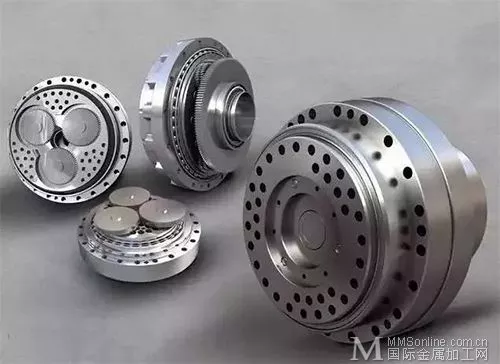
RV reducers, as a type of compact, high-transmission-ratio, zero-backlash, and ultra-high transmission-to-volume ratio reducer, represent a pinnacle achievement in precision mechanical engineering. Inside the reducer, all components are high-precision gears meshing together, which imposes extremely high demands on materials science, precision machining equipment, machining accuracy, assembly technology, and high-precision testing technology.
All we can do now is disassemble and analyze products purchased to carry out reverse engineering, knowing how something works but not why. Let me give you an example. In the 18th century, European glassware and optical glass led the world because their glass was pure and had uniform medium, ensuring light would not refract due to uneven density, thus affecting optical performance. Artisans from other countries always wanted to understand the reason behind this, but they never managed to uncover its secrets. It wasn't until the 20th century that this method was fully disclosed: heating glass to a molten state and stirring it continuously for a long time, with specific讲究 regarding the speed, angle, and technique of stirring. Without knowing this, breakthroughs through mere trial and error were extremely difficult to achieve before.
There is a true story: Suzuki Motor, a well-known Japanese motorcycle manufacturer, has a joint venture manufacturing plant in China called Jiangmen Dachangjiang Suzuki Motorcycle Manufacturing Co., Ltd. When this company was establishing its branch factory in Zhaoqing, China, it encountered a strange problem. The 250cc, 59-horsepower motorcycle engines assembled in China were only producing 55 horsepower—where had the missing 4 horsepower gone? The materials were the same, and the actual production processes were identical. It took nearly a full year of implementing Total Quality Management (TQM) and making corrections to gradually recover those 4 horsepower differences. This incident involved strict process specifications and quality control engineering, highlighting that industrial technology leaves no room for carelessness.
Netizen Wang Zhe once tested a domestic well-known brand's RV reducer. He stated that it could indeed be used, but its noise and heat generation were significantly higher than those of the imported Nabtesco reducers. Those in the mechanical field know that noise and heat indicate poor gear meshing, excessive friction and wear, internal stresses, and that the machinery is not operating under normal conditions. Such machinery will not have a long lifespan. Later, after several improvements, these issues were reduced considerably, but they still could not reach Nabtesco's level. Unlike electrical products, the failure and damage of mechanical components are not immediate but occur over time. Even if it works now, no one can guarantee that after three months, six months, or a year, it won't be scrapped due to wear. At that point, the cost of recalling or repairing thousands of products would be extremely high. Therefore, they really dare not use it.
Costs: Without sufficient production volume to support it, equipment depreciation costs are prohibitively high.
There's a joke in the industry:
A financial journalist interviews the boss of a recently listed reducer manufacturing company:
\"You've raised hundreds of millions. What are you planning to use the funds for?\
\"First, pay off the overdue supplier debts, unpaid salaries and bonuses. Then, repay the loan for buying a Magieler machine.\
\"What about the rest?\
The boss looks up and blows a cloud of smoke.
\"The rest... we'll pay it back slowly...\
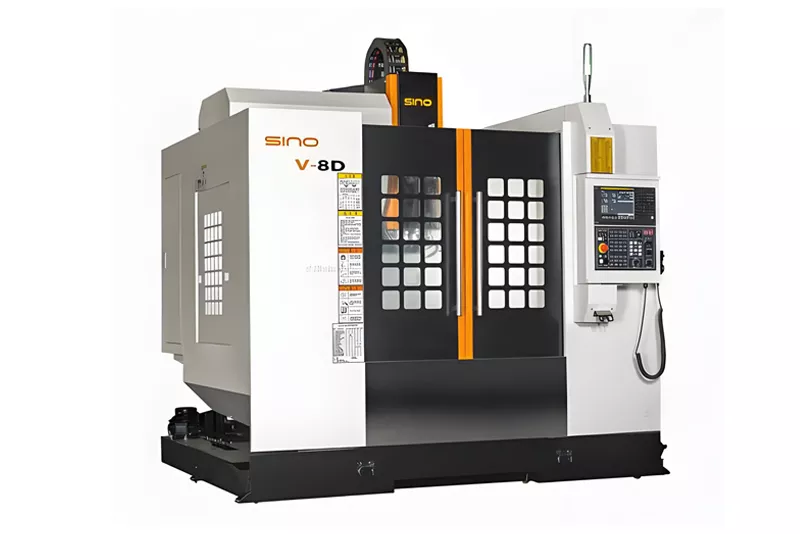
Of course, this is a joke, but the reality is that it's not just Magieler grinding machines. All equipment used in reducer production and all management personnel are involved in depreciating equipment across very small batch sizes, making costs impossible to reduce. How expensive are the machines used to process reducers? Take the Magieler surface grinder mentioned in the joke as an example: it can grind internal holes, end faces, and outer circles in one operation, with a precision of 0.5μm and repeat positioning accuracy of 0.3μm. It is said that it can achieve a machining accuracy of 1μm and has a grinding wheel magazine. Its value converted into RMB is close to ten million yuan.
It is understood that domestic reducers are not cheap, not referring to their absolute price, but rather that they are not inexpensive when achieving the same effect. Netizen Chandler compared the prices of reducers used in a 165kg foreign robot and a 165kg domestic robot model. The procurement price of the foreign robot's reducer was 21,000 yuan, accounting for 13% of the total cost, while the procurement cost of the domestic robot's reducer was 92,000 yuan, accounting for 31% of the total cost (the two brands are not named). The huge price difference is due to Nab's own differential pricing, of course, which is also related to the lack of bargaining power of domestic robots in terms of demand volume. At this time, domestic robot manufacturers all hope that domestic reducers can replace imported products, with 21,000 yuan as the reference quotation. However, in reality, although domestic reducers can be produced, their price is still 82,000 yuan.
Chandler also mentioned an example he personally experienced: the harmonic reducers for the last three axes of the robot. \"The quotations came from a certain Taobao store abroad and a certain domestic brand. Taking the sixth axis as an example, the price difference between the two was less than 1,000 yuan. Even if I could further negotiate with domestic reducer brands later, calculating based on six reducers, the cost saved would only be about 6,000 yuan. This cost advantage is not enough to buy ten and get one free for a robot costing around 200,000 yuan.\
Of course, it is also difficult to attribute all the responsibility to reducer manufacturers. Domestic robots are only a few thousand units per year, and the usage of RV reducers multiplied by three is still a limited quantity. When allocated to each reducer factory, it is a limited number requiring unreasonable high investment. R&D without buyers is indeed difficult for general enterprises to support.
Current Market Status of Reducers
Currently, there are two main types of reducers used in the field of robotics: RV reducers and harmonic reducers. In joint-type robots, due to their higher stiffness and rotational accuracy, RV reducers are generally placed in heavy-load positions such as the base, large arm, and shoulder, while harmonic reducers are placed in the small arm, wrist, or hand. For high-precision robot reducers, Japan holds an absolute leading advantage. At present, 75% of the world's precision reducers in the robot industry are monopolized by Japan's Nabtesco and Harmonic Drive (commonly known as RV reducers and harmonic reducers in the industry). The reducers for international mainstream robot manufacturers such as ABB, FANUC, and KUKA are also provided by these two companies. Among them, Harmonic Drive has a 15% market share in the industrial robot joint field.
According to industry insiders, the procurement price of a precision reducer from the four major international giants ranges from 30,000 to 50,000 yuan. They sell these to well-connected domestic clients for about 70,000 yuan and to ordinary clients with general relationships for approximately 120,000 yuan. The cost for domestic enterprises to procure precision reducers is more than twice that of international giants, highlighting the significant profit differences involved.
Japanese companies dominate the global market share: Nabtesco's RV reducers account for about 60%, and Harmonica's harmonic reducers for approximately 15%.
Notably, from proposing the RV design in the early 1980s to achieving substantial breakthroughs in RV reducers by 1986, Nabtesco took 6-7 years. Domestic pioneers such as Nantong Zhenkang and Hengfengtai also spent 6-8 years. This indicates there are no shortcuts in technology. In other words, the current development level of domestic RV reducers still lags behind that of Japan in the late 1980s.
According to an unnamed industry source, international mainstream robot manufacturers such as ABB, Fanuc, Yaskawa, and KUKA all source their reducers from these two Japanese companies. These collaborations come with very strict conditions: using products from either of the two companies means they cannot use products from any other supplier; otherwise, the partnership will be terminated.
Nantong Zhenkang produced over 200 units last year. Its products have been tested by multiple robot manufacturers, including foreign firms like ABB, KUKA, and Fanuc, as well as domestic companies such as E-Fort and Estun. Among them, E-Fort has purchased several hundred RV reducer units after testing.