
What factors affect the machining accuracy of CNC machine tools?
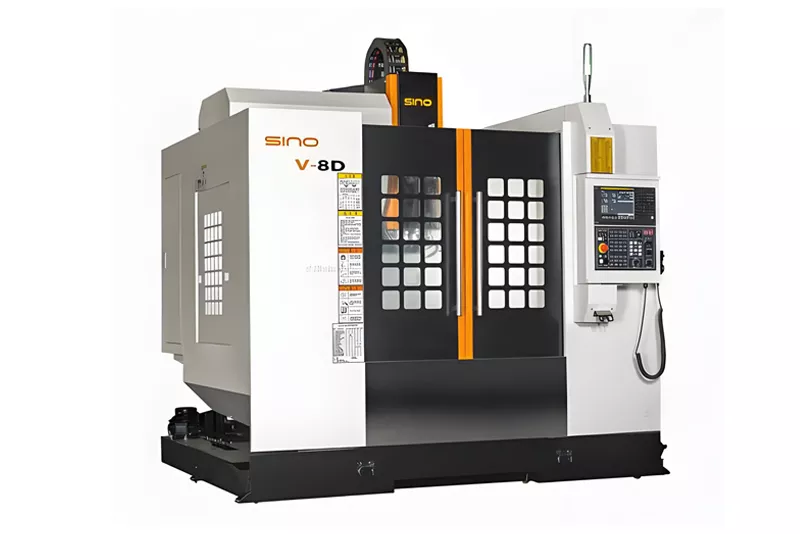
CNC milling machines are commonly used machine tools in the CNC machining industry. Their machining accuracy directly affects the size and shape of the machined parts, thereby influencing the final product quality. The precision of CNC milling machines refers to the ability of various moving components to reach accurate positions under the same control system.
Although China's numerical control machining industry has become increasingly developed nowadays and the machining equipment has gradually taken the lead in the world, there are still many problems in practical applications that need to be addressed in actual operations.
I. The following sections will briefly describe the factors that directly affect the machining accuracy of CNC milling machines:
Backlash error and lead screw pitch error.
First, it must be recognized that the transmission error of the ball screw during operation will affect the precision positioning of the CNC milling machine. Therefore, the main way of positioning control for modern CNC milling machines in our country is mainly through servo motors driving ball screws. Some CNC milling machines use semi-closed loop control servo systems. When the servo system sends drive pulse signals to the servo motor, it ensures that the rotation angle of the servo motor is consistent with the servo system.
However, due to the gear backlash in the transmission reduction gearbox and the clearance between the lead screw and nut, these clearances are reflected during the instant of reverse transmission. The manifestation is that the motor has already reversed to a certain angle, but the corresponding moving part remains stationary. Additionally, pitch differences exist at various positions, which is referred to as lead screw pitch error.
Full Closed-Loop Emergency System Structural Error
In theory, a fully closed-loop feed system, especially with the presence of electrical compensation, should not have backlash errors or pitch errors. However, in actual production processes, errors caused by these two factors still exist. Mechanical gaps during system transmission will cause reverse creep in feedback devices such as gratings. Errors in the manufacturing of ball screws lead to a discrepancy between the position required by the servo system and the position detected by the feedback device. The servo system's drive motor repeatedly searches for the comparison position, which can cause chatter in the machine tool and also affect the custom precision of the milling machine. This is one of the reasons why the milling machine chatters during processing.
The impact of guide rail accuracy
The bed guideways of a CNC machine tool are installed on the machine bed of a milling machine. Their function is to maintain the precision of various parts of the milling machine and the machining accuracy. Therefore, at any time, the bed guideways should ensure that all linear motion components maintain linear accuracy during movement. When the milling machine spindle rotates smoothly, other components must also maintain precise stable feed rates.
The accuracy of the guideways largely determines the accuracy of various moving parts, which in turn affects the accuracy of the machined components. When the machine tool is in operation, the working parts move back and forth for feeding operations. Therefore, the friction performance of the guideway surface, as well as the straightness error and parallelism error of the guideways, will directly impact the performance of the moving parts.
Impact of Interferences in the Production Site
The production workshop has various sources of interference waves, other electrical equipment, and various vibrations, which can affect the CNC milling machine during the production process.
In factories, there are many high-frequency power supplies and oscillating circuits. The interference between these sources can generate strong electromagnetic waves, which can radiate over a wide area to CNC machine tools. This actually affects the stable operation of the CNC system and the machining accuracy of the milling machines.
The CNC milling machine has a limited voltage range. However, in actual production processes, there are other large electrical equipment in the workshop environment. When these devices start up, they generate significant voltage fluctuations that cause interference. When the voltage fluctuation exceeds the maximum tolerance of the CNC milling machine, the system power supply of the CNC milling machine will issue a warning. On the other hand, vibrations from the workshop floor can also cause vibrations in the machine tool, which will affect the machining accuracy of the CNC milling machine.
In addition to the aforementioned reasons, the machining performance, rigidity, and ability to withstand mechanical vibrations during processing of the CNC milling machine itself will all affect the final quality of the machined parts. From this perspective, the quality of the CNC milling machine itself must be guaranteed.
The above discusses how various factors inherent to the CNC milling machine itself, upon leaving the factory, affect machining accuracy. In fact, cutting parameters also influence the precision of milling machine processing. Parameters such as tool rotational speed, depth of cut, feed rate, and milling speed are all very important. The actual application methods of cutting parameters chosen for different parts will also vary, and these variations will affect the precision, dimensions, and surface roughness of the machined workpiece.
Therefore, before using a CNC milling machine to process parts, it is necessary to rationally select the required parts for processing by comprehensively considering the equipment used, tools, and drawings that mark the part dimensions.
Finally, operators of CNC milling machines need to have a clear understanding of the factors that affect the machining accuracy of CNC milling machines on a daily basis. They should combine a large amount of actual machining operations with practical analysis of various causes, ultimately striving to improve the actual machining accuracy of parts processed by CNC milling machines as much as possible.
II. Overview of Solutions
Locating the datum surface for clamping of a rough casting.
CNC milling machines typically process various shapes of parts according to customers' actual needs, including some rough blank materials with uneven surfaces—such as cylindrical, square, spherical, or other irregular shapes. Since these materials inherently have relatively large tolerances, it is necessary to establish accurate reference planes during machining. This operation also facilitates operators in measuring part dimensions, thereby further improving the machining accuracy of the parts.
Control the temperature of the CNC milling machine within a certain range
During the machining process, the related bearing areas of a CNC milling machine will rub against each other, generating a large amount of heat. In addition, the heat produced by the machine itself, as well as the friction between the cutting tool and the blank, all combine to cause the temperature of the blank to rise rapidly. If the machine cannot dissipate this heat in time, the machined parts may deform. Therefore, CNC milling machines are usually equipped with appropriate cooling devices to increase the heat dissipation area, allowing the machine to cool itself during operation. Perform error compensation during the part machining process. Method ①: If the CNC milling machine’s control system has a problem of reverse deviation, error compensation is required. At the start of machining, the operator can use CNC programming to position certain units, thereby achieving error compensation and eliminating the reverse deviation. Method ②: CNC programming can not only ensure precise positioning during milling but also enable interpolation of the CNC milling machine without modifying the machine body itself. The above are the main factors that can affect the machining accuracy of a CNC milling machine. You are also welcome to contact us directly for more detailed information about CNC machining.