
How are aerospace parts manufactured using CNC machining?
The vigorous development of the aerospace industry is inseparable from precision, innovation, and reliability—and CNC machining is the key to manufacturing aerospace parts. Whether it's turbine blades, landing gear components, or structural supports, aerospace parts produced through CNC machining must meet strict standards to ensure safety and performance under extreme conditions. As a leading five-axis CNC machining factory, JULONG Hardware utilizes cutting-edge technology and profound professional expertise to transform raw materials into high-quality aerospace spare parts.
In this guide, we will walk you through the process of manufacturing aerospace parts using CNC machining, explore its advantages, and highlight why it has become the cornerstone of modern aerospace part manufacturing. Whether you are an engineer seeking machined parts and aerospace standards, or a procurement specialist sourcing aerospace parts in Singapore, this article offers valuable insights tailored to your needs.
Why is CNC machining crucial for aerospace parts?
CNC machining (abbreviation for Computer Numerical Control machining) is a subtractive manufacturing process that shapes workpieces by removing material with computer-controlled tools. It offers high precision and diverse capabilities, making it an ideal choice for manufacturing aerospace components, as even minor deviations can compromise the integrity of an aircraft.
Unparalleled precision in complex design
Aerospace components typically have complex geometric shapes, such as the curved surfaces of jet engine turbine blades or the strict tolerances of fuselage accessories. Five-axis CNC machining excels in this area, allowing the tool to move simultaneously along five axes. This feature enables users to produce complex CNC-machined aerospace components in a single setup, thereby reducing errors and ensuring tolerances as tight as ±0.005 millimeters.
Processing high-performance materials
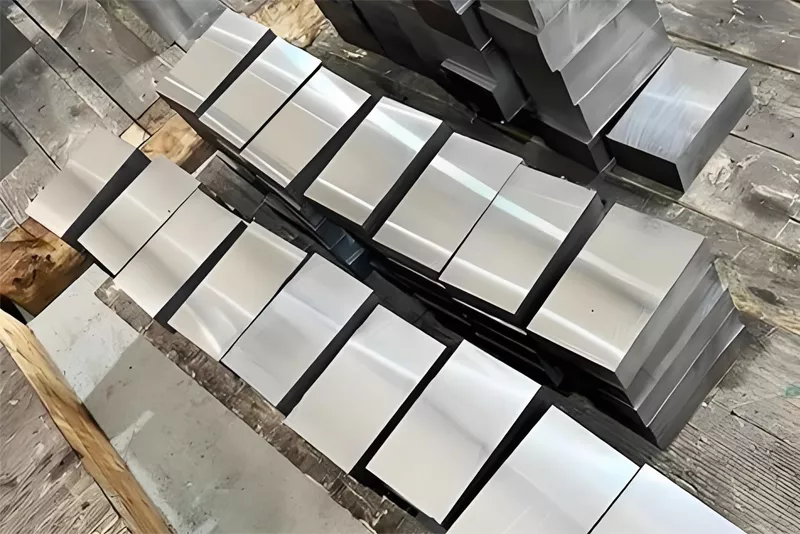
The aerospace industry relies on materials such as titanium, Inconel alloys, and aluminum alloys, which are highly valued for their high strength, light weight, and resistance to extreme temperatures. Aerospace component manufacturers need equipment capable of cutting these hard materials without compromising precision. CNC machine tools with spindle speeds up to 40,000 RPM can provide the necessary power and precision.
Consistency in production operations
Whether producing prototypes or thousands of aerospace parts, CNC machining ensures that every part is identical. For aerospace component companies supplying large manufacturers such as Lockheed Martin or SpaceX, this repeatability is crucial because consistency directly impacts product reliability.
Step-by-step process of manufacturing aerospace parts using CNC machining
Manufacturing aerospace CNC machining parts is a meticulous process that requires the integration of advanced technology and exquisite craftsmanship. The specific process is as follows:
Step 1 – Design and Prototyping
Every aerospace component starts with a digital blueprint. Engineers use CAD (Computer-Aided Design) software to design components that meet PMA (Parts Manufacturer Approval) aerospace part standards. 3D-printed aerospace components can be produced first to verify the design before undergoing machining and initial testing.
The Importance of Prototyping
Prototyping allows manufacturers to identify defects early, thereby saving time and resources. At Julei Hardware, we often combine 3D printing with CNC machining to streamline this stage and ensure the final design meets aerospace standards.
Step 2 - Material Selection
The selection of materials depends on the purpose of the parts. Titanium is favored for its strength-to-weight ratio, while aluminum is commonly used for lightweight structural components. Aerospace part suppliers must purchase materials certified to standards such as AS9100 to ensure their performance.
Material Challenges
High-performance alloys are difficult to process due to their high hardness. Julliant Hardware possesses professional 5-axis CNC machining technology, ensuring that these materials can be precisely formed even in demanding applications.
Step 3 - CNC Programming
CAD models are converted into G-code, a language that instructs CNC machine tools on their movements. For CNC machining of aerospace parts, this code can handle multi-axis operations, ensuring that each cut meets the design requirements.
The precision of programming
A single coding error can ruin a part. Our team will repeatedly check the G-code to ensure perfect execution, which is especially suitable for complex 5-axis CNC machining projects.
Step 4 – Machining Parts
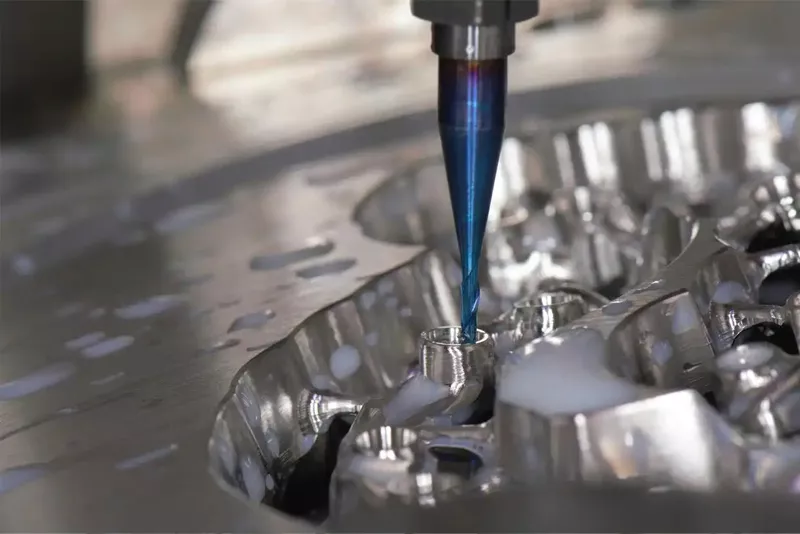
Raw materials are clamped into a CNC machine, and then programming cutting begins. High-speed spindles and advanced cutting tools mill the material layer by layer, precisely shaping aerospace components. Factories like ours in Singapore—specializing in CNC machining of Singapore aerospace parts—use state-of-the-art equipment to optimize this process.
Real-time monitoring
During the machining process, we monitor variables such as tool wear and temperature to maintain quality and ensure that parts meet aerospace standards for machined components.
Step 5 - Post-processing
After the parts are machined, they need to undergo precision processing, such as cleaning, heat treatment, or surface coating (e.g., anodizing) for aerospace parts. These steps can enhance the durability and corrosion resistance of the parts, which is crucial for components exposed to harsh environments.
Organize technology
For example, anodizing can extend the service life of aluminum components, while heat treatment can enhance the strength of titanium components. Haoguang Technology provides one-stop post-processing services tailored to aerospace requirements.
Step 6 - Quality Assurance
All aerospace components undergo strict inspection before leaving the factory. Tools such as Coordinate Measuring Machines (CMMs) are used to verify dimensions, while non-destructive testing (NDT) methods like ultrasonic or X-ray testing are employed to check for internal defects.