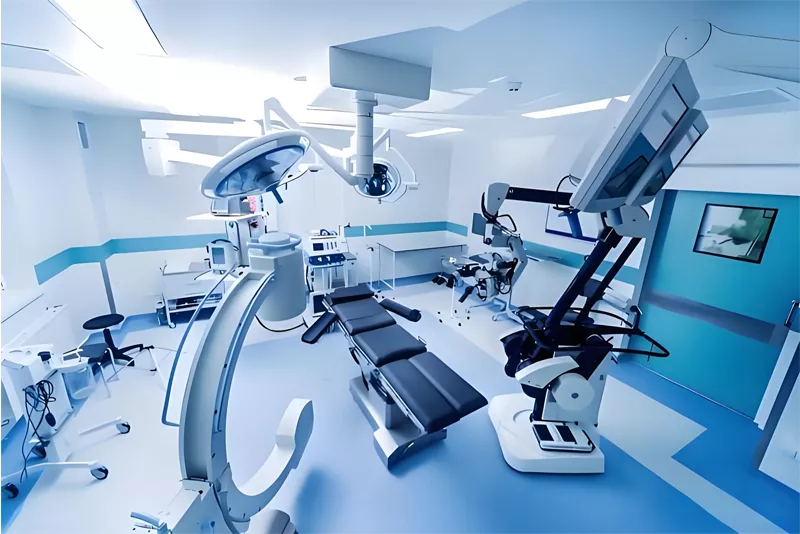

From Dentures to Fighter Jets: Why CNC Dominates Medical and Aerospace Manufacturing?
I. The Core Dominant Position of CNC Technology
2. Multi-axis interpolation machining of complex geometric shapes In the medical field, dentures require 360° circular engraving. The numerical control system activates the machine tool through programming instructions, using 4-axis distributed control to achieve smooth transitions of curved surfaces and avoid problems of discontinuous speed at corners.
3. Intelligent Process Flow Integration
Seamless integration of CAD/CAM software with numerical control systems: Medical dental engraving machines achieve 24-hour delivery of dentures through the workflow of 'scanning and modeling → program correction → CAM toolpath generation → numerical control engraving'; in the aerospace field, this can be combined with artificial intelligence to optimize machining paths.
II. Medical Manufacturing: From Mass-Produced Dentures to Minimally Invasive Surgery
Denture Manufacturing: Balancing Efficiency and Personalization
1.Core Components of Aircraft Engines
Challenge: The scroll blade needs to balance the requirements of thin wall thickness (1.8mm), high precision (±3 micrometers), and dynamic balancing (<0.09g·mm).
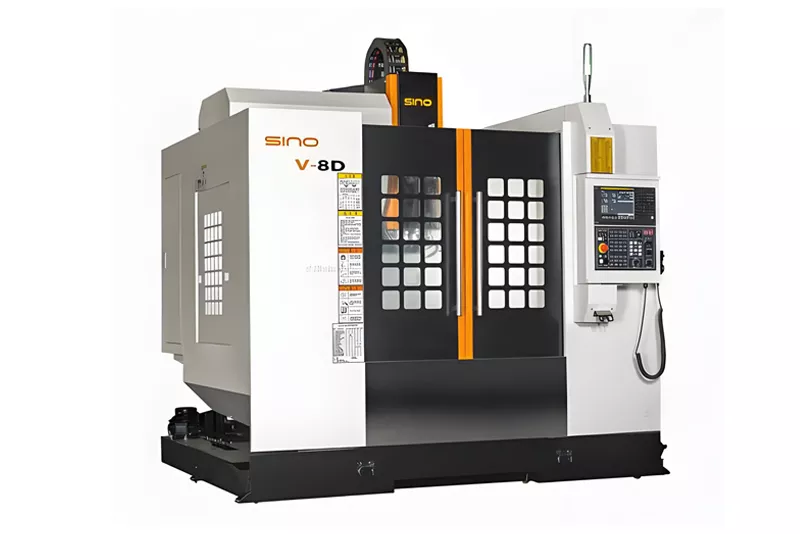
NC Solution: 5-axis machining center processes SUS304 stainless steel in stages, combined with an online measurement system for real-time deformation compensation to avoid dimensional deviations after heat treatment
2.Localization of large aircraft structural components
Kede CNC has jointly established a 'Large Aircraft Process Validation Test Base' with aviation enterprises. This base focuses on the precision machining of complex structures of domestically produced large aircraft such as the C919 and C929, as well as large drones. It is committed to breaking through the bottleneck of core components transitioning 'from laboratory to mass production', exploring new mechanisms, and promoting the良性 interaction between technological innovation and industrial innovation. Targeting pain points such as titanium alloy frames and panels, long-axis deep-hole parts, it uses domestically produced 5-axis machine tools to verify material adaptability, driving the upgrade of C919/C929 components from 'usable' to 'high-quality usable'.
3. Composite Material Processing and Green Manufacturing
The emergence of 'dark factories' marks a benchmark for the digital transformation of manufacturing. Essentially, they achieve full production process autonomy and intelligence through technological integration. Shenyang Jingrui's intelligent production line has implemented the 'dark factory' model, using RFID to manage tool life, achieving a spindle utilization rate of 90% and reducing the comprehensive cost of aviation parts by 30%.
IV. Future Trends: Cross-boundary Integration and Intelligent Upgrading
Medical-Aerospace Technology Integration: The 4-axis control technology of dental carving machines has been extended to the processing of small precision parts in aerospace; conversely, the 5-axis experience in aviation blade manufacturing is driving innovation in the complex curved surfaces of orthopedic implants. AI-Driven Smart Manufacturing: Delta's NC300 network function supports remote program transfer; Shenyang Jingrui's production line uses 'ant colony algorithm' for dynamic equipment scheduling, reducing changeover time by 50%.
Conclusion
The 'dominant position' of numerical control (NC) technology in the medical and aerospace fields stems from its mastery of extreme precision (micron-level), adaptability to complex geometric shapes (multi-axis interpolation), and intelligent closed-loop systems (online monitoring → real-time compensation). In the future, with the integration of artificial intelligence, the Internet of Things, and new material processing technologies, NC technology will further redefine the boundaries of high-end manufacturing—from perfect dental prosthetics within the human body to jet engine components in the clouds, all are defined by code and cutting tools.