
Four Main Steps of the CNC Machining Process
Step 1: Prepare a CAD model
This involves creating 2D or 3D models for a product. AutoCAD and SolidWorks are commonly used modeling software, which will be elaborated on later in the article. Additionally, based on the product's requirements, 2D designs can also be converted into 3D designs. CAD models should be designed reasonably to clearly display key features such as tolerances, structural lines, threads, and other parameters to the operator without difficulty, facilitating effective machining operations.
Step 2: Convert to CNC-compatible format
CNC machines do not understand CAD models. Therefore, CAD models must be converted into a format compatible with CNC so that the machine can interpret it. For this step, you can use CAM software such as AutoCAD, Fusion 360, or other online software services. This type of software converts the model into a CNC-compatible format and specifies the parameters for the CNC machine, such as rotational and linear movements related to machining operations, cutting sequence, tool paths, workpiece, and machine speed.
Step 3: Set up execution
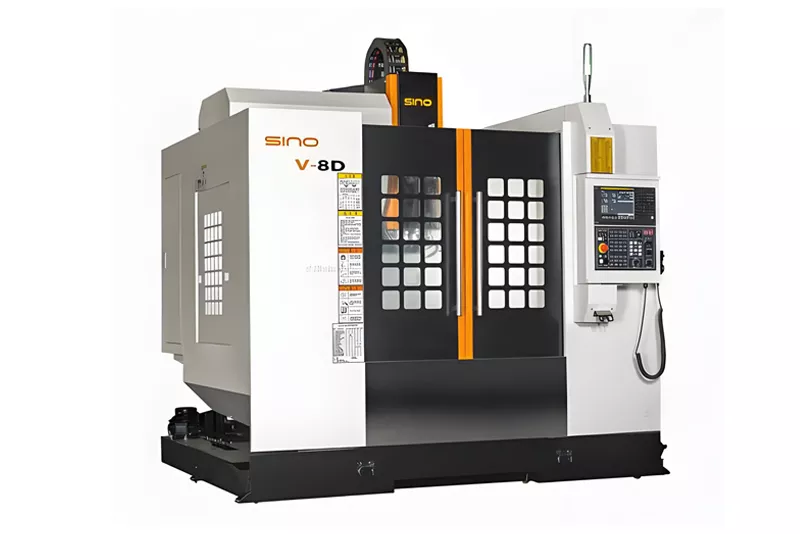
Mechanics convert CAD files into a numerical control program called G-code. With this G-code, mechanics can set all machining parameters of the numerical control machine before the machining operation begins, including tool changing, creating cutting operations for parts, and cooling of parts and tools. This process also involves selecting the appropriate type of numerical control machine, with the choice of machine depending on the workpiece, the complexity of the product design, and cost.
Step 4: Machining the workpiece
In the manufacturing process, computer numerical control (CNC) machining tools such as milling machines, lathes, grinders, and shapers are automated and will run continuously until the computer program determines completion. This means that human supervision is almost unnecessary during the manufacturing process. However, during the machining process, operators need to perform checks at several levels to ensure quality.
Due to this high level of automation, CNC machining is highly price-competitive for one-off custom parts and medium-volume production.