
CNC Turning vs. Milling: Which Machining Process Is Best for Your Project
In modern manufacturing, two well-known machining processes are CNC turning and milling. Both CNC turning and milling utilize numerical control technology to produce high-precision parts. However, they operate in different ways. CNC milling uses multi-point cutting tools to machine fixed workpieces. This makes it suitable for processing fine components and complex geometric shapes.
On the other hand, CNC turning involves the rotation of the workpiece, with a single-point cutting tool removing material. This makes it suitable for machining cylindrical parts. Understanding the differences between CNC turning and milling is crucial for determining the most appropriate machining method based on manufacturing requirements, materials, and part design.
What is CNC milling?
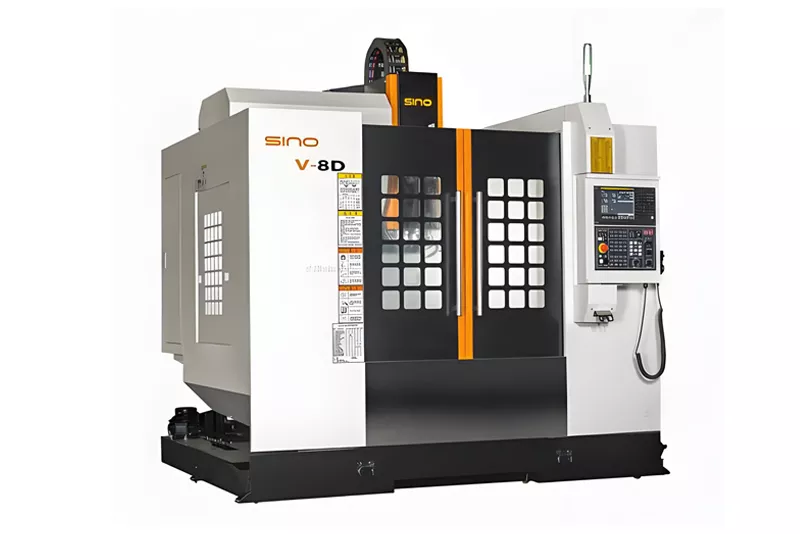
CNC milling uses rotating cutters to remove material from a workpiece. Unlike CNC turning, which causes the workpiece to rotate, this process keeps the material fixed while the tool carves out high-precision holes, shapes, and complex features. With this process, you can create intricate contours and shapes that are impossible to achieve with manual milling.
In addition, milling machines integrated with CNC can operate on multiple axes, typically 3 to 5 axes, ensuring precise and detailed cutting. Industries such as medical, automotive, and aerospace rely on this process to manufacture top-tier components with strict tolerances. You can mill a variety of materials, including composites, plastics, and metals, making it a versatile manufacturing solution.
As software and automation continue to advance, modern CNC milling machines offer higher efficiency, accuracy, and speed. This technology will always be an important aspect of manufacturing, thereby ensuring consistency in both custom manufacturing and mass production.
What is CNC Turning?
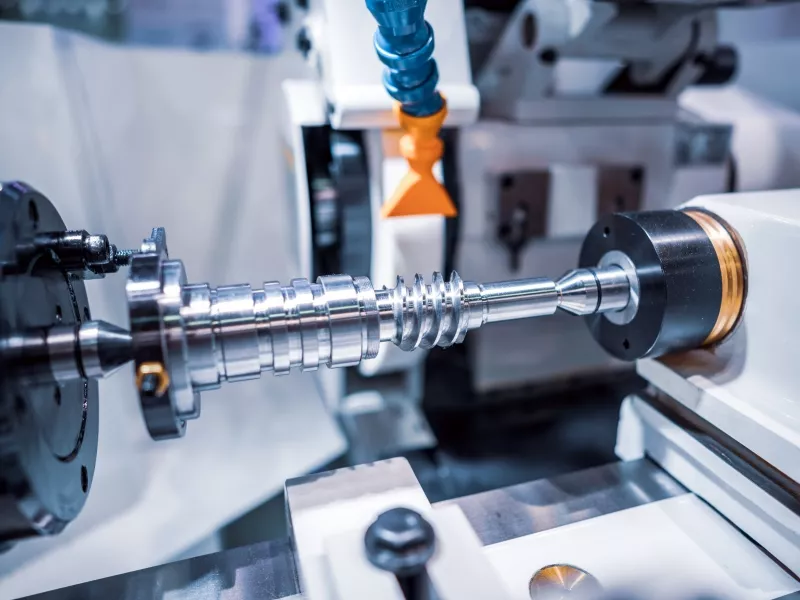
CNC turning is a precise machining process that shapes cylindrical parts by rotating the workpiece while cutting tools remove material. This process is performed on CNC lathes, which help achieve repeatability and accuracy. The tools can rotate along multiple axes, ensuring complex grooves, threads, and shapes are machined with high precision.
In addition, compared to manual lathes, CNC turning uses programmed instructions to ensure higher production efficiency and reduce human errors. This process can be used in various industries such as medical manufacturing, automotive, and aerospace, where smooth surfaces and strict tolerances are required.
In addition, you can use CNC turning to machine materials such as wood, plastic, and metal, ensuring it is a reliable solution for both mass production and custom manufacturing. Furthermore, with technological advancements, today's CNC lathes are equipped with multi-axis capabilities, enabling the realization of more complex designs. This is why CNC turning is widely regarded as the foundation of modern manufacturing, guaranteeing the consistency and quality of machined parts.
CNC Milling: What Are Its Characteristics and Processes?
It is one of the important milling machining processes, which involves using rotating cutting tools to remove material from the workpiece. The cutting tools used in this process are controlled by computers. CNC milling machining method is especially popular in different industries due to its advantages. This method is efficient, precise, and can produce complex parts.
In this section, we will explain the CNC machining process and its characteristics.
CNC Machining Process
In the CNC milling process, digital design is your first step. This step requires you to create a design with the help of a program called CAD (Computer-Aided Design). After that, you use CAM (Computer-Aided Manufacturing) software to convert the design into a CNC program. The CAM software provides the machine with certain instructions regarding cutting depth, speed, and tool paths.
You immediately load the CNC program, the milling machine clamps the workpiece, and at the same time, the cutting tool rotates along different axes to create the material you want.
You can operate a milling machine on multiple axes while ensuring precise cutting. The machine follows specific instructions to remove material until the final shape is achieved. You can also use coolant to minimize heat buildup. This coolant can also extend the tool's lifespan. The CNC milling process is an automated process, so it offers high precision. This makes it one of the best machining methods for custom part production and batch manufacturing.