
CNC Machining DFM Outsourcing: A Mature Strategy to Reduce Costs, Minimize Risks, and Accelerate Mass Production
Introduction: Why DFM Outsourcing Is Particularly Important Today
In today's highly competitive manufacturing environment, lead time, cost, and stability are no longer optional factors but critical determinants of success or failure.
Many cases of cost overruns and delivery delays in CNC machining projects do not occur in the workshop but stem from insufficient consideration of manufacturing constraints during the design phase.
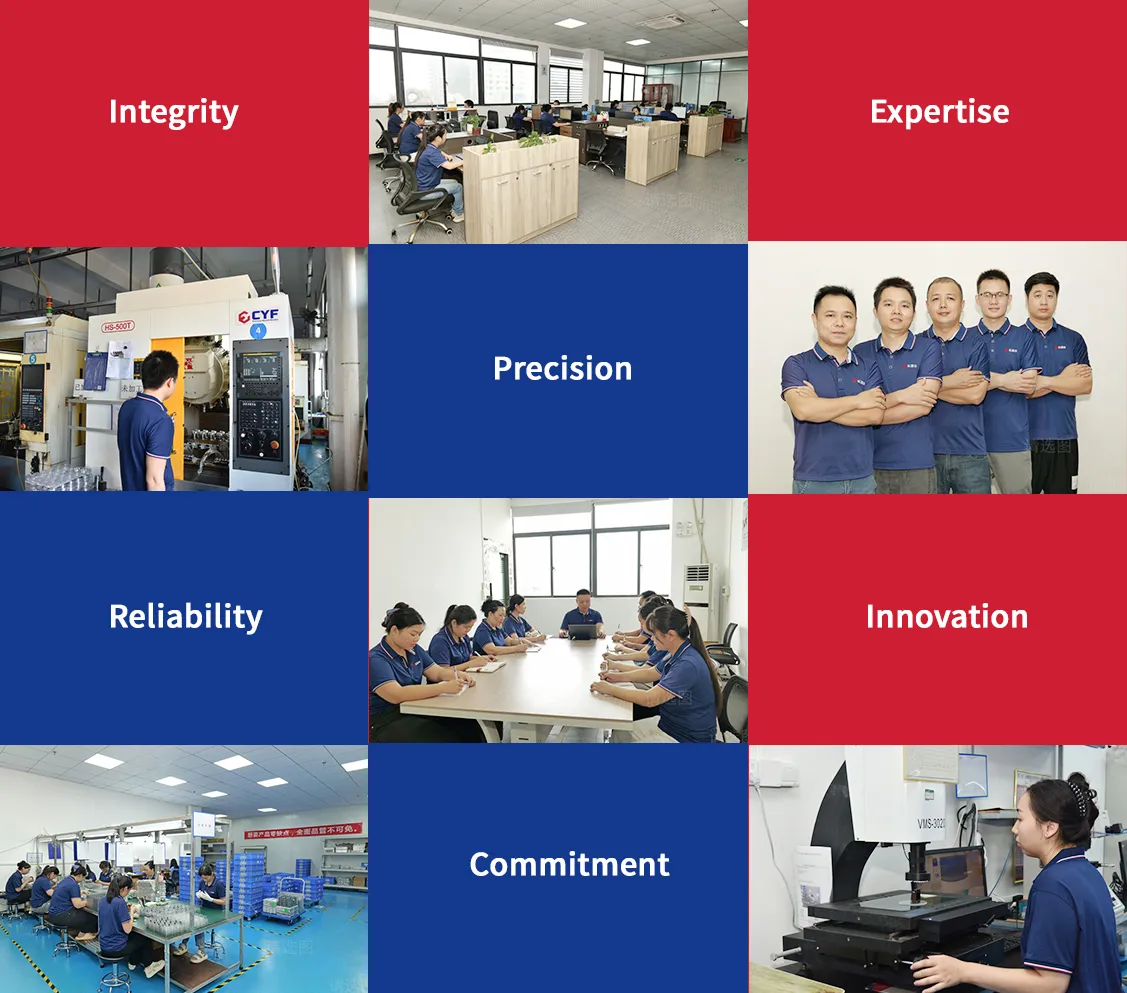
Based on the practical experience of Dongguan Changyuanfeng Precision, over half of the CNC machining issues can be traced back to designs that are feasible in CAD but not user-friendly for actual machining.
This is why an increasing number of companies are choosing to outsource DFM (Design for Manufacturability) as an effective means to shorten development cycles and control machining costs.
What is DFM in CNC Machining?
DFM (Design for Manufacturability) refers to the systematic evaluation and optimization of part structures during the design phase to ensure they can be efficiently, stably, and controllably machined using CNC processes.
In CNC machining, DFM typically focuses on the following questions:
Can this structure be machined with standard tools?
Do the tolerances match functional requirements, and is there any over-engineering?
Are the clamping methods and machining paths complex and affecting cycle time?
Is the selected material suitable for the target accuracy and surface finish?
By incorporating DFM in outsourcing, these manufacturing-level judgments can be made early in the design phase, rather than exposing issues only during trial production or full-scale production.
2. Cost Reduction in CNC Machining from the Source
A large portion of CNC machining costs is effectively "locked in" during the design phase.
Through DFM outsourcing, systematic optimizations can be achieved in:
• Wall thickness, cavity depth and structural proportions
• Tool specifications and machining strategies
• Number of non-essential features
• Secondary processing and inspection procedures
In many cases, minor structural adjustments can significantly reduce per-unit cost and machining time.
3. Accelerating the Transition from Prototyping to Mass Production
A successfully produced prototype does not necessarily mean the design is suitable for mass production.
One of the core values of DFM outsourcing is to help manufacturers:
• Identify design details that affect CNC cycle time
• Simplify fixturing and clamping complexity
• Improve consistency and repeatability in batch machining
This enables a smoother production ramp-up and shortens the time-to-market for products.
General Process of CNC DFM Outsourcing
Step 1: CAD File Evaluation
Analyze STEP, IGES, or native CAD files to examine key factors including tool accessibility, feature depth, machining orientation, and more.
Step 2: Manufacturability & Risk Analysis
CNC engineers focus on evaluating:
• Suitable machining methods (3-axis / 5-axis)
• Potential deformation risks
• Feasibility of tolerances and surface finishes
• Material-related machining challenges
Step 3: Actionable DFM Optimization Recommendations
Deliver practical, production-ready suggestions rather than abstract theories, including:
• Structural simplification solutions
• Alternative design proposals
• Cost-effective tolerance strategies
• Adjustments to reduce machining operations
Common CNC Design Issues Identified in DFM
• Over-specified tolerancesOverly tight tolerances significantly increase machining and inspection costs. The goal of DFM is to achieve “just enough” precision.
• Excessively deep or narrow cavitiesStructures with high aspect ratios require special tools and suffer from low efficiency. Structural optimization can greatly improve productivity.
• Sharp internal cornersTrue right-angle internal corners cannot be achieved by CNC machining. Properly increasing fillet radii reduces tool wear and extra processes.
• Mismatch between material and structureDifferent materials impose distinct design requirements. DFM helps align designs with optimal material properties.
Practical Value of DFM in CNC Projects
Across aerospace, medical, automation, and other industries, clients utilizing DFM outsourcing have achieved:
• Significant reduction in CNC machining costs
• Noticeably shorter machining cycle times
• Improved product consistency and yield rates
• Fewer engineering changes during mass production
These results directly enhance supply chain stability and customer satisfaction.