
Advanced Robot Parts CNC Machining: The Ultimate Guide to Robot Manufacturing
The robotics industry is experiencing an unprecedented era of growth and diversification. From collaborative robots (cobots) that work alongside humans in factory settings, to autonomous mobile robots (AMRs) navigating complex logistics centers, to highly specialized medical robots assisting in life-saving surgeries, the applications are endless. However, beneath the complex algorithms, artificial intelligence, and advanced sensors lies the physical foundation that makes these innovations possible: mechanical hardware.
As a market research expert at Dongguan Changyuanfeng Precision (a leading manufacturer in the CNC machining industry), I have spent years analyzing the evolving demands of global robot manufacturers. The consensus across the entire industry is clear: a robot's reliability, accuracy, and service life are fundamentally tied to the precision of its physical components. This comprehensive guide explores key aspects of robot CNC machining solutions, providing actionable, data-driven insights for engineers, procurement managers, and industry leaders looking to optimize their manufacturing processes.
1. The Core of Innovation: Robotic CNC Machining Solutions
When discussing the physical structure of modern robots, robotic part CNC machining stands out as the most critical manufacturing process. Unlike 3D printing, which is well-suited for rapid prototyping but often lacks the structural integrity required for high-load applications, and unlike injection molding, which requires significant upfront mold costs and offers little flexibility for design changes, CNC (Computer Numerical Control) machining provides the perfect balance of precision, material versatility, and scalability.
Why CNC Machining Is Indispensable to Robotics Technology
A robot's kinematic accuracy—the ability to repeatedly move its end effector to precise coordinates in 3D space—relies entirely on the dimensional accuracy of its joints, links, and structural base. Even minor deviations within a single robotic arm joint can compound into significant errors at the end effector, rendering the robot unsuitable for precision tasks such as micro-welding or surgical assistance.
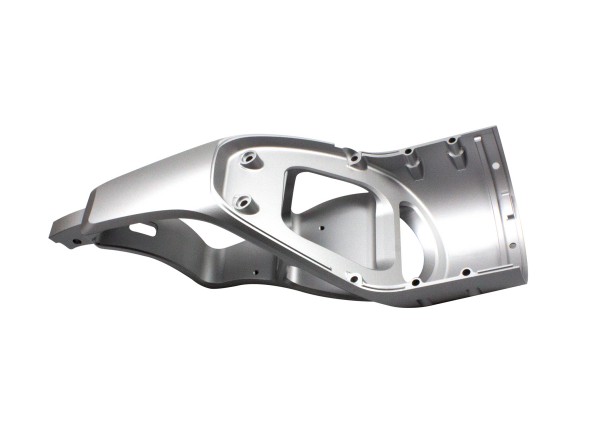
CNC Machining of Robot Components
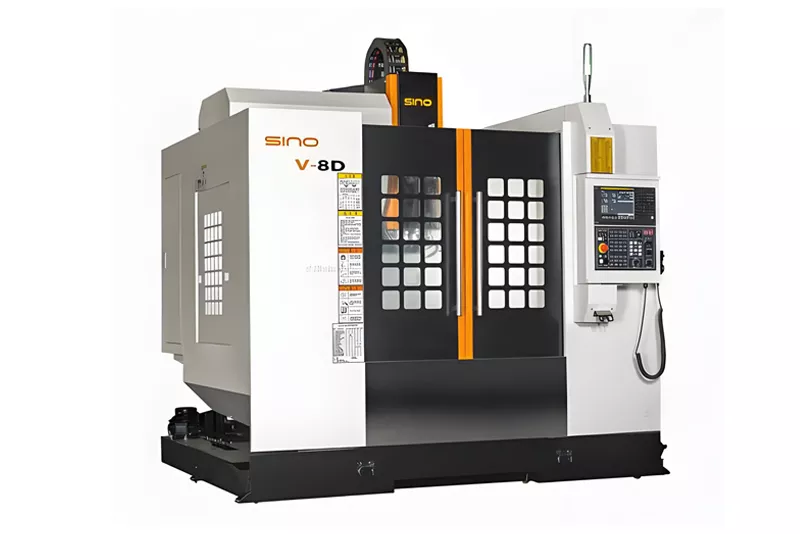
Complex geometries are carved from solid metal or engineering plastic blocks using advanced 3-axis, 4-axis, and synchronous 5-axis milling and turning centers. This subtractive manufacturing process enables:
Unmatched Precision: Achieving tolerances as low as ±0.005mm, which is critical for bearing housings, gearboxes, and actuator components.
Complex Geometries: 5-axis CNC machining can produce intricate organic shapes, optimizing the strength-to-weight ratio of robotic arms, reducing inertia, and improving motor efficiency.
Rapid Iteration: In the fast-paced robotics industry, design development progresses quickly. CNC machining allows engineers to test prototypes, adjust CAD models, and machine new parts within days without requiring new molds.
2. Master the selection of materials for robot components
One of the most critical decisions engineers must make is the selection of materials for robot components. The chosen material directly determines the robot's payload capacity, energy efficiency, environmental adaptability, and overall cost. The goal is almost always to maximize the strength-to-weight ratio while maintaining manufacturability.
Aluminum: The Industry Workhorse
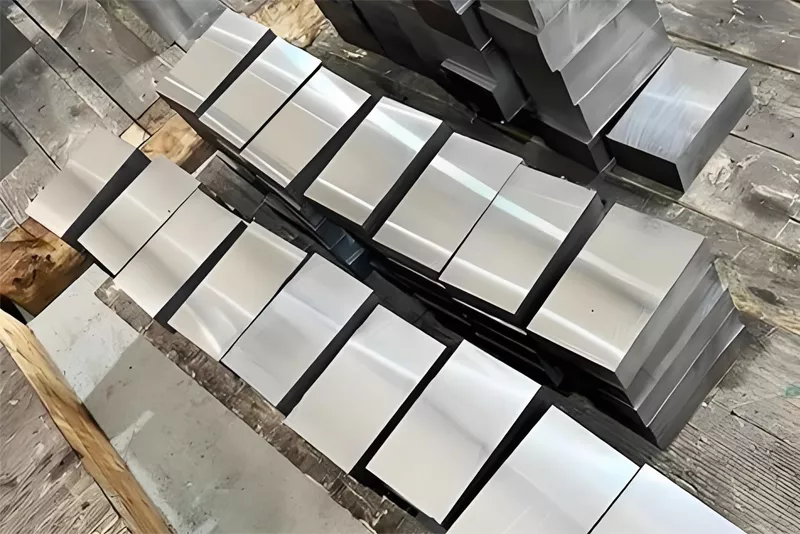
Aluminum is the most commonly used material for CNC machining of robot parts. It is lightweight (with a density about one-third that of steel), non-magnetic, and has excellent machinability.
Aluminum 6061-T6: The preferred alloy for general-purpose robot structural components, frames, and brackets. It offers an excellent balance between strength, weldability, and corrosion resistance.
Aluminum 7075-T6: Known as aerospace-grade aluminum, 7075 has tensile strength comparable to many steels but at a fraction of the weight. It is extensively used in high-stress robotic arms and drone frames, where minimizing weight without sacrificing rigidity is crucial.
Stainless Steel and Tool Steel: Suitable for High-Stress Environments
While heavier than aluminum, steel is indispensable when extremely high strength, wear resistance, or sanitary conditions are required.
Stainless Steel (304 & 316L): Critical for medical and surgical robots, as well as robots operating in corrosive environments (e.g., underwater ROVs or food processing). Due to the addition of molybdenum, 316L offers exceptional corrosion resistance.
Tool Steel (e.g., D2, A2): Used for custom robot grippers and end-effectors that must withstand repeated impacts and high friction without degradation.
Titanium Alloys (Ti-6Al-4V): A Premium Choice
Titanium is the ultimate choice when budget allows and performance cannot be compromised. It provides the highest strength-to-weight ratio among all metal elements and exhibits high biocompatibility. Titanium is increasingly used in advanced humanoid robots, aerospace robots, and high-end prosthetics. However, titanium is notoriously difficult to machine, requiring specialized tools, slower feed rates, and expert CNC programmers—capabilities that Dongguan changyuanfeng Precision has been continuously refining for many years.
Engineering Plastics: Low Friction and Electrical Insulation
Not all robot components need to be metal. The selection of materials for robot parts typically includes advanced polymers that meet specific functional requirements.
POM (Polyoxymethylene/Acetal): Offers high rigidity, low friction, and excellent dimensional stability. It is often used for custom gears, bushings, and sliding mechanisms within robot joints.
PEEK (Polyether Ether Ketone): A high-performance thermoplastic that can withstand extreme temperatures and harsh chemicals. It is used in semiconductor manufacturing robots and aerospace applications where outgassing must be minimized.
3. Ensuring the Quality and Performance of Robotic Components
In the robotics industry, components that are merely 'good enough' represent a liability. Strict control over the quality and performance of robotic components is essential because a single point of failure can lead to catastrophic production line downtime, or in the case of medical robots, life-threatening consequences.
Impact of Tolerances on Kinematics
Robotic joints typically consist of harmonic reducers, cycloidal gearboxes, and high-resolution encoders. For these components to operate seamlessly, the CNC-machined housings that contain them must be perfectly concentric and flat. Even if the machining tolerances of bearing bores exceed a few micrometers, it can result in premature bearing wear, increased friction (which depletes the robot's battery faster and causes motor overheating), and loss of positional repeatability.
Surface Finish and Tribology
Surface finish (measured by Ra - average roughness) is another key indicator of robotic component quality and performance.
Mating Surfaces: Parts that are bolted together require flat, smooth surfaces to ensure rigidity and prevent loosening over time due to vibration.
Dynamic Seals: For robots operating in dusty or humid environments (IP65 to IP68 ratings), machined surfaces where O-rings and dynamic seals are located must have mirror-like finishes to prevent contamination ingress.
Strict Quality Control Protocols
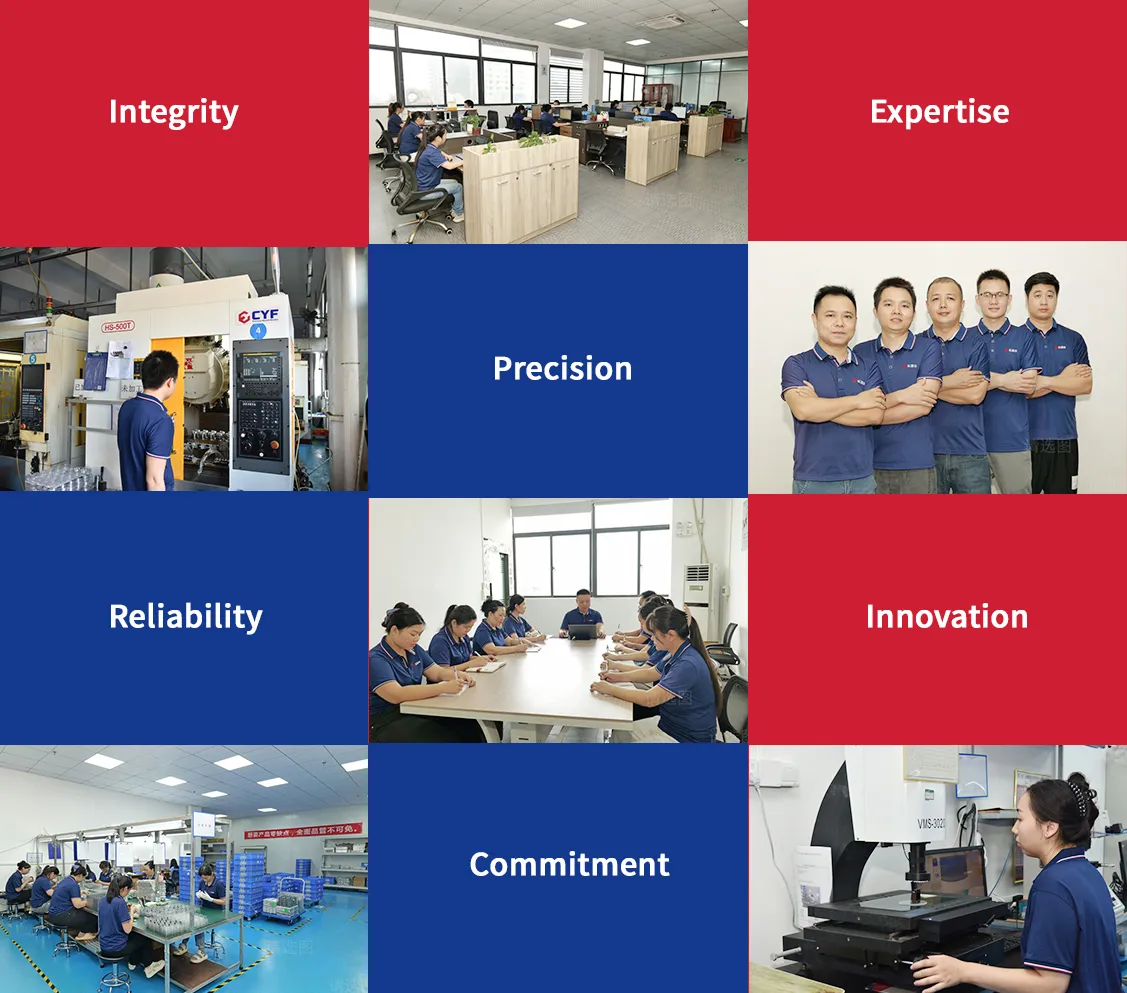
To guarantee performance, top-tier CNC machining partners like Shenzhen Yixin Precision implement rigorous quality assurance (QA) protocols:
Coordinate Measuring Machines (CMMs): High-sensitivity CMMs are used to verify that machined parts' physical dimensions perfectly match the original CAD model, with precision down to micrometers.
Material Traceability: Comprehensive Material Test Reports (MTRs) are provided to ensure that the alloys used fully comply with specifications, preventing the use of counterfeit or substandard metals.
ISO Certifications: Adherence to strict quality management systems, such as ISO 9001 for general manufacturing and ISO 13485 for medical device components.
4. Pricing Factors in CNC Machining
Cost optimization is an ongoing challenge for both robotics hardware startups and established OEMs. Understanding the pricing factors of CNC machining enables engineering and procurement teams to design more cost-effective robots without compromising quality.
Part Complexity and Machining Time
The most important driver of CNC machining costs is the time a part spends on the machine.
3-Axis vs. 5-Axis: Parts that can be machined from a single direction on a 3-axis mill will be significantly cheaper than complex multi-faceted parts that require a 5-axis machine or multiple manual setups. Engineers should practice Design for Manufacturability (DFM) by minimizing deep cavities, avoiding sharp internal corners (which require small, fragile end mills), and standardizing hole sizes.
Material Cost and Machinability
As discussed in the material selection section, raw material costs play a certain role, but the machinability of the material typically has a greater impact on the final price. Aluminum is inexpensive and machines very quickly, reducing machine-hour costs. Titanium and stainless steel are not only more expensive raw materials but also require slower cutting speeds, consume more cutting fluid, and wear tools much faster, significantly increasing per-unit costs. Production Volume and Economies of Scale The pricing factors for CNC machining are heavily influenced by production volume. Initial setup costs—including CAM programming, design of custom fixtures, and machine setup—are fixed costs. If you order 5 prototype parts, this setup cost is allocated across those 5 units, resulting in a very high per-unit price. If you order 5,000 parts, the setup cost per unit becomes negligible.Dongguan Changyuanfeng Precision works closely with customers to achieve a smooth transition from high-mix, small-batch prototyping to efficient large-scale production.
Surface Treatment and Finishing
Post-processing techniques increase costs but are crucial for the longevity and aesthetics of robots. Common treatment methods include:
Type II and III (Hard) Anodizing: Protects aluminum parts from corrosion and wear while providing a stylish, professional appearance.
Electroless Nickel Plating: Used on steel parts to prevent rust and enhance surface hardness.
Sandblasting: Removes tool marks and provides a uniform matte finish.
5. Building a Resilient Robot Component Supply Chain
Recent global disruptions have highlighted a critical vulnerability for hardware manufacturers: the supply chain. Robots are assemblies composed of hundreds of custom-machined parts, off-the-shelf motors, and electronic components. If a single custom bracket is delayed, the entire assembly line comes to a halt. Therefore, optimizing the robot component supply chain is as important as optimizing robot design.
Risks of a Fragmented Supply Chain
Many robot companies make the mistake of over-dispersing their supply chains—sending aluminum parts to Supplier A, steel parts to Supplier B, and complex 5-axis parts to Supplier C—in pursuit of the lowest unit price. This approach generates enormous logistics costs, increases the risk of quality mismatches (for example, parts from different suppliers failing to assemble perfectly together), and turns tracking delivery times into a nightmare.
Strategic Supplier Integration
A modern approach to building a resilient robotic parts supply chain is strategic integration. Collaborating with comprehensive and capable manufacturers like Shenzhen Yixin Precision enables robot companies to source their entire mechanical bill of materials (BOM) from a single, reliable entity.
The benefits of this approach include:
Simplified Communication: A single point of contact for engineering revisions, quality reports, and logistics.
Guaranteed Assembly Fit: When a manufacturer produces mating components, they can ensure fit and finish before parts leave the facility.
Agile Delivery Times: Strategic partners can allocate specific machine capacity to your projects, ensuring that even rapid, unexpected demand spikes are met without delaying your time-to-market.
Inventory Management: Advanced CNC partners offer kanban or just-in-time (JIT) delivery services, maintaining safety stock of critical components so you don't have to tie up capital in warehousing.