
0.005 Precision Breakthrough! How Shenzhen Robot CNC Model Processing Supports the 'China Intelligence' Ceiling?
When new energy vehicle welding robots complete body spot welding with an error of 0.02mm, and when AI collaborative robots accurately sort chip components as small as 0.3mm, these 'millimeter-level operations' are all inseparable from the 'micron-level control' of part hand boards in CNC machining.
As the core base of China's robotics industry, Shenzhen is continuously breaking the limits of CNC machining accuracy by leveraging its industrial cluster composed of over 200 precision machining enterprises. So, what level of CNC machining accuracy can Shenzhen's robot part prototypes achieve? And how does this precision advantage help enterprises reduce costs and improve efficiency?
I. Practical Precision Classification Testing: Covering from Conventional Requirements to Ultra-Precision Scenarios
In the production workshops of Shenzhen's precision machining enterprises, 'precision' is never an abstract concept, but a quantifiable and verifiable hard indicator. Combining the latest industry field test data, the CNC machining precision of Shenzhen's robot part prototypes has formed a clear three-level gradient, meeting the needs of different scenarios:
Basic application-level precision: For non-core structural components such as service robot casings and charging pile robot bases, stable precision can be achieved through ordinary CNC machining. Among them, metal parts have a tolerance controlled within ±0.05mm, while plastic parts, due to the thermal expansion and contraction characteristics of the material, have a slightly relaxed tolerance of ±0.1mm, which fully meets the requirements for assembly and appearance. Taking a service robot manufacturer in Shenzhen as an example, the casing produced according to this precision standard has reduced the assembly error rate to 1.2% and improved production efficiency by 25%.
Core function-level precision: critical components such as robot joint brackets and servo motor housings have significantly higher precision requirements. Mainstream enterprises in Shenzhen, using five-axis CNC machining centers, can stabilize the precision of metal parts within ±0.01-0.02mm, which is equivalent to 1/5 the diameter of a hair. In a certain AI collaborative robot project, the use of joint parts with ±0.015mm precision reduced the robot's repeated positioning error to ±0.02mm, increasing sorting efficiency by 30% and successfully adapting to precision assembly scenarios in the 3C industry.
Ultra-precision breakthrough-level accuracy: Facing robot 'heart components' such as harmonic reducers and RV reducers, leading Shenzhen enterprises have achieved ±0.005mm precision control. This level of precision has raised the transmission efficiency of industrial robots to over 98%. More notably, in the field of medical surgical robots, through composite turning and milling processes combined with nanocoating technology, Shenzhen enterprises have controlled the wall thickness error of thin-walled robotic arms within 0.5mm while maintaining a dimensional stability of ±0.01mm, providing key technical support for minimally invasive brain surgery.
II. Precision Security Password: Four Core Technologies Build a 'Zero Error' System
Achieving such stringent precision control is not the credit of a single device, but rather the result of Shenzhen enterprises building a full-process precision guarantee system through four dimensions: 'equipment upgrading + process innovation + intelligent detection + environmental management'.
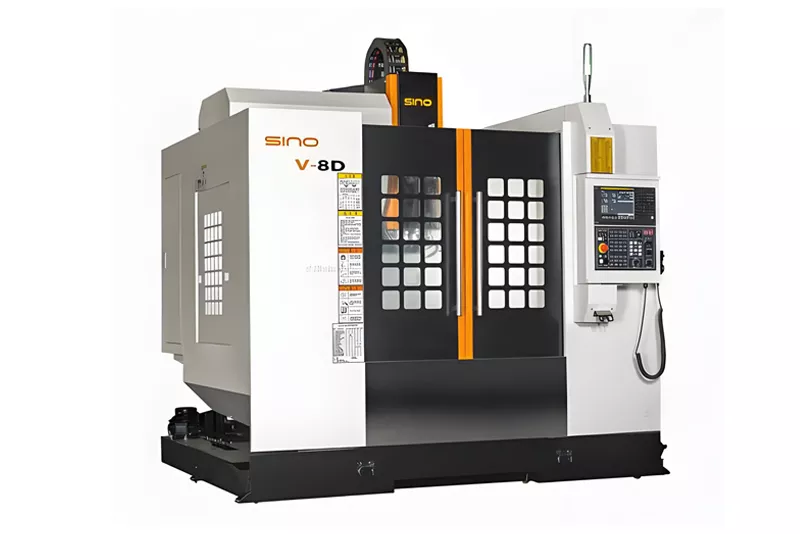
High-end equipment clusters lay a solid foundation for precision. More than 80% of large-scale CNC machining enterprises in Shenzhen have completed the popularization of five-axis centers. For example, Huazheng Precision introduced five-axis machine tools from Germany's DMG MORI, equipped with imported grating scales and ball screws, with spindle radial runout controlled within 0.002mm, and a processing range covering 2000×1300×600mm. This enables the one-piece forming of large robot bases, avoiding cumulative errors caused by split processing. Mingmei Handboard has even invested millions of yuan to build a 'flexible production line', through the linkage of 12 five-axis machine tools, shortening the part delivery cycle to 3 days, while maintaining a precision pass rate of over 99.6%.