
AI-driven CNC machining center technology
As global manufacturing enters the intelligent era, the application of artificial intelligence (AI) technology in computer numerical control (CNC) machining has become an important driving force for industrial progress. Since 2016, KAEPPEL has invested in the field of machine intelligence, starting with factory visualization management. Now, the company can provide a series of intelligent manufacturing factory solutions, becoming a tool machine processing solution provider that can keep up with the digital trend.
The article aims to delve deeply into the revolutionary role of AI in CNC machining, highlighting how it not only enhances production efficiency and product quality but also drives the manufacturing industry toward a higher level of automation and flexible development. Through specific technical analyses and future trend forecasts, we will demonstrate how AI technology creates significant value in CNC machining and predict how this integration of technologies will shape the future of manufacturing. With this in-depth analysis, readers will gain a comprehensive understanding of AI applications in modern manufacturing and witness a true industrial transformation.
I. Introducing the Revolutionary Role of AI in CNC Machining Centers
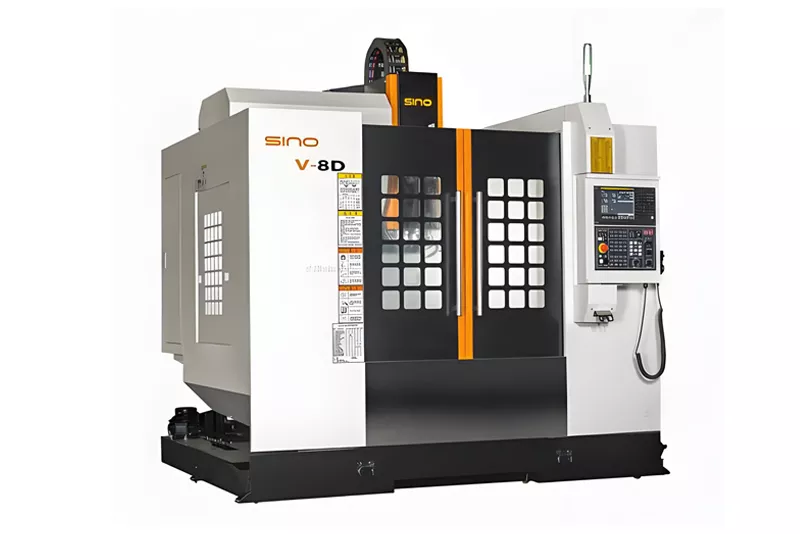
Over the past few decades, Computer Numerical Control (CNC) technology has completely transformed the face of manufacturing. As technology continues to advance, CNC machining centers are now capable of performing complex machining tasks with unprecedented precision and efficiency. However, with the increasing market demand and expansion of production scale, traditional CNC machine tools are facing new challenges: how to further improve production efficiency, reduce costs, and achieve higher levels of automation and flexibility. Against this backdrop, the introduction of Artificial Intelligence (AI) technology is gradually triggering a revolution in the CNC machining field. AI's core capability lies in its ability to process and analyze large amounts of data, which enables it to play a key role in automating and optimizing manufacturing processes. In CNC machining, AI can be used to analyze machine operation data, adjust machining parameters in real time to adapt to different machining conditions or material properties. This intelligent adaptive capability not only improves machine operating efficiency but also significantly enhances machining quality and consistency.
More importantly, AI enables CNC machines to perform predictive maintenance and fault diagnosis. By continuously monitoring the machine's operating status and performance, AI systems can identify potential machine failures and maintenance needs, and intervene in advance before problems occur. This not only extends the machine's service life but also significantly reduces maintenance costs and unplanned downtime. Furthermore, the application of AI has driven CNC technology toward a higher level of automation. For example, through machine learning algorithms, CNC machine tools can self-learn and optimize their machining strategies, continuously improving based on past machining experiences. This learning ability not only enhances machining efficiency but also allows machines to handle a more diverse range of machining tasks, better adapting to changing production demands.
In short, the application of AI in CNC machining is ushering in a revolution in manufacturing. By integrating AI technology with CNC machining equipment, manufacturing enterprises can not only improve production efficiency and product quality but also achieve greater operational flexibility and cost-effectiveness. Looking to the future, as AI technology continues to develop and improve, its impact on the CNC machining field will be even more profound, bringing more innovation and transformation to global manufacturing.