
What is subtractive manufacturing?
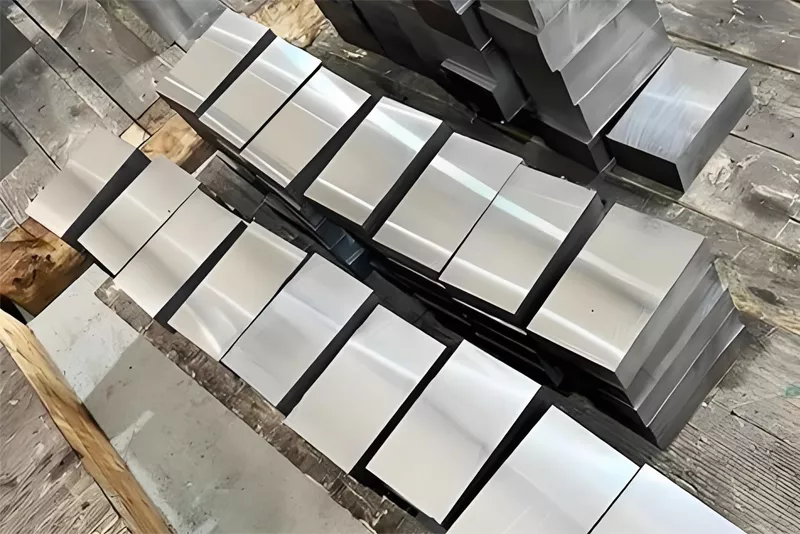
Subtractive manufacturing is a manufacturing technology that gradually processes raw materials into required parts or products by removing material. It typically starts with a larger block of raw material and uses various machining processes such as cutting, grinding, drilling, milling, etc., to remove excess material in order to obtain parts with specific shapes, dimensions, and precision.
Common Processes
Turning: The workpiece rotates while the tool moves along a specific path to remove material. It is used for machining rotational parts such as shafts and disc parts, and can process various surfaces including outer circles, inner holes, and threads.
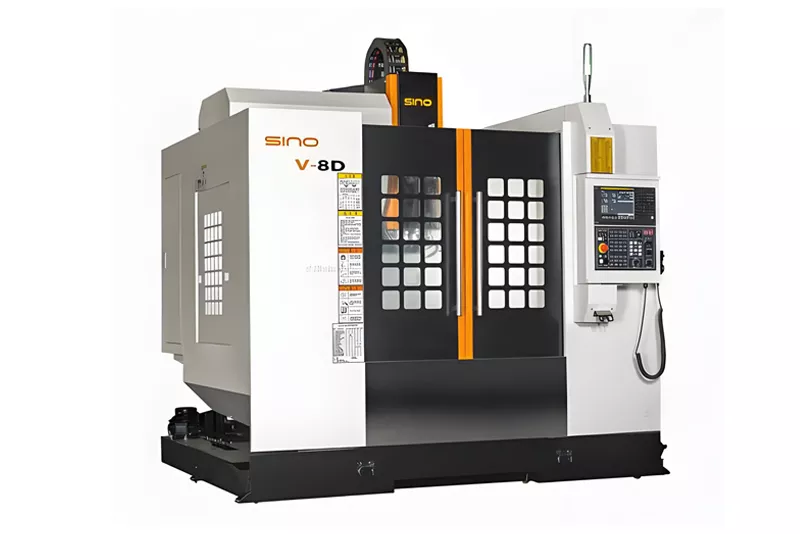
Milling: The tool rotates while the workpiece undergoes feed motion. It can machine various shapes such as planes, steps, grooves, and gears. By using milling cutters of different shapes and tooth counts, a wide range of complex contours can be processed.
Grinding: Cutting the workpiece surface with abrasive tools such as grinding wheels, used to obtain high-precision and low-roughness surfaces. It is commonly used for precision machining of parts, such as external cylindrical grinding, internal cylindrical grinding, plane grinding, and gear tooth surface grinding, etc.
Drilling: Using a drill bit to process holes in a workpiece, it is a commonly used method for machining holes in various mechanical parts, which can be used to process different types of holes such as through holes and blind holes.
Advantages: High machining accuracy: It can achieve high dimensional accuracy and surface quality, meeting the processing requirements of many parts with strict precision demands, such as aircraft engine blades and precision molds. Ability to process complex shapes: Through technologies like multi-axis linkage, it can machine various complex three-dimensional shapes, such as impellers and cavity molds. Strong material adaptability: It can process almost all kinds of metal and non-metal materials, including those with very high hardness, such as quenched steel and hard alloys.
Disadvantages: Low material utilization: A large amount of material is removed and becomes waste, especially for parts with complex shapes, leading to severe material waste and increasing production costs and resource consumption. Relatively low processing efficiency: For some complex parts, multiple processing steps are required, resulting in a long processing cycle and relatively low production efficiency. This problem is more prominent when processing large parts or in mass production. High equipment cost: Precision subtractive manufacturing equipment, such as five-axis联动 machining centers, is expensive, and the maintenance and operating costs of the equipment are also high.