
What impacts do breakthroughs in precision machining technology bring to medical precision equipment?
Precision machining technology is a manufacturing technique that achieves dimensional control at the micrometer level (10⁻⁶ meters) to the nanometer level (10⁻⁹ meters) through high-precision equipment and processes. It encompasses specialized fields such as ultra-precision turning, grinding, laser processing, and electrical discharge machining. Its technological breakthroughs are profoundly reshaping the design concepts and performance boundaries of medical precision equipment. From the operational accuracy of surgical instruments to the biocompatibility of implantable devices, from the manufacturing of core components in diagnostic equipment to the miniaturization of wearable medical devices, it demonstrates the significant empowering effect of this technology.
The demand for machining accuracy in modern medical equipment has been upgraded from the traditional millimeter level (10⁻³ meters) to the sub-micron level. For example, the mesh precision of cardiovascular stents needs to be controlled within 50 micrometers, and the surface roughness of artificial joints needs to be lower than 0.1 micrometers. This technological iteration not only relies on the precision upgrade of machine tool hardware but also benefits from collaborative breakthroughs in software technologies such as digital twin modeling and error compensation algorithms, forming a composite technical system of 'hardware precision + software control', which provides underlying support for the functional innovation of medical equipment.
Specific impact of breakthroughs in core processing technologies
Ultra-precision material processing: Expanding the application boundaries of medical materials
The processing of traditional medical materials such as stainless steel and aluminum alloys has become mature. However, the processing of new titanium alloys (e.g., Ti-6Al-4V), medical polymers (e.g., polyether ether ketone PEEK), and bioceramics (e.g., hydroxyapatite) is challenging due to their high hardness, brittleness, or strong adhesion. Ultra-precision grinding technology, through nanoscale dressing of diamond grinding wheels, can achieve a surface roughness Ra ≤ 0.05μm for titanium alloy artificial joints, which is more than 5 times better than traditional grinding. Laser micromachining technology, on the other hand, can create microholes with a diameter of 50 micrometers in PEEK materials, meeting the structural design requirements for drug-eluting stents.
The improvement of material processing accuracy directly enhances the biocompatibility of implantable devices. For example, the surface of precision-machined titanium alloy bone screws, treated with electrochemical polishing, can reduce protein adsorption by 30%, lowering the risk of inflammation caused by cell adhesion. This technological breakthrough has enabled more high-performance materials to move from the laboratory to clinical applications, driving the upgrade of medical devices from 'usable' to 'durable + comfortable'.
Nanometer-level precision control: Revolutionizing the performance of minimally invasive surgical instruments
The popularization of minimally invasive techniques such as laparoscopic surgery and neurointerventional surgery has put stringent requirements on the operational precision of instrument tips. Precision machining technology achieves breakthroughs through the following dimensions:
● Geometric Precision: The surgical forceps joints are machined using air static pressure bearing machine tools, which can control the rotational clearance within 1 micrometer, avoiding the 'sticking' phenomenon of traditional instruments;
●Surface Precision: Magnetorheological Polishing Technology enables the ultrasonic surgical scalpel tip to achieve a surface roughness of Ra≤0.02μm, reducing the probability of tissue adhesion;
● Motion Accuracy: Based on five-axis simultaneous machining with an error compensation algorithm, the bending radius error of the vascular interventional catheter tip is controlled to ≤ 5 micrometers, improving maneuverability in complex vascular environments.
These technological advancements enable doctors to perform precise anastomoses of blood vessels with diameters smaller than 1 millimeter, driving surgeries such as coronary artery bypass grafting from a 'big open' approach to a 'precision interventional' one, significantly reducing patient trauma and recovery time.
Micro-nanostructure Processing: Driving Innovation in Miniaturized Medical Devices
The miniaturization of devices such as wearable blood glucose monitors and implantable pacemakers relies on micro-nano processing technologies to construct complex internal structures. For example:
●LIGA technology (X-ray lithography, electroforming, and molding): Produces micro-gears with a thickness of 50 micrometers for precise drug delivery control in insulin pumps;
●Focused Ion Beam (FIB) machining: Etching electrode arrays with a width of 100 nanometers on the surface of chip-level sensors to improve the accuracy of physiological signal acquisition;
●Microfluidic Chip Fabrication: By using ultraviolet laser micromachining, 500 micrometer-scale channels are constructed on a 3cm² chip, enabling multi-parameter synchronous analysis for portable biochemistry detectors.
The popularization of miniaturized devices not only enhances patient convenience but also drives the shift of medical scenarios from hospitals to homes, accelerating the arrival of the era of personalized medicine.
Surface Functionalization Processing: Enhancing Device Biosafety
The surface properties of medical devices directly affect their clinical performance. Precision machining technology achieves breakthroughs through two paths:
Surface Texture Processing: By machining micro-groove structures with a cycle of 5 micrometers on the surface of intraocular lenses, protein adsorption can be reduced by more than 90%, thereby delaying the recurrence of postoperative cataracts.
Coating Deposition Technology: Using magnetron sputtering technology to deposit a 5-micron thick diamond-like carbon (DLC) coating on the surface of surgical instruments, which increases the wear resistance of the instruments by 10 times and reduces bacterial adhesion rate by 40%.
The combination of these surface treatment technologies with precision machining processes has built a complete technical chain from 'structural accuracy' to 'functional accuracy', effectively solving the biocompatibility problems faced by traditional equipment.
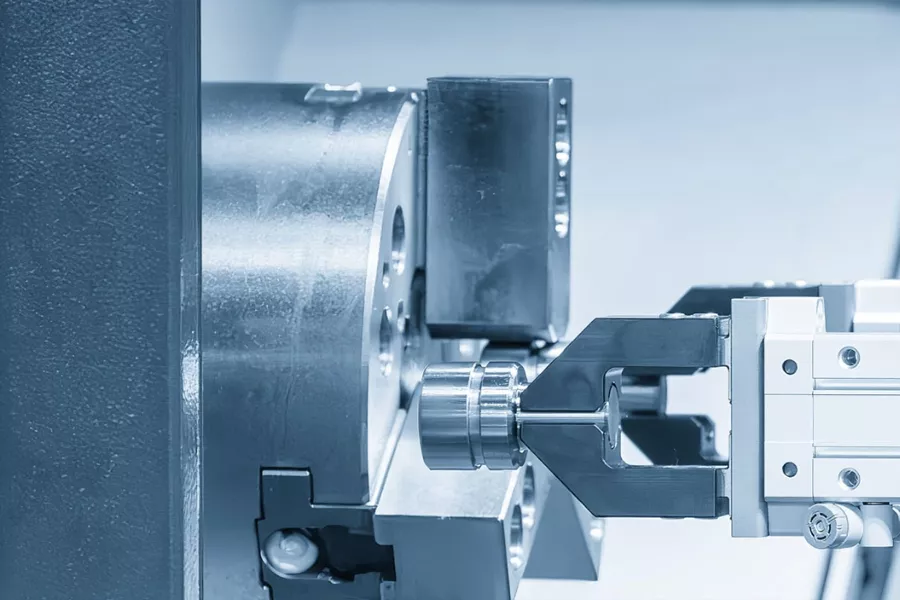
Technology is driving transformative changes in the medical device industry
Breakthroughs in precision machining technology are not only improvements in manufacturing accuracy but also the underlying engine driving innovation in the medical device industry. By achieving synergistic progress in four key dimensions—material processing, precision control, miniaturization, and surface treatment—it drives medical devices to realize 'three transformations': an upgrade from functional realization to efficacy enhancement through precise treatment, a morphological innovation from large-scale to miniaturized designs, and an iterative shift in design philosophy from prioritizing mechanical performance to emphasizing both biosafety and functional integration.
As the research and development of cutting-edge technologies such as electron beam machining and quantum metrology advance, future precision machining accuracy is expected to enter the sub-nanometer era (<10 nanometers), laying the foundation for disruptive applications such as nanorobot targeted drug delivery and cell-level diagnostic and therapeutic devices. The medical device industry will exhibit a development trend of \"technology defining products,\" with precision machining technology always serving as a core driving force, releasing greater value in improving medical efficiency and enhancing patient outcomes.