
What are the effects of temperature changes on CNC precision parts?
As is well known, the precision of CNC machined parts is an important factor in measuring the final quality of the product, so the requirements for precision are very important. During CNC machining, there are many reasons that can affect the precision of the components. Today, the editor will focus on talking about how temperature changes affect the machining accuracy of CNC parts.
1- The effect of temperature changes on materials;
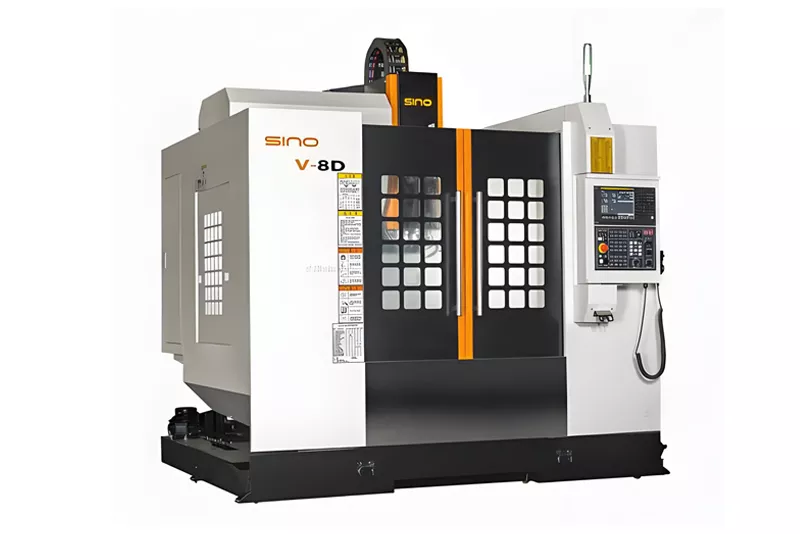
Temperature\" is also what we commonly refer to as \"thermal deformation\". The temperature changes we often encounter, such as the ambient temperature outside the workshop, the heat generated by electric motors, and the heat produced by friction from mechanical movement, can all cause temperature imbalance in different parts of a CNC machine tool. This, in turn, will affect the machining accuracy of the parts of the CNC machine tool.
Temperature changes cause detection errors
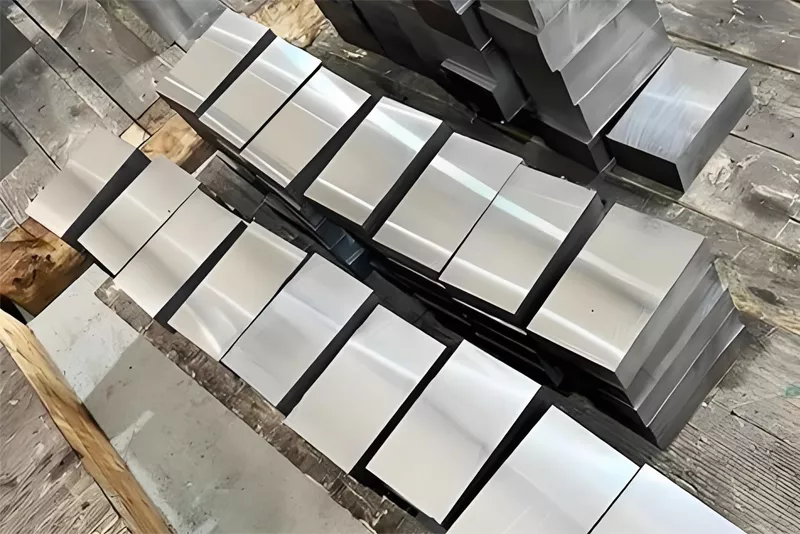
If the workpiece and the measuring instruments and gauges used during inspection are made of different materials, inspection errors will occur if the inspection is not carried out under standard temperature conditions (20°C).
Therefore, when inspecting high-precision parts, higher-precision measurement methods and instruments are required. Dong Guan Chang Yuanfeng possesses advanced measuring instruments such as three-coordinate measuring machines (CMM), spectrometers, 2D image measuring instruments, and other testing equipment. It conducts 100% full inspection of all finished products to ensure quality and precision.
3- Maintain thermal stability in CNC part machining
Under normal circumstances, even if the temperature drops rapidly, a certain amount of time is still needed to maintain accuracy. Especially for larger objects, more time is required to restore accuracy when there are temperature changes.
Generally, experienced factories pay great attention to workshop ambient temperature and machine tool thermal equilibrium. Even high-precision machine tools can only achieve stable machining accuracy under stable temperature and thermal equilibrium conditions.

Maintaining thermal stability is a crucial concept that must be thoroughly understood in precision machining. Some people may get hung up on whether the temperature should be kept at 20°C or 23°C, but in fact, what matters most is the ability to maintain a stable target value. Theoretically, the standard is usually set at 20°C, while in actual workshops it's generally maintained around 22–23°C—what's essential is strictly controlling temperature fluctuations.
Generally speaking, if the machined parts are relatively precise but not accurate, it may be caused by large temperature fluctuations in the workshop leading to significant precision dispersion. If the machined parts are accurate but not precise, it is likely that the temperature fluctuations in the workshop are small, but there is a large deviation from the standard temperature. If the parts are neither precise nor accurate, it indicates that the workshop temperature deviates significantly from both the standard temperature and the control requirements.
Small tip: Precision (also known as accuracy) refers to the reproducibility and consistency of results obtained from repeated measurements using the same backup sample. It is possible to have high precision but low accuracy. For example, when measuring a length of 2mm, three results are obtained: 2.053, 2.049, and 2.050. In this case, although the precision is high, the accuracy is not.
Accuracy refers to the degree of closeness between the measured result and the true value. High measurement accuracy means that the systematic error is small, the average value of the measurement data is close to the true value, but the magnitude of random errors is not clear.
Shop floor workers usually know that when starting machine processing each morning, the machining accuracy of the first piece is often not very good; after a long holiday, the first batch of parts processed upon restarting the machine often have unstable accuracy, with a very high probability of failure in high-precision machining, especially positional accuracy.
This is because CNC machine tools can only achieve stable machining accuracy in a stable temperature environment and thermal equilibrium state. Preheating the machine tool after startup is the most basic machining common sense.
The difference in machining accuracy of machine tools under long-term shutdown and thermal equilibrium states is very significant. This may be because, after running for a period of time, the spindle and various motion axes of the CNC machine tool maintain their temperature at a certain fixed level, and as the machining time changes, the thermal accuracy of the CNC machine tool tends to stabilize. This further highlights the importance of preheating the spindle and moving parts before machining.
If the machine tool is left idle for multiple days, it is recommended to preheat for more than 30 minutes before high-precision machining. If the machine tool is only left idle for several hours, it is recommended to preheat for 5-10 minutes before high-precision machining.
The preheating process should involve making the machine tool participate in the repeated movement of the machining axes, and it is best to perform multi-axis linkage. For example, move the XYZ axes from the lower-left corner of the coordinate system to the upper-right corner position repeatedly along the diagonal. When executing, a macro program can be written on the machine tool to make the machine tool repeatedly perform the preheating operation.
Only after the machine tool has been adequately preheated can it be put into high-precision machining production.
The above shows the important impact of temperature on processing accuracy. Then, how should temperature control be carried out?
A - Cooling Technology
Cooling technology is a very commonly used method. By cooling the workpiece and cutting tool, it can effectively reduce temperature, thereby minimizing the impact caused by temperature changes and improving machining accuracy. Cooling technology is divided into internal cooling and external cooling, which achieve the cooling purpose by transferring heat through liquids.
B - Cooling Time Control
Temperature reduction time control is a simple and commonly used method. By appropriately extending the cooling time, it can effectively control temperature changes, reduce thermal stress, and improve processing accuracy.
C-Temperature Monitoring
Temperature detection is a key link to fully understand the processing humidity situation, promptly control temperature changes, and improve processing accuracy. It is generally carried out by installing temperature sensors on machine tools for detection.
D-Processing Process Control
Process control during machining is a relatively comprehensive method that involves comprehensive control over multiple factors such as temperature and cutting parameters, and real-time monitoring and adjustment of these parameters during the machining process to achieve the purpose of controlling temperature and improving machining accuracy.
In conclusion, temperature is one of the important factors affecting machining accuracy. To ensure machining accuracy and product quality, temperature control is necessary. Common temperature control methods include cooling technology, control of cooling time, temperature detection, and machining process control. By combining these methods, temperature changes can be effectively controlled, thereby improving machining accuracy and product quality.