
Unveiling Precision Manufacturing and Machining Technologies: Practical Applications and Advantages of 4-Axis and 5-Axis Machine Tools
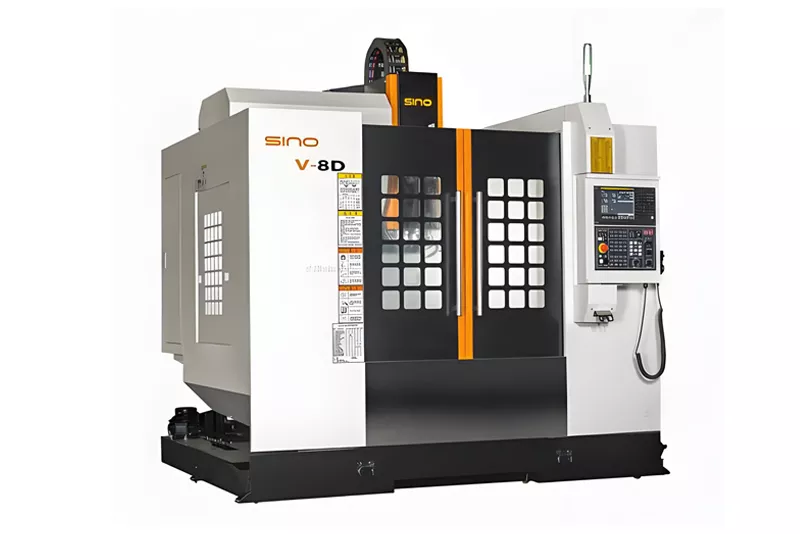
A four-axis machine tool is a precision manufacturing equipment that extends from traditional three-axis machine tools. It provides an additional rotational coordinate axis during the machining process, typically rotating around a fixed point of the workpiece. This design allows machining from multiple angles, thereby enhancing machining flexibility and efficiency. A four-axis machine tool generally consists of three linear movement axes (X, Y, Z) and one rotational axis, which is commonly referred to as a rotary table or indexing head. Such a structure enables the machining of complex-shaped parts, such as molds and aerospace components.
In terms of performance, four-axis machine tools offer better positioning accuracy and repeatability compared to three-axis machine tools. With an additional rotational axis, parts can be machined on multiple sides more conveniently, reducing the number of fixture changes required during the machining process. This also saves time, improves production efficiency, and minimizes errors introduced by manual operations.
Four-axis machine tools are widely used in fields such as aerospace, automotive manufacturing, medical equipment, and mold making. In these industries, we often require high-precision and highly complex components, which four-axis machine tools can precisely meet. Through this overview, we can see that four-axis machine tools not only enhance machining performance but also provide strong support for complex processes. In the following sections, we will further explore the characteristics of five-axis machine tools to better understand the differences and connections between the two.
Core Features of Five-Axis Machining Centers
Five-axis machine tools are an important processing equipment in modern manufacturing. Their core feature is the ability to perform machining simultaneously on five different axes. The standout advantage of such machine tools is the benefits of five-axis linkage precision manufacturing. Five-axis linkage technology allows us to avoid frequent repositioning of the workpiece, significantly improving machining accuracy and efficiency. This technology enables the cutting tool to move in multiple directions, facilitating the machining of more complex parts while ensuring uniform treatment of the work surface and meeting intricate design requirements. These advantages have led to widespread application of five-axis machine tools in high-precision fields such as aerospace, medical equipment, and mold manufacturing industries.
In terms of practical applications, we have found that five-axis machine tools are widely used in scenarios requiring high-precision and complex machining. They are not only suitable for processing light metals such as aluminum and titanium alloys but can also be used for cutting complex curved surfaces and high-strength materials. Therefore, whether in the automotive industry for manufacturing engine parts or in the medical field for producing surgical instruments, five-axis machine tools have demonstrated their irreplaceable importance. We are well aware that for manufacturing processes that need to balance production volume and precision, selecting appropriate five-axis equipment can significantly improve production efficiency and product quality.
The main differences between 4-axis and 5-axis machine tools
When exploring the main differences between four-axis and five-axis machine tools, we first focus on their differences in the number of motion axes. A four-axis machine tool typically consists of three linear axes and one rotational axis, while a five-axis machine tool adds a second movable rotational axis. This design enables five-axis machine tools to achieve more complex machining paths, thereby improving machining accuracy and surface quality. Secondly, in terms of machining flexibility, five-axis machine tools can perform cutting from multiple angles, significantly reducing the number of times workpiece fixtures need to be changed—a capability that four-axis machine tools find difficult to match.
In addition, four-axis machine tools are more suitable for processing relatively simple workpieces, ideal for planar cutting or simple cavity machining. For workpieces with complex shapes that require multi-angle machining, five-axis machine tools demonstrate significant advantages. In terms of production efficiency, since five-axis machine tools can complete multi-sided machining in a single setup, their overall work efficiency is noticeably higher than that of four-axis machines. We should also note that different types of precision manufacturing machine tools each have their own strengths in application areas. Four-axis machine tools are typically used in traditional manufacturing fields such as mold making and milling, while five-axis machine tools are widely applied in high-precision and advanced fields including aerospace, automotive manufacturing, and medical equipment.
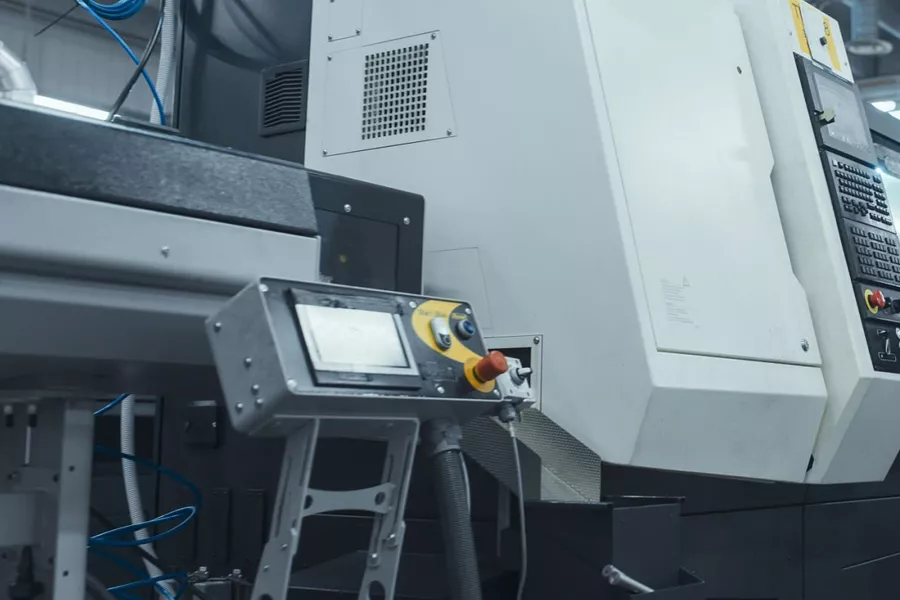
In summary, by comparing these two machine tools in terms of structure, flexibility, and application areas, we can gain a deeper understanding of their respective characteristics and the manufacturing needs they are suited for, which will be of great help in equipment selection and optimization.
Factors to Consider When Choosing the Right Machine Tool Type
When selecting between a four-axis or five-axis machine tool, multiple factors must be considered to ensure the chosen equipment meets specific production requirements. First, we must evaluate the complexity of the workpieces to be machined. For highly complex parts, a five-axis machine tool is typically more suitable, as it has the capability to machine multiple faces and angles simultaneously, significantly improving production efficiency. Conversely, if the workpiece structure is relatively simple, a four-axis machine tool may be more economical, with its excellent cost-performance ratio making it a preferred choice for many small and medium-sized enterprises.
Second, production capacity and batch size are also key considerations. Generally, five-axis machine tools perform exceptionally well in processing large batches of high-precision products, as they reduce the time required for workpiece transfer and fixture adjustment. We need to select appropriate equipment based on our production plans to achieve optimal economic results. Additionally, the proficiency level of technical personnel is an indispensable factor. If our team is not familiar with five-axis machine tools, a four-axis machine tool will be a more user-friendly and easier-to-learn option.
Furthermore, budget is one of the important factors we consider. Five-axis machine tools are typically more expensive, not only in terms of purchase cost but also including subsequent maintenance and operation training costs. Therefore, we need to carefully assess the company's financial status and whether it can afford the investment required for this type of machine tool.
Finally, changes in market demand should also be taken into account. Being able to flexibly respond to market changes can help enhance a company's competitiveness. By comprehensively considering these factors, we can more clearly determine the most reasonable choice between four-axis and five-axis machine tools, thereby achieving the goals of efficient and high-quality production.