
Turning and Milling: Definitions, Types, Operating Procedures, Differences, and Applications
With the development of numerical control technology, turning and milling technologies have made significant progress, achieving higher precision, automation, and complex operations. Each process has its unique methods and applications. Integrating both processes into multi-tasking machine tools allows for the efficient production of high-precision complex parts. This section introduces the two machining processes of turning and milling. Definitions of Turning and Milling
Turning:
Turning is a machining process where the cutting tool (typically a non-rotating tool) moves linearly while the workpiece rotates. This process primarily manufactures cylindrical parts by removing material from the outer surface of the rotating workpiece.
Milling:
Milling is a machining process where a rotating cutting tool moves over one or more workpieces to remove material. This process can create various features such as slots, holes, and complex contours. The cutting tools in milling can move along multiple axes.
Techniques and Methods of Turning and Milling
Turning Techniques
1. Traditional Lathe: A conventional machine tool where the workpiece rotates and the cutting tool is manually controlled by the operator.
2. CNC Lathe: Computer Numerical Control (CNC) lathes offer automated control, enabling precise, repeatable, and complex operations with minimal manual intervention.
3. Multi-Spindle Lathe: Lathes equipped with multiple spindles can machine multiple parts simultaneously, enhancing production efficiency.
4. Swiss-Type Lathe: Specialized for machining high-precision small parts, particularly those with complex geometries.
Turning Machining Methods
1. Straight Turning: Machining cylindrical parts by moving the cutting tool parallel to the axis of rotation.
2. Taper Turning: Forming conical shapes by moving the cutting tool at an angle to the axis of rotation.
3. Profile Turning: Creating detailed shapes with varying diameters using complex tool paths.
4. Facing: Cutting across the end of the workpiece to produce a flat surface.
5. Parting/Offsetting: Cutting a part away from the main workpiece.
6. Threading: Cutting a helical groove (thread) on the outer surface of the workpiece.
7. Boring: Enlarging an existing hole or internal surface.
8. Slotting: Cutting narrow slots or grooves into the workpiece.
Milling Technology
1. Traditional Milling Machine: Traditional milling machines are manually operated by the operator to control the movement of the cutting tool and the workpiece.
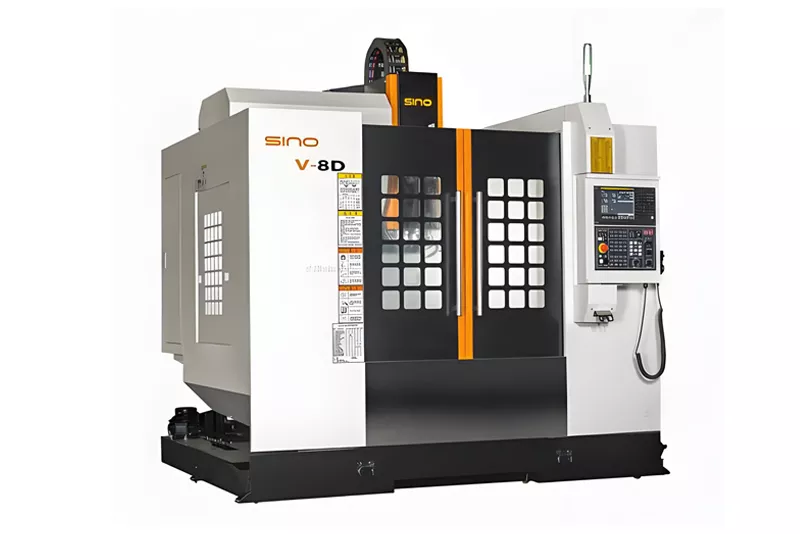
2. CNC Milling Machine: CNC milling machines automatically and precisely control the movement of the tool and workpiece, enabling complex operations with high repeatability accuracy.
3. Vertical Milling Machine: The cutting tool is vertically positioned and is typically used for face milling, end milling, and drilling.
4. Horizontal Milling Machine: The cutting tool is horizontally positioned, suitable for heavy-duty cutting operations and machining of large parts.
5. Multi-axis Milling Machine: Machining centers with three, four, or five axes capable of performing complex three-dimensional machining operations.
Milling Machining Methods
1. Face Milling: Uses the tool surface to cut, forming a flat surface on the workpiece.
2. Peripheral Milling: Uses the outer edge of the tool to cut, used for machining deep grooves, contours, and complex surfaces.
3. End Milling: Uses end mills to create slots, grooves, holes, and complex three-dimensional shapes.
4. Profile Milling: Machines the part contour to achieve the desired shape.
5. Slot Milling: Cuts slots or grooves into the workpiece.
6. Plunge Milling: The cutting tool enters the workpiece vertically, suitable for machining deep cavities.
7. Gear Milling: Produces gear teeth using specialized milling cutters.
8. Chamfer Milling: Creates beveled edges or chamfers on the workpiece.
9. Thread Milling: Generates threads using a rotating tool that moves along the workpiece.
1. Turning and Milling Centers: These advanced machine tools integrate turning and milling functions, enabling the machining of complex parts in a single setup. This integration enhances efficiency, reduces setup time, and improves accuracy.
2. Live Tools: On CNC lathes, live tools allow milling, drilling, and tapping operations without removing the workpiece from the lathe. This increases the flexibility and capabilities of turning operations.
3. Multitasking Machines: Machine tools capable of performing turning, milling, and additional processes such as grinding or laser cutting in a single setup can boost versatility and productivity.
As CNC technology has advanced, turning and milling technologies have made significant progress, achieving higher precision, automation, and complex operations. Each process has its unique methods and applications. Combining both processes in multitasking machines enables the efficient production of high-precision complex parts.
What is the difference between turning and milling?
Motion
Turning: The workpiece rotates, while the cutting tool remains stationary except for linear feed motion.
Milling: The cutting tool rotates and moves relative to the stationary workpiece along multiple axes.
What types of parts are suitable for turning and milling?
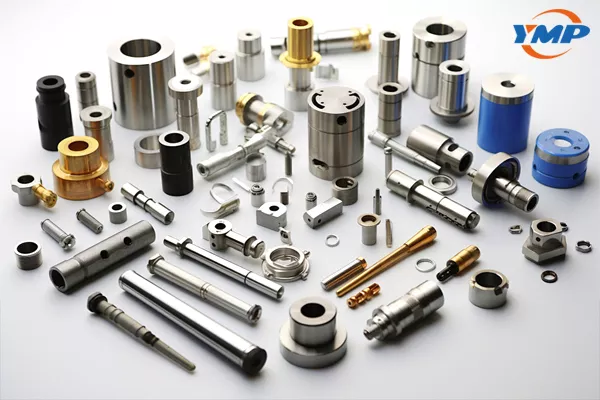
Turning: Suitable for producing cylindrical parts, shafts, bolts, and screws.
Milling: Suitable for machining complex shapes, slots, pockets, gears, and intricate details on flat or irregular surfaces.
What are the differences between turning and milling processes?
Tool Usage
Turning: Uses a single-point cutting tool.
Milling: Uses a multi-point cutting tool.
Material Removal
Turning: Material is removed by a fixed tool as the workpiece rotates.
Milling: Material is removed by moving a rotating tool over the workpiece.
Setup
Turning: Typically involves clamping the workpiece between a chuck or centers, resulting in a simpler setup.
Milling: Usually requires more complex fixtures to secure the workpiece.
What are the applications of turning and milling?
Turning
- Production of shafts, bushings, pulleys, and threaded components.
- Manufacturing of precision cylindrical parts.
- Common in rotational parts for automotive, aerospace, and general manufacturing industries.
Milling
- Manufacturing of parts with complex geometries and multiple features.
- Common in aerospace, automotive, mold making, and custom machining industries.
- Used to produce components with intricate details such as engine blocks, molds, and mechanical parts.
Understanding the differences between turning and milling and their appropriate applications allows for selecting the correct machining process to achieve desired results in terms of precision, efficiency, and cost-effectiveness.
What are the advantages and disadvantages of turning and milling processes?
Advantages and Disadvantages of Turning:
Advantages:
1. High Precision: Turning can achieve very tight tolerances and excellent surface finish, making it suitable for producing precision components.
2. High Efficiency for Cylindrical Parts: It is highly efficient for producing cylindrical parts such as shafts, rods, and bolts.
3. Versatility: It can handle various materials, including metals, plastics, and composites.
4. Cost-Effective: For mass production of simple, symmetrical parts, turning is more cost-effective than other machining processes.
5. Simpler Tools: Compared to other machining processes, it typically requires simpler tools, reducing setup time and costs.
Disadvantages:
1. Limited to Rotational Parts: Primarily suitable for parts with rotational symmetry, thus limited to cylindrical parts.
2. Material Waste: Significant material removal generates substantial waste, especially for large workpieces.
3. Surface Finish Challenges: Achieving good surface finish can be challenging for long or slender workpieces due to potential deformation or vibration.
4. Tool Wear: Single-point cutting tools wear quickly, particularly when machining hard materials, requiring frequent replacement.
Advantages and Disadvantages of Milling:
Advantages:
1. Complex Geometries: Capable of producing a variety of complex shapes, including slots, holes, pockets, and intricate contours.
2. Multi-Axis Machining: Modern CNC milling machines can move along multiple axes, enabling three-dimensional machining and the production of fine parts.
3. Flexibility: Suitable for both small-batch and mass production as well as prototyping.
4. Diverse Cutting Tools: A range of cutting tools and tool paths can be used, making it adaptable to different machining operations.
5. High Material Removal Rate: Effectively removes material from the workpiece, reducing production time for complex parts.
Disadvantages:
1. Complex Setup: Requires more complex fixtures and setup compared to turning, increasing preparation time and costs.
2. Higher Cost: Milling machines and their associated tools are generally more expensive than lathes.
3. Surface Finish: Achieving fine surface finish is more challenging compared to turning, especially on flat surfaces.
4. Tool Wear: Multi-point cutting tools used in milling wear quickly, particularly when machining hard materials, necessitating frequent tool changes.
5. Part Size Limitations: The size of the milling machine limits the dimensions of the parts that can be machined, especially for large workpieces.
Summary
Turning is highly effective for producing high-precision, efficient cylindrical parts but is limited to rotationally symmetric shapes. Turning typically has lower setup costs but generates significant material waste.
Milling excels at machining complex geometries and detailed features, offering great flexibility and capability for three-dimensional machining. However, milling requires more complex and expensive setups and may find it challenging to achieve the same fine surface finish as turning in some cases.
The choice between turning and milling depends on the specific requirements of the part being machined, including geometry, size, required tolerances, and production volume.