
The Ultimate Guide to Custom Machining: 7 Key Strategies for High-Precision Manufacturing
Against the backdrop of rapid development in modern industry, the demand for components that fully meet design specifications has never been more urgent. For high-performance applications such as aerospace, medical technology, automotive engineering, or consumer electronics, off-the-shelf standard parts often fail to meet the requirements. This is precisely why custom machining has become a core driver of innovation.
As a professional manufacturer in the manufacturing field, Chang Yuanfeng Precision deeply understands that transforming a raw material into a high-performance functional component requires not only exquisite engineering capabilities but also the combination of experience and craftsmanship. This article will delve into the core logic of custom machining, help you understand its process essence, and clarify why it is an indispensable key link for your next project.
1. What is Custom Machining?
At its core, custom machining is a subtractive manufacturing process. Unlike additive manufacturing (such as 3D printing), which builds up layers to form a shape, machining achieves the desired form, dimensions, and surface finish by removing excess material from a solid raw material block (the workpiece).
The essence of 'custom' lies in:
These parts are not mass-produced standard items but are tailored specifically according to the customer-provided CAD drawings and technical specifications.
The importance of custom machining is that it completely bridges the gap between design drawings and physical products. Whether for single-piece sample validation or small-batch production of complex structures, custom machining ensures the finished product strictly adheres to design tolerances, with precision often controllable at the micrometer level. This is why machining consistently outperforms injection molding or 3D printing processes in high-strength and high-reliability applications.
2. The Critical Role of CNC Lathe Services
In the field of machining, CNC turning is one of the indispensable core processes. For any cylindrical or rotating parts, CNC lathe services are almost always the preferred solution.
During the turning process, the workpiece rotates at high speed while the cutting tool remains relatively stationary, removing material through precise feed. This method is particularly suitable for manufacturing rotational parts such as shafts, pins, bolts, and sleeves.
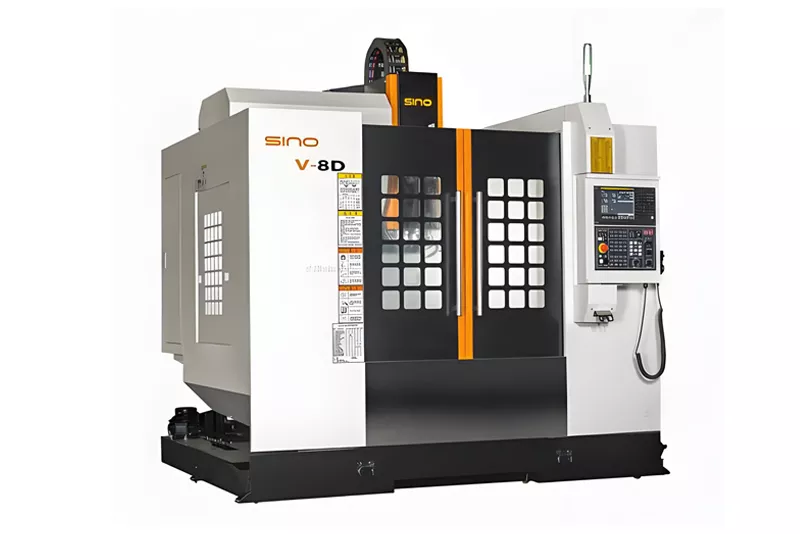
Modern CNC lathes are typically equipped with multi-axis and powered tool systems, enabling multiple operations including turning, milling, drilling, and tapping to be completed in a single setup.
For product design engineers, a thorough understanding of the capabilities and limitations of CNC lathe services allows for the realization of more coaxial structures, multi-step diameters, and complex internal and external threads during the design phase, significantly enhancing design freedom.
Furthermore, CNC turning offers extremely high repeatability and production efficiency, making it suitable for both small-batch customizations and large-scale production, ensuring a high degree of consistency for every part.
3. Widespread Applications of Machined Parts
Machined parts are ubiquitous.
They are hidden inside car engines, form the metal casings of smartphones, and are used in precision instruments for life-saving medical surgeries.
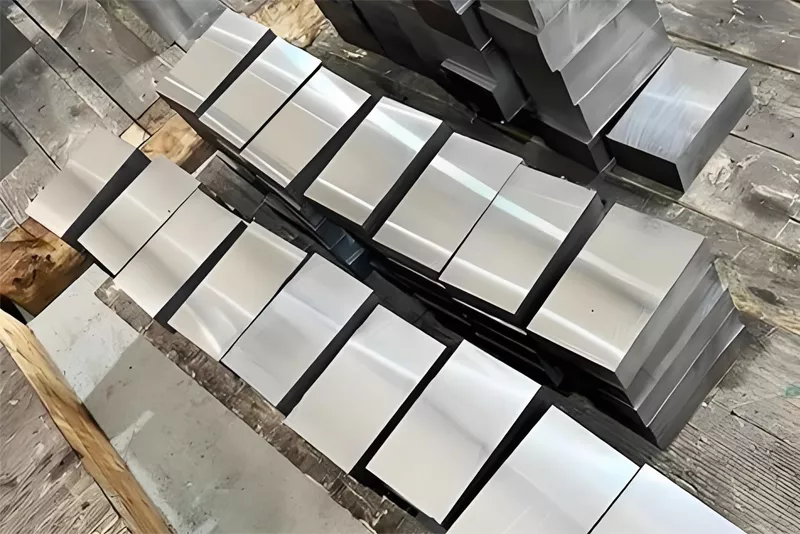
One advantage of custom machining lies in its strong material adaptability.
Common machining materials include:
Aluminum alloys
Stainless steel
Brass
Titanium alloys
At the same time, high-performance engineering plastics (such as PEEK, POM, nylon) are also frequently used in special application scenarios requiring insulation, wear resistance, or weight reduction.
The final quality of machined parts depends on both equipment precision and the experience of engineers and technicians.
Surface treatment options range from \"machined as-is\" to sandblasting, anodizing, and even mirror polishing, meeting functional requirements while conforming to aesthetic needs, making them particularly suitable for consumer products.
4. Core Logic of Metal Part Manufacturing (Manufacturing of Metal Parts)
Metal part manufacturing encompasses various process routes, but in scenarios requiring high precision and high strength, machining remains an irreplaceable mainstream solution.
When customers have metal part requirements, the selection of manufacturing processes typically depends on the part structure and usage environment. For example:
Die casting is suitable for large-volume, relatively simple parts.
However, machining is clearly more advantageous in terms of strength, dimensional stability, and precision.
In CNC milling, rotating cutting tools machine fixed workpieces, making it highly suitable for block-shaped parts with holes, slots, and complex three-dimensional contours.
Experienced manufacturers also provide professional advice on material selection:
6061 Aluminum Alloy: Excellent machinability, corrosion-resistant, suitable for general structural components.
304 Stainless Steel: Good hygiene performance, commonly used in food and medical industries.
5. Synergy Between Metal Fabrication and Machining (Metal Fabrication Parts)
It is important to note that machining and fabrication are not opposing processes but highly complementary.
Metal fabrication parts are typically formed through methods such as laser cutting, bending, and welding, while machined parts are often integrated into these structures to provide high-precision interfaces.
For example:
Machined mounting surfaces on a fabricated metal frame to ensure motor flatness
Secondary machining of welded structural components before assembly to guarantee planarity and coaxiality
By appropriately combining the cost advantages of fabrication with the precision advantages of machining, manufacturers can significantly optimize overall manufacturing costs without compromising quality.
6. Complexity of Metal Part Assemblies
In real-world engineering projects, almost nothing consists of a single part; instead, they are metal assemblies composed of multiple components.
Successful assembly relies on a deep understanding of 'assembly tolerances'.
If shafts and holes are machined to exactly the same size, they will not fit together smoothly.
Experienced engineers select appropriately based on actual requirements:
Interference fit
Transition fit
Clearance fit
and precisely control dimensions during the part machining stage to ensure smooth and reliable final assembly.
The ability to complete both part machining and complete machine assembly is an important indicator of whether a manufacturer possesses system capabilities.
7. Core Advantages of Professional Custom Machining
Why Are More and More Engineers and Procurement Managers Choosing Professional Custom Machining Services?
High Precision:
Modern CNC equipment can achieve machining tolerances of ±0.001mm, ensuring that the functionality fully meets design expectations.
Strong Scalability:
From single sample production to mass manufacturing, there is no need for high upfront costs associated with mold processes.
Stable Material Properties:
Machining directly uses solid materials, and the original mechanical properties are maintained after processing.
High Design Freedom:
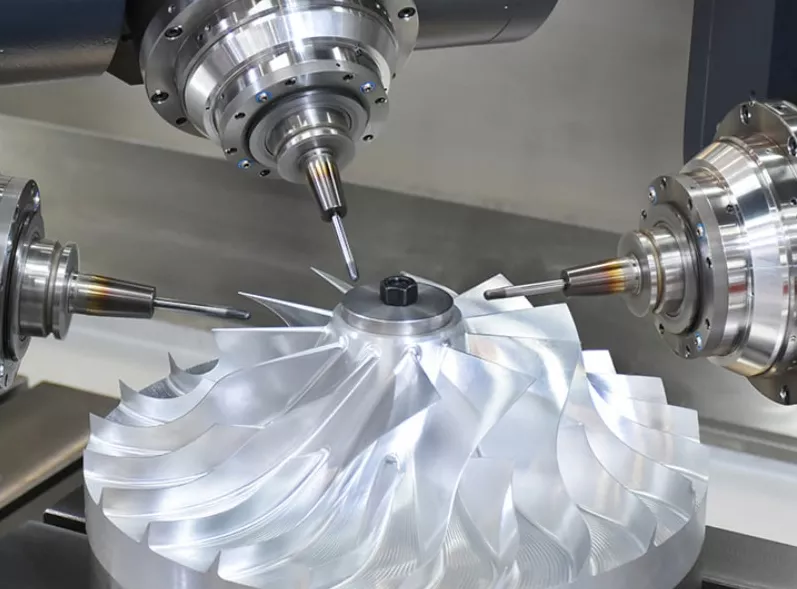
Five-axis machining technology can almost realize any complex structure that can be modeled.