
The Evolution of CNC Lathes: From Simple Turning to Complex Parts
Numerical control lathes play an important role in various manufacturing processes. Currently, modern numerical control lathes offer numerous advantages. These most advanced machines can effortlessly produce precision parts with consistent accuracy. However, before the integration of computerized technology, lathes already had a rich history spanning several centuries.
The lathe is one of the earliest functional machines in manufacturing. It uses longitudinal and horizontal movements to produce cylindrical parts. Lathes shape and modify rotating workpieces held in a chuck, producing functional end products.
The evolution of these machines, starting from manual tools and developing into complex CNC machining, is indeed remarkable. In this exam, you will embark on a journey to trace the history of CNC lathes, witnessing their transformation from basic turning to the precision production of complex parts.
Early manual lathes
Lathe machining involves the complex interaction between the rotational motion of the workpiece and the linear motion of the cutting tool. The origins of lathe machining can be traced back to ancient times, when clever humans used ropes to rotate wood and shaped it with hand tools.
During the Industrial Revolution, when there was a surge in demand for various metal products, the key role of lathe machining became more prominent. Lathes played an important role in meeting these production needs. Subsequently, with the advent of steam engines and the combination of belts and gears, the era of all-gear high-speed lathes arrived.
By now, CNC lathe processing equipment has gradually replaced traditional lathes. This technological shift has doubled production efficiency and significantly improved the precision of part machining. In today's era, adopting CNC lathe technology is an important aspect of national modernization and a key indicator of progress and efficiency in manufacturing.
Basic Design and Function of a Lathe Machine
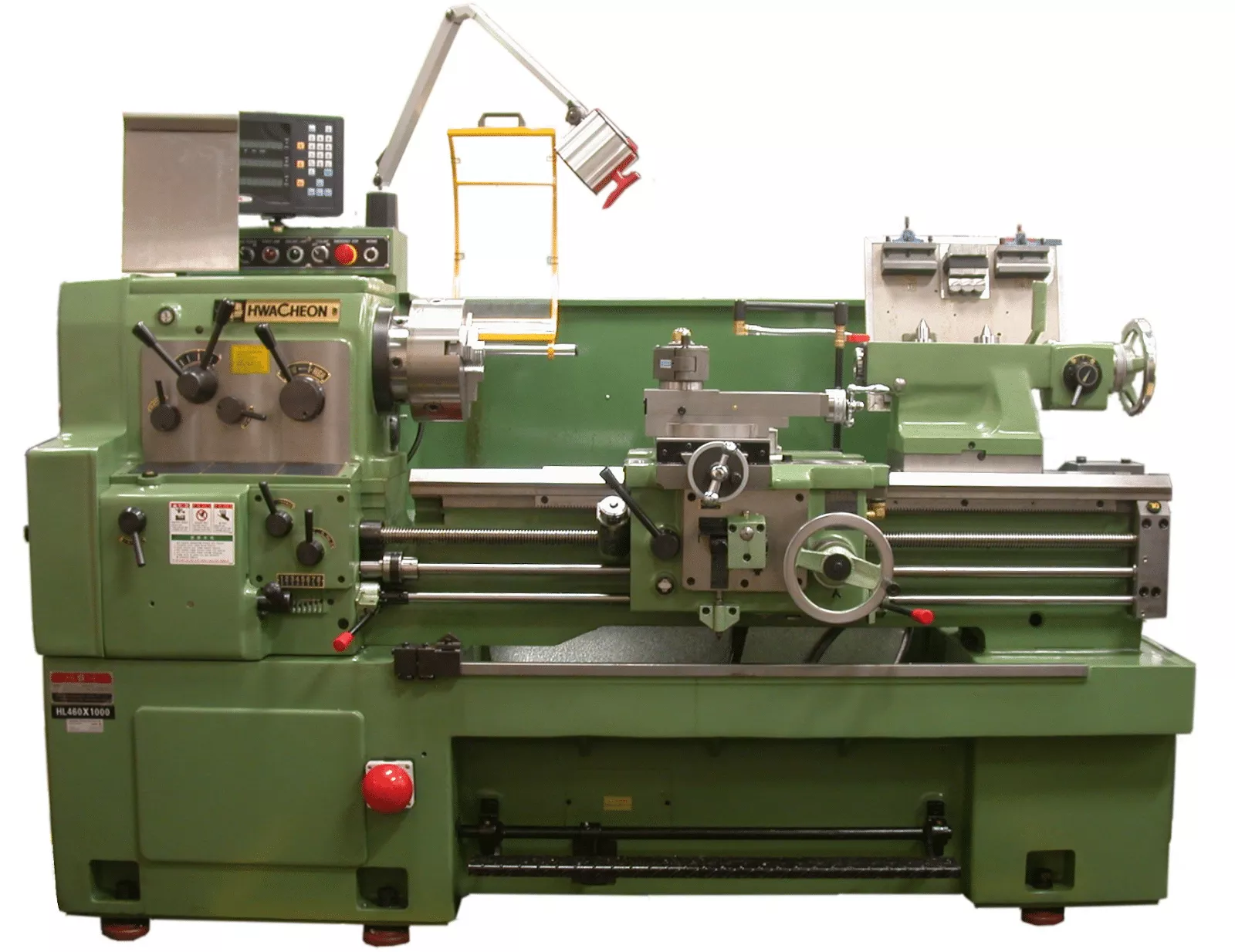
Lathe machines are versatile tools widely used for shaping and machining tasks, especially for turning cylindrical workpieces. Their basic design and operation remain consistent, providing a fundamental understanding of their functionality.
Bed
The bed of a manual lathe serves as a sturdy foundation, ensuring the stability and rigidity of the entire machine. It is typically made of cast iron, providing a solid base for mounting critical components. Guide ways or rails are embedded within the bed, facilitating smooth movement of the carriage and tailstock during machining processes. This structure is crucial for the overall integrity of the lathe and makes a significant contribution to its precision and reliability.
Spindle Box
The spindle box is located at one end of the bed and plays a crucial role in the operation of the machine tool. It is equipped with the spindle, which is the key component responsible for the rotational movement of the workpiece. The spindle box is fitted with chucks or collets to securely hold the workpiece, providing the flexibility to clamp various types of workpieces. The ability of the spindle box to offer variable spindle speeds is essential for adapting to different machining requirements.
Carriage
The tool post is mounted on the bed and is a complex assembly consisting of a saddle, a cross slide, and the tool post itself. The saddle supports the cutting tool and can move longitudinally along the bed, facilitating the machining of workpieces of different lengths. The cross slide moves perpendicular to the spindle axis, enabling precise control over depth and diameter, thereby enhancing the lathe's versatility. The inclusion of the tool post allows for efficient and rapid tool changing, an important function for adapting to various machining requirements.
Control device and apron
Manual lathes rely on controllers, handwheels, and levers to help operators adjust basic parameters. The apron is a component of the carriage and is equipped with mechanisms that control the movement of the carriage. This includes the feed rod, half nuts, and engagement lever, which are particularly important for thread cutting. The skill with which operators manipulate these controls determines the accuracy and quality of the machining process.
Tool Post and Lubrication
The tool post serves as the mounting point for cutting tools. Its adjustability allows for precise control of the tool's height and angle, which is beneficial for machining workpieces with different contours. Adequate lubrication is crucial for the smooth operation and extended service life of manual lathes. An integrated lubrication system ensures that moving parts experience minimal friction, thereby improving overall performance while reducing wear.
Detailed Explanation of the Limitations of Manual Lathe Operation
Although manual lathes are widely used and versatile, they also have certain limitations that affect their operation. Below is a detailed explanation of some key limitations:
Limited Automation
Manual lathes lack the advanced automation features that CNC lathes possess. Operators must manually control the spindle speed, feed rate, and tool movement, which slows down the machining process. This manual intervention increases the likelihood of errors and requires operators to have more skills and attention. Tasks that can be efficiently automated on CNC lathes need to be carefully performed manually on manual lathes.
The complexity of precision
Achieving and maintaining high precision in machining tasks presents a challenge for manual lathes. Fine adjustments largely depend on the operator's skills and experience, especially when dealing with complex workpieces or intricate geometries. Without digital control and feedback systems, consistently replicating precise dimensions becomes significantly more difficult. Human factors introduce variability, affecting the overall accuracy of the machining process.
Time-consuming setup
Setting up a manual lathe for new machining operations is very time-consuming. Adjusting the tool position, securing the workpiece, and configuring various control devices all require meticulous attention to detail. Unlike CNC lathes, which can simplify setup through pre-programmed instructions, manual lathes require manual adjustments, thereby extending delivery times. This limitation makes them less efficient in large-scale production where quick setup is critical.
Early CNC lathes and their functions
Early numerical control (NC) lathes, developed in the mid-20th century, marked a significant shift from manual machining to automated processes. These early versions laid the foundation for more advanced computer numerical control (CNC) lathes that followed. Below is an overview of early NC lathes and their functions:
Punched tape programming
Early CNC lathes used punched tapes as a programming method. Operators created sequences of instructions by punching holes in the paper tape. These tapes contained codes that guided the movement of cutting tools, workpiece positioning, and other parameters.
Limited programming ability
Compared to modern CNC systems, the programming capabilities of early CNC lathes were relatively basic. Instructions were limited to simple geometric shapes, linear movements, and basic tool path commands. Programming required specialized knowledge, and changes to the machining process involved physical modifications to the punched tape.
Improve accuracy and repeatability
Despite its limitations, early numerically controlled lathes offered higher precision and repeatability compared to manual lathes. The ability to follow pre-determined instructions reduced human error, resulting in more accurate machining outcomes. This was particularly advantageous for industries requiring consistent part dimensions.
Single-axis control
Early CNC lathes typically used single-axis control, allowing movement along the X-axis. This limited the complexity of machined parts because multi-axis functionality had not yet been integrated.
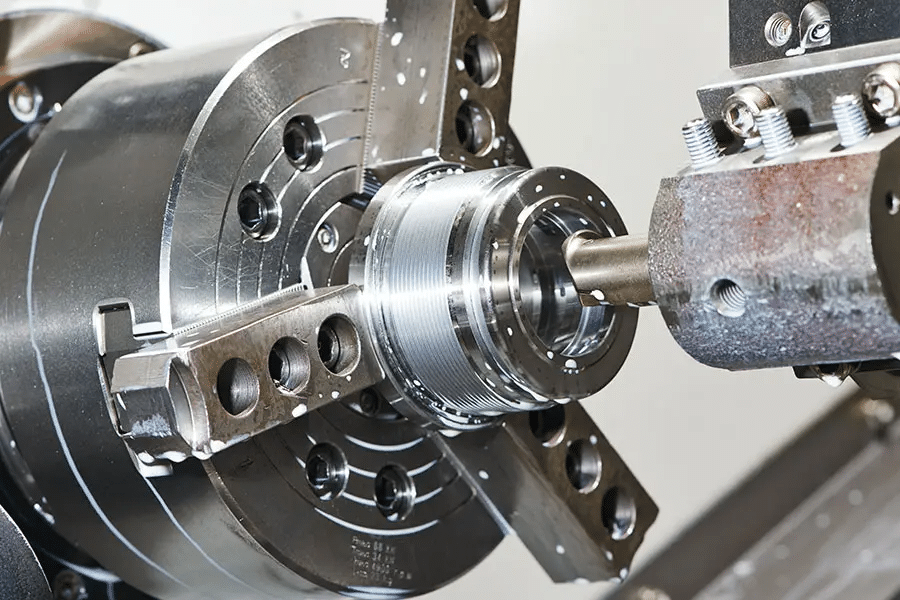
Modern CNC Lathe
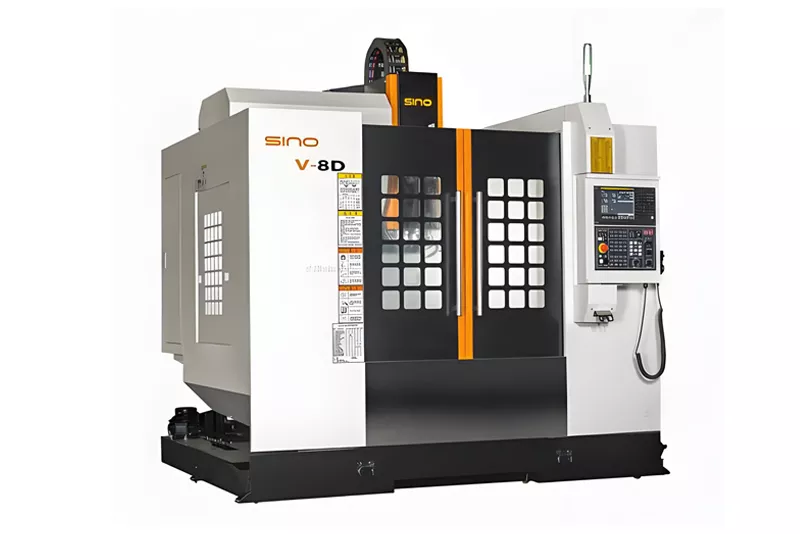
CNC lathes have made significant progress, incorporating the most advanced features to improve the precision, versatility, and efficiency of the machining process. Below is a detailed insight into key aspects of modern CNC lathes under the specified subheadings.
Control system
Digital control achieves precision
A notable feature of modern CNC lathes is their advanced digital control system. These systems utilize digital data input to achieve unprecedented precision in controlling spindle speed, tool movement, and workpiece positioning. The transition from analog control to digital control has significantly improved the accuracy and consistency of the machining process.
User-friendly programming interface
Modern CNC lathes typically feature intuitive graphical user interfaces (GUIs). These interfaces serve as user-friendly platforms for operators to program, monitor, and adjust machining parameters. The integration of advanced programming interfaces not only enhances accessibility but also simplifies complex tasks, placing even greater emphasis on user-centered design.
Adaptive control algorithm
Modern CNC lathes use control systems equipped with adaptive algorithms. These algorithms continuously analyze real-time data from sensors and dynamically adjust parameters such as cutting speed and tool path to optimize the machining process. This adaptive capability ensures efficiency and responsiveness under different machining conditions.
More advanced processing capabilities
The multifunctionality of multi-axis machining
Modern CNC lathes can handle multi-axis machining, allowing movement along multiple axes simultaneously. This enhanced functionality broadens the machine's versatility, enabling the production of complex parts with intricate geometric shapes. Multi-axis machining has proven particularly advantageous for industries that require high-precision components.
Power tool for expansion operations
Power tools are a prominent feature of modern CNC lathes, enabling operations beyond traditional turning. Lathes equipped with power tool functionality can seamlessly perform milling, drilling, and tapping operations on the same machine without the need for secondary processing. This improves operational efficiency and expands the range of potential machining operations.
Integrated automation technology
Seamless tool changing is achieved through an automatic tool changing device
Automatic tool changing devices have become a standard feature of modern CNC lathes. These systems enable rapid automatic switching between cutting tools during machining operations. Automatic tool changing devices enhance the machine's adaptability to different machining requirements and reduce downtime associated with manual tool changes.
Precise control through a programmable cooling system
Modern integrated cooling systems for CNC lathes are programmable and can precisely control flow rate and spray pattern. This programmability ensures optimal cutting temperature is maintained, thereby extending tool life and improving machining quality.
CNC Lathe: High productivity and wide range of applications
Fast and precise processing
CNC lathes are renowned for their exceptional speed and precision in machining operations. Equipped with advanced digital control systems, they facilitate rapid and accurate tool movement and precise workpiece positioning. This not only shortens production time but also ensures a consistently high level of precision, thereby establishing CNC lathes as an important tool in modern manufacturing processes.
Economically producing complex parts
The key advantage of CNC lathes is their ability to economically and efficiently manufacture complex parts. The inherent precision and versatility of these machines enable the easy creation of complex geometries and components. Implementing automation and programmability on CNC lathes can streamline the manufacturing process, reduce labor costs, and make complex parts more economically feasible.
Adaptability across industries
CNC lathes demonstrate impressive adaptability, capable of meeting the diverse needs of various industries. Whether deployed in aerospace, automotive, medical, or other fields, these machines can be programmed to process a variety of materials and perform machining processes of different complexities. The adaptability of CNC lathes ensures their continued relevance and practicality across different manufacturing sectors, making them a versatile asset that can meet the unique requirements of each industry.