
The Development History of CNC Machine Tools and Future Trends in Precision Manufacturing
In modern industrial manufacturing, precision manufacturing and numerical control (NC) machine tools have become important pillars supporting high-end manufacturing. Whether in aerospace, automotive, semiconductors, medical equipment, or the field of life sciences, the application of NC machine tools continues to drive advancements in manufacturing technology. This article will take you back to review the development history of NC machine tools, their key role in precision manufacturing, and explore their future trends.
Definition of Precision Manufacturing and CNC Machine Tools
Precision manufacturing refers to the manufacturing process that produces high-quality, high-precision products using high-precision and high-efficiency processes and equipment. Its characteristics are that the dimensional and shape tolerances of the products must be strictly controlled to meet the requirements of specific industries for precision, stability, and reliability.
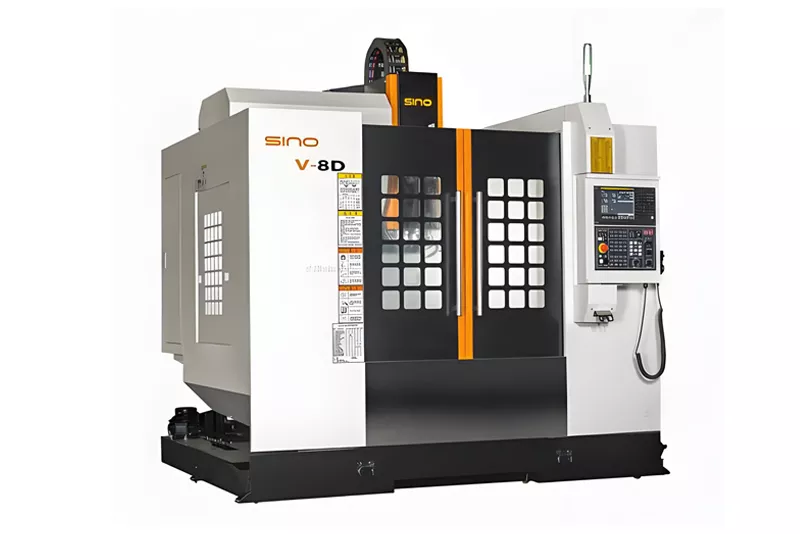
CNC machine tools, also known as computer numerical control machine tools, are automated mechanical equipment controlled by computers. CNC machine tools have unprecedentedly improved the precision, complexity, and repeatability of the machining process, playing a crucial role in modern precision manufacturing.
The Development History of CNC Machine Tools
The early era of manual machine tools (early 20th century)
At the beginning of the 20th century, traditional manual machine tools were widely used in various manufacturing industries. However, due to the limitations of manual operation, workers' technical proficiency directly affected machining accuracy and production efficiency, failing to meet the growing industrial demands.
2. The Birth of Numerical Control Technology (1940s)
The prototype of numerical control machine tools emerged in the 1940s, when MIT (Massachusetts Institute of Technology) in the United States first proposed the concept of 'numerical control', with the aim of using computers to control the movement of machine tools. The earliest numerical control machine tools used punched card technology, where programs controlled the movement trajectory of the machine, thereby greatly improving machining accuracy and production efficiency.
3. The Popularization of CNC Machine Tools (1960s-1970s)
With the development of computer technology, numerical control (NC) technology has gradually matured and entered the stage of large-scale industrial production in the late 1960s to early 1970s. Especially in high-precision manufacturing fields such as aviation and automotive, the application of NC machine tools has greatly improved the automation, accuracy, and efficiency of production processes.
4. High-precision and multi-functional CNC machine tools (1990s)
Entering the 1990s, with further advancements in computer hardware and software technology, the functions of CNC machine tools have gradually become more diverse. In particular, the emergence of five-axis CNC machine tools has enabled CNC machine tools to perform machining simultaneously in multiple directions, significantly improving machining accuracy and complexity, and meeting the requirements of higher industrial applications.
5. Intelligence and Automation (Early 21st Century to Present)
Entering the 21st century, the intelligence and automation level of CNC machine tools have been significantly improved. By integrating the Internet of Things (IoT), big data analysis, and artificial intelligence (AI), modern CNC machine tools can not only achieve precision machining but also perform real-time monitoring, data collection, and analysis, thereby realizing intelligent manufacturing and automated production.
The role of CNC machine tools in precision manufacturing
The application of CNC machine tools in precision manufacturing not only improves production efficiency but also promotes the production of high-end technology products. Here are several key roles of CNC machine tools in the field of precision manufacturing:
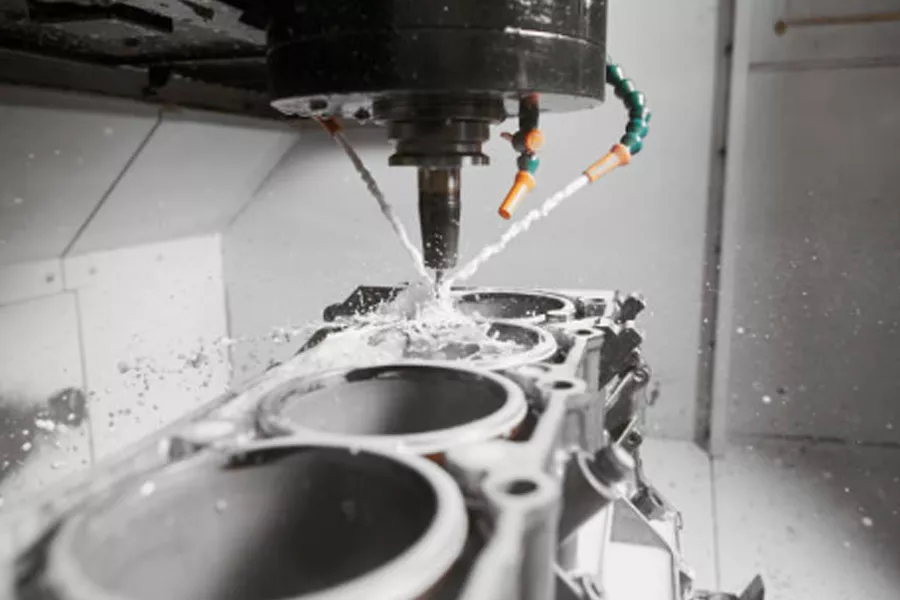
High-precision machining: One of the main advantages of CNC machine tools is their ability to achieve high-precision machining, even reaching micrometer-level tolerances. This allows their application in fields such as aerospace, automotive, and medical equipment to ensure the production of products that meet strict quality standards.
Complex Structural Component Machining: As product designs continue to become more complex, traditional machine tools can no longer meet the machining requirements for complex structural components. CNC machine tools, with their multi-axis and automated functions, can easily handle the machining of complex curved surfaces and irregular parts, and are widely used in high-end equipment manufacturing.
High-efficiency production capacity: CNC machine tools can not only greatly improve production efficiency but also enable unattended production. Especially in the production process of products that require long-time and repetitive machining, the advantages of CNC machine tools are particularly obvious.
Flexible Manufacturing: CNC machine tools can adjust their machining programs according to different processing requirements to enable flexible production. This makes them highly competitive in precision manufacturing with small batch sizes and a variety of products, meeting the personalized needs of different industries.
Future Development Trends of CNC Machine Tools
As technology advances, numerical control machine tools will continue to develop towards greater intelligence, automation, and high precision. Here are several main trends in the future development of numerical control machine tools:
Intelligent Manufacturing: Future CNC machine tools will be deeply integrated with technologies such as artificial intelligence, the Internet of Things, and big data to achieve autonomous learning and intelligent decision-making. For example, by real-time monitoring of the production process and automatically adjusting machining parameters, CNC machine tools can optimize the machining process in real time and reduce human intervention.
Green Environmental Protection: As environmental requirements increase, the design of future CNC machine tools will place greater emphasis on energy efficiency and resource utilization efficiency. CNC machine tools that are highly efficient, energy-saving, and reduce waste and emissions will become the trend of industry development.
Multifunctionality and Modularity: CNC machine tools will gradually develop towards multifunctionality, for example, a single machine tool can complete various processes such as milling, grinding, and drilling. In addition, modular design will enable machine tools to be quickly configured and adjusted under different production requirements.
Miniaturization and Nanofabrication: As the demand for precision machining continues to rise, future CNC machine tools will further reduce in size, driving machining capabilities at the micrometer and nanometer levels. Miniaturization and nanofabrication technologies will be applied to more refined and precise product manufacturing fields.
Conclusion
The birth and development of CNC (Computer Numerical Control) machine tools have greatly advanced the progress of precision manufacturing technology. Today, CNC machine tools are not merely manufacturing equipment; they have become a core component of modern industrial production, widely used in various high-precision manufacturing fields. In the future, with the continuous advancement of technology, CNC machine tools will embrace more development opportunities in areas such as intelligence, automation, and green manufacturing, propelling the precision manufacturing industry to new heights.