
Multi-axis linkage technology for profile machining centers: Enabling precision machining of complex components.
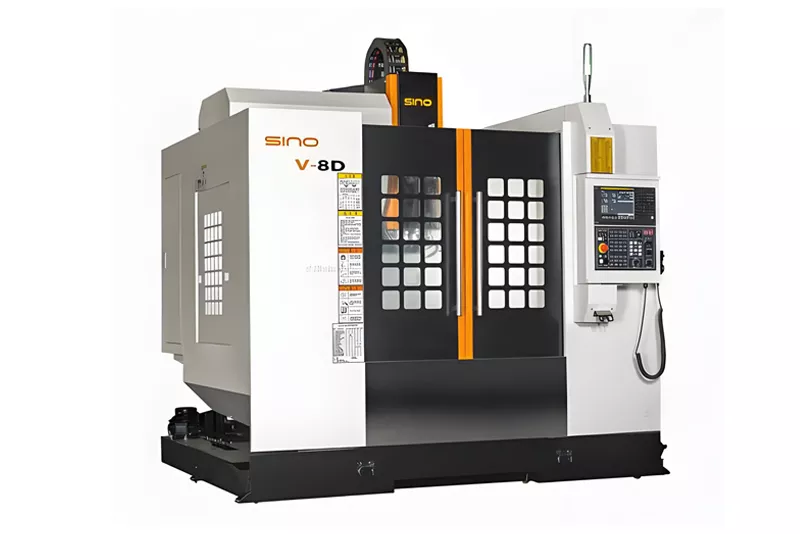
In modern manufacturing, the multi-axis linkage technology of profile processing equipment provides strong support for the precise machining of complex shapes. This technology not only improves processing efficiency but also ensures the high precision and consistency of workpieces. With the advancement of technology, an increasing number of industries, such as aerospace, automotive manufacturing, and construction engineering, are experiencing growing demand for profile processing, while the requirements for precision and complexity are also continuously rising. As a result, multi-axis linkage technology in profile processing equipment has become a core solution to address these challenges.
What is multi-axis linkage technology?
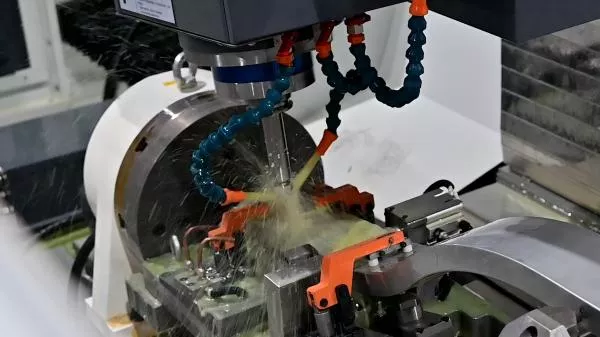
Multi-axis linkage technology refers to the capability of multiple axes (such as the X, Y, and Z axes) in profile processing equipment to move simultaneously, enabling the machining of more complex geometric shapes. Traditional three-axis machining equipment is limited to operations within a confined plane, whereas multi-axis linkage technology expands the tool’s access to the workpiece by adding rotational axes or additional degrees of freedom, allowing machining tasks for various complex shapes to be completed. Taking five-axis machining equipment as an example, it can simultaneously control three linear axes (X, Y, Z) and two rotational axes (A, B). This design enables the machining equipment to access different areas of the workpiece from multiple angles. This flexibility not only reduces the number of repeated workpiece setups but also effectively avoids machining blind spots in certain areas, thereby enhancing overall processing efficiency and quality.
Advantages of Multi-Axis Linkage Technology in Profile Processing Equipment
Improved Machining Efficiency Multi-axis linkage technology allows equipment to process multiple surfaces in a single setup, eliminating the need for frequent workpiece repositioning and significantly reducing processing time. According to statistics, when manufacturing complex profiles using five-axis linkage machining equipment, production efficiency typically increases by 30%–40% compared to traditional three-axis equipment.
2. Enhanced Machining Precision In traditional machining methods, multiple setups can easily lead to workpiece positioning errors, thereby affecting precision. Multi-axis linkage technology minimizes these errors by reducing the number of setups required. For example, in aerospace component machining, certain complex-shaped workpieces may require precision as stringent as 0.01 mm, a demand reliably met through the stable synchronous motion enabled by multi-axis linkage technology.
3. Capability to Machine Complex Shapes Multi-axis linkage equipment can handle the machining of profiles with complex geometries, such as curved surfaces and irregular structures. In the automotive industry, components like engine blocks and turbine blades feature intricate designs that are difficult to complete in a single operation with traditional three-axis equipment. Multi-axis linkage machines, however, are well-suited to such tasks.
4. Reduced Production Costs Although the initial investment in multi-axis linkage equipment is relatively high, its ability to improve machining efficiency, reduce repositioning frequency, and lower the scrap rate caused by machining errors can significantly decrease long-term production costs for enterprises. Additionally, as the technology becomes more widespread, the cost of such equipment is gradually declining, making it increasingly accessible to more businesses.
IV. Key Technologies Enabling Multi-axis Linkage Capabilities
CNC (Computer Numerical Control) Systems The core of multi-axis linkage technology lies in its underlying CNC system. The CNC system must monitor and adjust the synchronized motion of each axis in real time to ensure precise tool paths. An advanced CNC system is capable of processing complex three-dimensional paths while maintaining stability during high-speed operations.
Tool Path Planning Tool path planning is critical in multi-axis linkage machining. To ensure machining quality, reasonable tool trajectories must be designed to avoid interference during the process. Optimizing tool paths can significantly reduce machining time and enhance equipment operational efficiency.
Multi-axis Servo Drive System The servo drive system controls the precise motion of each axis and forms the foundation of multi-axis linkage technology. Through precise calibration of the servo system, the equipment can ensure synchronization and stability among all axes, thereby improving machining accuracy.
V. Development Trends in Multi-axis Linkage Technology As the manufacturing industry advances toward intelligence and automation, multi-axis linkage technology continues to evolve. In the future, profile machining equipment will become increasingly intelligent, leveraging artificial intelligence and big data analytics to achieve adaptive machining, further enhancing processing efficiency and precision. Additionally, virtual reality (VR) technology is expected to integrate with multi-axis linkage technology, enabling operators to conduct virtual simulations before machining to anticipate and resolve potential issues in advance.