
Farewell to Human Error! Smart Manufacturing Automation Ensures Batch Precision.
In the wave of high-end and intelligent transformation in the manufacturing industry, 'precision manufacturing' and 'intelligent machining' are core keywords. From core components of aerospace to precision structures of electronic consumer products, intelligent machining, with its advantages of high precision, high efficiency, and high stability, has become a key support for precision manufacturing. This article will analyze the core connection between the two, their technical advantages, application scenarios, and development trends.
Cognitive Core: The Intrinsic Connection Between Precision Manufacturing and Intelligent Machining
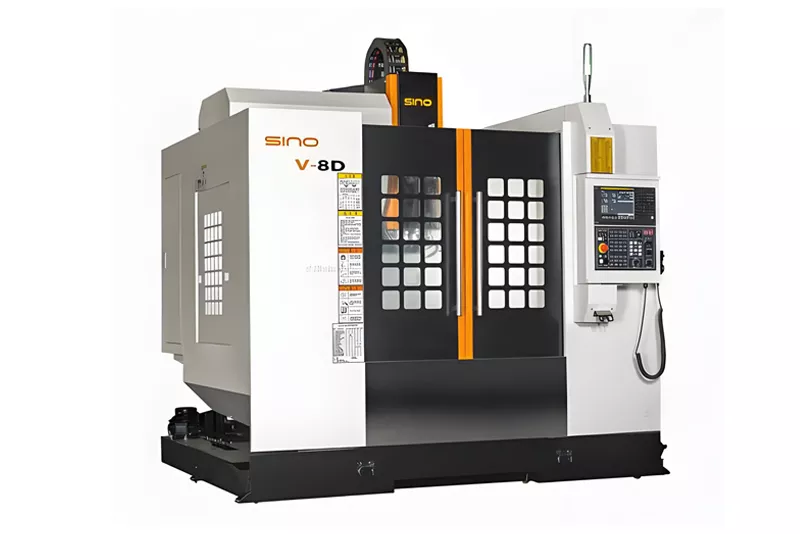
The core requirements of precision manufacturing are "accuracy" and "consistency." It involves producing products that meet extremely high standards in terms of dimensions, shape, positional accuracy, and surface quality. Intelligent machining (computer numerical control machining) controls machine tools through computer programs, converting digital instructions into precise actions to achieve automated and high-precision processing of workpieces.

Intelligent machining is the core implementation method for precision manufacturing. Traditional machining relies on manual operation, making precision vulnerable to interference and often falling short of exacting requirements. In contrast, intelligent machining eliminates human error through digital control, achieving micron-level or even nanometer-level precision and ensuring batch production consistency. The two approaches complement each other: advancements in intelligent technology propel the progress of precision manufacturing, while the demands of precision manufacturing, in turn, drive innovation in intelligent manufacturing technology.
Technical Advantages: The Core Capabilities of Intelligent Machining Supporting Precision Manufacturing As a core technology in precision manufacturing, intelligent machining possesses several irreplaceable advantages. These form the technical barriers within the field and represent the fundamental reasons why enterprises choose this technology.
Exceptional Machining Precision Meets Demanding Requirements The precision of intelligent machining is determined by the accuracy of the machine tool and its programming. Modern high-end smart manufacturing machines can achieve positioning accuracy at the 0.001mm level, allowing for precise control of tool cutting parameters to ensure part accuracy. For example, in processing carriers for mobile phone chips in the electronics industry, key dimensions such as groove width and aperture can be controlled within micron-level tolerances, guaranteeing proper chip fitment and stable device operation.
• High Automation Drives Production Efficiency Intelligent manufacturing enables automated mass production through programmed instructions, significantly reducing the need for frequent manual intervention. This substantially lowers labor costs and boosts efficiency. It also allows for integrated processing of multiple operations like milling, drilling, boring, and tapping, minimizing the number of workpiece setups to reduce positioning errors and shorten production cycles.
• Superior Stability Ensures Batch Consistency Precision manufacturing requires consistent quality across batch production. Traditional manual machining is prone to significant precision fluctuations due to factors like operator skill and fatigue. In contrast, intelligent machining, governed by precise programming and uniform processing steps, ensures consistent accuracy across all parts in a batch. This reduces defect rates, an advantage particularly crucial in sectors like automotive components and medical devices.
• Flexible Machining Adapts to Diverse Needs The trend toward personalized and diverse market demands drives the need for flexible processing in precision manufacturing. Intelligent machining can switch between different workpieces simply by modifying the program, eliminating the need for extensive machine reconfiguration and enabling rapid response to market changes. For instance, programs can be adjusted on-demand for customized medical equipment manufacturing, and the aerospace sector can flexibly adapt to processing products of different models.
Application Scenarios: How Intelligent Machining Enables Precision Manufacturing Across Multiple Fields Leveraging its core technical advantages, intelligent machining is widely applied across various sectors of precision manufacturing, driving the high-end development of multiple industries. Here is an analysis of typical scenarios:
• Aerospace: Extreme Precision Ensures Flight Safety The aerospace sector imposes extremely high demands on part precision and reliability. Core components such as engine blades and landing gear require precision manufacturing. Intelligent machining can accurately process complex structures (e.g., the curved surfaces of engine blades) to ensure aerodynamic performance. It can also handle high-strength materials like titanium alloys and superalloys, meeting requirements for high temperature and pressure resistance. For example, through five-axis intelligent machining, the surface precision error of certain aircraft engine blades can be controlled within 0.005mm, ensuring flight safety.
• Consumer Electronics: Compact Precision Enhances Product Experience The trend toward thinner, lighter, and smaller consumer electronics has surged the demand for precision structural components like mobile phone frames and camera modules. Intelligent machining enables high-precision, small-scale processing of electronic parts. It accurately controls dimensions such as frame thickness and aperture, ensuring assembly precision. It can also process materials like aluminum alloys and stainless steel to enhance product quality. Its high efficiency further meets the demands of mass production, ensuring market supply.
• Medical Equipment: Precision Fit Guarantees Diagnostic and Treatment Outcomes The precision of medical equipment directly impacts diagnostic efficacy and patient safety. Devices such as minimally invasive surgical instruments and artificial joints require extremely high precision. Intelligent machining can accurately fabricate complex instrument structures (e.g., the slender shafts of minimally invasive tools), ensuring operational flexibility. For implantable devices like artificial joints, it can process biocompatible materials such as titanium alloys and ceramics, controlling surface smoothness and dimensional accuracy to reduce rejection reactions. For instance, through intelligent machining, the thread precision of artificial dental implants can be controlled within 0.01mm, improving stability and lifespan.
• Automotive Industry: Advanced Manufacturing Elevates Vehicle Performance The shift toward electrification and intelligence in the automotive industry is driving demand for precision manufacturing of high-end components. Parts like new energy vehicle battery casings and motor rotors require high-precision processing. Intelligent machining can precisely process complex structures, enhancing assembly accuracy and operational stability. It can also handle lightweight, high-strength materials like aluminum alloys and carbon fiber composites, reducing vehicle weight and extending range. For example, intelligent machining using laser cutting and milling for battery casings precisely controls dimensions and sealing, ensuring battery safety.