
Low-price machine tool guards should not be trusted easily
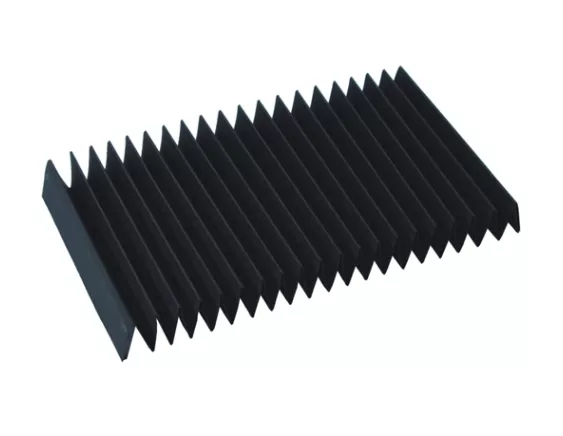
Machine tool protective covers are characterized by tight and reasonable structure, noiselessness, large travel range, fast movement speed, and long service life. They have a smooth surface, regular shape, and attractive appearance, adding infinite color to the overall design of machine tools. Therefore, they not only provide practical protection for machine tools but also enhance their visual appeal, thereby increasing the overall value of the machine tools. When selecting machine tool protective covers, we should focus on considering the following factors:
1. Pressure: Before selecting a model, it is essential to determine the actual working pressure of the machine tool protective cover. Then, refer to the nominal bore and pressure gauge of the machine tool protective cover to decide whether to use a stainless steel braided sleeve type machine tool protective cover.
2. Size: The size of the machine tool protective cover can be designed according to actual requirements. Therefore, when selecting, we must first understand its working range in advance to choose an appropriate size and length.
3. Temperature: Understand the operating environment temperature of the machine tool protective cover, especially at high temperatures. In such cases, it is necessary to apply the temperature correction factor for working pressure under high-temperature conditions to determine the corrected pressure after temperature adjustment. This allows for the selection of the correct pressure rating.
On the current market, there are not a few machine tool protective covers priced particularly cheaply. However, such products often come at the expense of quality. Some manufacturers of machine tool protective covers, in order to enhance their product competitiveness, set extremely low prices for their products. Such low prices often lead to compromised production quality, with various cost-cutting measures during manufacturing. While these products may not show obvious issues initially, they tend to develop various quality problems over time with prolonged use. This approach by such manufacturers is self-defeating and ultimately damages the market, leaving no one better off.
Selecting the appropriate size of machine tool protective cover is essential; its size should be larger than the sum of the camera and lens dimensions, otherwise the camera and lens cannot be installed. Based on the installation location, choose between indoor or outdoor machine tool protective covers. Indoor protective covers primarily serve to dustproof, while outdoor ones, in addition to dustproofing, mainly protect the camera from functioning properly under various harsh natural conditions (such as rain, snow, low temperatures, high temperatures, etc.). Consequently, outdoor all-weather protective covers feature more stringent sealing structures and additional functions like wipers, sprays, heating, and cooling. This determines that outdoor machine tool protective covers are significantly more expensive than indoor ones. It is worth noting that in some regions where temperature variations are minimal throughout the year and fall within the camera's operating temperature range, ordinary outdoor protective covers without constant temperature functionality can be selected to reduce costs.
We know that many factors influence the price of machine tool protective covers, and area is an important aspect among them. When purchasing machine tool protective covers, pricing is determined based on the size of the area. So, how is the area of a machine tool protective cover measured?
Generally, machine tool protective covers are used to protect guideways, so the area of the protective cover must be slightly larger than the guideway. That is, the length multiplied by the width of the guideway, with a slight addition, gives the area of the machine tool protective cover. In addition, machine tool protective covers come in various shapes, including circular, square, and polygonal. The area calculation for these shapes can be achieved using algorithms from higher mathematics or geometry. Typically, the unfolded flat pattern of a protective cover is rectangular. Therefore, the first step is to determine its length and width. Once these dimensions are known, the maximum material required for cutting the protective cover can be determined. The maximum material directly determines the price of manufacturing the machine tool protective cover.