
How to prevent tool overheating during machining in a profile processing center
I. Hazards of Tool Overheating
The hazards of tool overheating are mainly reflected in two aspects:
one is the accelerated wear of the tool, and the other is the decline in machining quality. Tool life is shortened: when the tool works under high-temperature conditions for a long time, it will lead to a decrease in the tool's hardness, making the cutting edge prone to wear, chipping, and other phenomena. High temperature also accelerates the oxidation or melting of the tool material, greatly shortening the tool's service life and increasing the enterprise's production costs.
Reduced machining accuracy: Overheating of the tool not only causes changes in the tool's shape but may also lead to fluctuations in the temperature of the machined surface, thereby affecting the dimensional accuracy and surface quality of the workpiece. Particularly in precision machining, the problem of tool overheating is more pronounced, which may result in dimensional errors and excessive surface roughness of the workpiece. Decreased cutting force and cutting efficiency: Tool overheating also affects the stability of the cutting process. In high-temperature environments, cutting forces often change, which may cause tool vibration
II. How to Prevent Tool Overheating
1. Select appropriate cutting parameters.
Cutting parameters (such as cutting speed, feed rate, and depth of cut) are key factors affecting tool temperature. Excessively high cutting speed can cause excessively high temperatures on the tool surface, while excessively low cutting speed can affect processing efficiency. Therefore, reasonably selecting cutting speed, feed rate, and cutting depth is the basis for preventing tool overheating.
Cutting Speed: During the machining process, excessively high cutting speed can generate a large amount of heat in the tool, thereby increasing the temperature. To prevent overheating, an appropriate cutting speed should be selected based on the type and hardness of the material. Generally, materials with higher hardness require lower cutting speeds, while softer materials can have their cutting speeds appropriately increased.
Feed rate: An excessively high feed rate increases the heat generated in each cutting cycle, leading to tool overheating. Therefore, appropriately adjusting the feed rate to ensure even heat distribution helps reduce tool temperature.
Cutting Depth: Cutting depth directly affects the load on the tool during each cutting operation and the heat generated. Appropriately reducing the cutting depth not only helps in cooling the tool but also improves machining efficiency.
2. Use efficient coolant
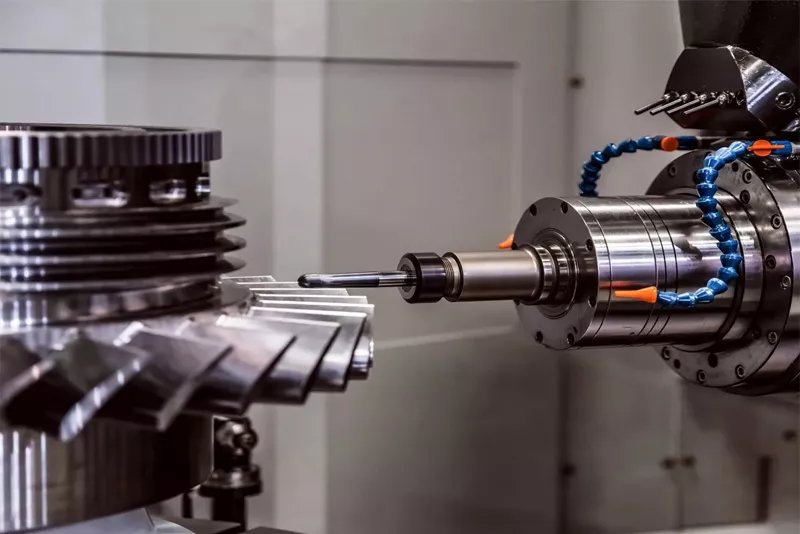
Coolant plays a crucial role in profile machining, especially in high-temperature cutting environments, where it can quickly remove the heat generated during the cutting process. Using appropriate coolant can effectively reduce the temperature of the tool and prevent it from overheating.
Selection of Coolant: Different workpiece materials and cutting tools require different types of coolants. Water-based coolants are commonly used for general machining, while oil-based coolants provide better cooling effects for high-speed cutting or machining of high-temperature materials. The viscosity and flow rate of the coolant also need to be adjusted according to actual conditions.
Optimization of cooling methods: In addition to selecting the appropriate coolant, the design of the cooling system is also crucial. By optimizing the spray direction, flow rate, and pressure of the coolant, it can ensure that the coolant effectively acts on the tool and workpiece surfaces, quickly removing the heat generated during cutting.
3. Regularly inspect tools and equipment
Tool wear and equipment malfunctions are also important causes of overheating. Therefore, regularly inspecting the tool condition, cleaning the cooling system, and maintaining good equipment operating status are necessary measures to ensure that tools do not overheat during processing. Tool Wear: Regularly checking the tool wear condition and promptly replacing severely worn tools can effectively avoid overheating problems caused by dull tools. Equipment
III. Selecting Suitable Tool Materials
In addition to cutting parameters and the use of coolant, the selection of tool material plays a crucial role in preventing tool overheating. Different tool materials exhibit varying performance at high temperatures. Choosing an appropriate tool material can effectively enhance the tool's heat resistance and extend its service life.
Carbide cutting tools: Carbide cutting tools have excellent heat resistance and wear resistance, making them one of the most commonly used tool materials in machining centers today. Carbide can withstand high temperatures and cutting forces, so in high-temperature cutting environments, it can effectively reduce overheating phenomena.
Coated cutting tools: Surface coatings on steel cutting tools (such as TiN, TiAlN, CVD coatings, etc.) can significantly enhance the tool's heat resistance. Coated cutting tools not only improve the tool's hardness and wear resistance but also effectively reduce the friction coefficient between the tool and the workpiece, thereby minimizing heat generation.
Ceramic cutting tools: The use of ceramic cutting tools is particularly important for machining super-hard materials or high-temperature alloy materials. Ceramic cutting tools have very high heat resistance and wear resistance, allowing them to maintain good stability in high-temperature environments and reduce the possibility of tool overheating.