
Do you really understand 5-axis simultaneous machining?
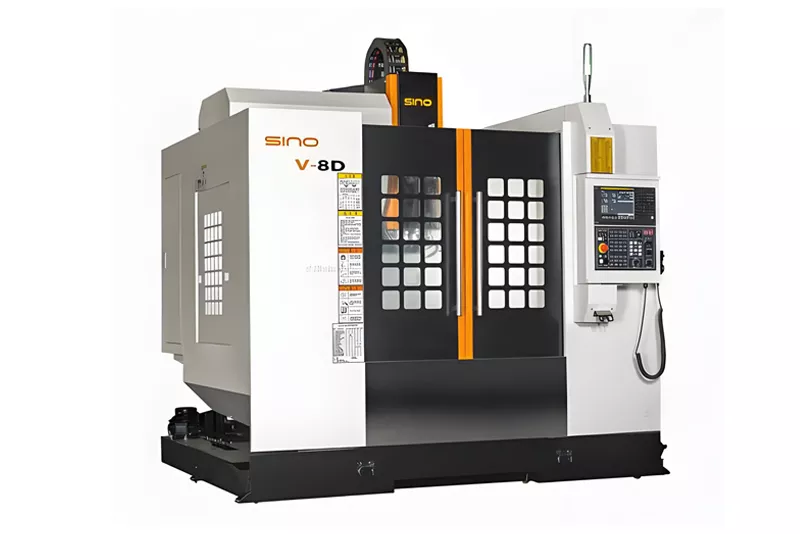
5 Axis Machining, as the name suggests, is a mode of CNC machine tool processing. It uses linear interpolation motion of any 5 coordinates among X, Y, Z, A, B, and C. The machine tools used in 5 Axis Machining are typically referred to as 5-axis machine tools or 5-axis machining centers. But do you really understand 5 Axis Machining?
The development of five-axis technology
For decades, five-axis CNC machining technology has been widely regarded as the only means for processing continuous, smooth, and complex curved surfaces. Whenever people encounter unsolvable problems in the design and manufacturing of complex curved surfaces, they turn to five-axis machining technology. However......
5-axis simultaneous CNC (Computer Numerical Control) technology is the most sophisticated and widely applied in the field of numerical control. Integrating computer control, high-performance servo drive, and precision machining technology, it is utilized for the efficient, precise, and automated processing of complex curved surfaces. Internationally, 5-axis simultaneous CNC technology is regarded as a hallmark of a country's automation level in production equipment. Due to its special status—particularly its significant impact on the aerospace, aviation, and military industries, coupled with its technical complexity—western industrialized nations have long treated 5-axis CNC systems as strategic materials, implementing an export license system and imposing an embargo on China to restrict the development of China's national defense and military industries.
Compared with 3-axis simultaneous CNC machining, from the perspectives of process technology and programming, 5-axis CNC machining offers the following advantages for complex curved surfaces:
(1) Improve processing quality and efficiency (2) Expand process range (3) Meet the new direction of composite development
However,Five-axis CNC machining is far more complex than three-axis machine tools due to issues such as interference and the control of tool posture within the machining space, involving its CNC programming, CNC system, and machine tool structure. Therefore, while five-axis machining may sound easy to talk about, truly implementing it is really difficult! Moreover, operating and utilizing it well is even more challenging!
Everyone has long recognized the superiority and importance of five-axis CNC technology. However, to date, the application of five-axis CNC technology is still limited to a few well-funded sectors, and there are still unresolved challenges.
5-axis CNC programming is abstract and difficult to operate.
1. This is a common headache for every traditional CNC programmer.
Unlike 3-axis machine tools, which only have linear coordinate axes, 5-axis CNC machines come in diverse structural configurations. While the same segment of NC code can achieve consistent machining results on different 3-axis CNC machines, the NC code for one type of 5-axis machine cannot be universally applied to all 5-axis machine models. In addition to linear motions, CNC programming for 5-axis machines requires coordinating calculations related to rotational motions—such as rotational angle travel verification, nonlinear error checking, and tool rotation motion calculations. The large volume of information to process makes 5-axis CNC programming highly abstract.
The operation and programming skills of five-axis CNC machining are closely related. If the machine tool is equipped with special functions, programming and operation will become more complex. Only through repeated practice can programmers and operators master the necessary knowledge and skills. The lack of experienced programmers and operators is a major obstacle to the popularization of five-axis CNC technology.
2. The NC interpolation controller and servo drive system have very strict requirements.
The movement of a five-axis machine tool is the synthesis of movements along five coordinate axes. The addition of rotational coordinates not only increases the burden of interpolation calculations but also causes even slight errors in rotational coordinates to significantly reduce machining accuracy. Therefore, the controller requires higher computational precision. The motion characteristics of five-axis machine tools demand that the servo drive system have excellent dynamic performance and a wide speed regulation range.
3. The verification of NC programs for five-axis CNC machining is particularly important.
To improve the efficiency of mechanical processing, it is urgently necessary to eliminate the traditional 'trial cutting method' of verification. In five-axis CNC machining, the verification of NC programs has also become very important because the workpieces processed by five-axis CNC machine tools are usually extremely expensive, and collisions are a common problem in five-axis CNC machining: the tool切入 the workpiece; the tool collides with the workpiece at extremely high speed; the tool collides with the machine tool, fixture, and other equipment within the processing range; moving parts on the machine tool collide with fixed parts or the workpiece. In five-axis CNC machining, collisions are difficult to predict, and the verification program must conduct a comprehensive analysis of the machine tool kinematics and control system.