
Core Precision Manufacturing Process: The Irreplaceable Advantages and Application Scenarios of Electrical Discharge Machining
As a core non-traditional machining technology in precision manufacturing, electrical discharge machining (EDM) not only possesses unique machining characteristics but also demonstrates irreplaceable core advantages in practical applications. It has become an essential process in high-end precision manufacturing fields such as mold making, aerospace, and medical equipment. The latter part of this article will focus on the core advantages and practical application scenarios of EDM, helping readers gain a comprehensive understanding of its actual value in precision manufacturing.
The core advantages of the EDM (Electrical Discharge Machining) process in precision manufacturing
Compared to traditional cutting processes, electrical discharge machining (EDM) demonstrates significant and irreplaceable core advantages in scenarios such as precision manufacturing of ultra-hard materials, complex structure processing, and micro-miniature component machining. It perfectly meets the processing requirements of high-end precision manufacturing and is the key reason for its status as a core process in precision manufacturing. Specifically, these can be summarized as five advantages:
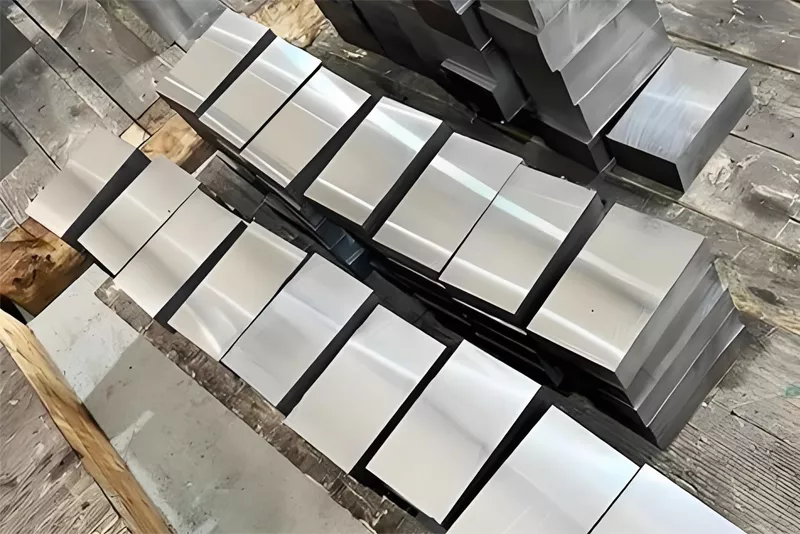
Breaking through material hardness limitations and adapting to ultra-hard materials commonly used in high-end manufacturing: This completely addresses the industry pain points of traditional cutting processes, which struggle with 'difficulty in cutting, rapid tool wear, and low machining accuracy' for ultra-hard and high-strength materials. It can process various conductive ultra-hard materials, maintains stable machining accuracy over time without tool wear during processing, eliminates the need for frequent tool changes and equipment adjustments, significantly improves machining efficiency, and perfectly meets the material requirements of precision manufacturing fields such as aerospace and mold making.
Complex structures can be formed in one go, reducing processing difficulty and production cycle: For complex cavities, irregular holes, narrow slots, and other structures that require multiple processes and clamping operations with traditional cutting technologies, EDM (Electrical Discharge Machining) can achieve one-time forming through customized electrodes. This reduces process transitions and clamping times, effectively avoiding positioning errors caused by multiple clamping, while significantly shortening the production cycle and lowering the processing difficulty and manufacturing costs of complex precision structures.
Force-free machining ensures dimensional and positional accuracy of easily deformable components: For precision manufacturing of thin-walled, slender, and miniature components prone to deformation, the force-free nature of electrical discharge machining (EDM) fundamentally eliminates workpiece deformation and warping during processing. This enables precise maintenance of component dimensional accuracy and positional tolerances, a feat difficult to achieve with traditional cutting processes, and represents its core competitive advantage in the machining of micro-precision components.
Ultra-precision machining capabilities to meet micro-nano level precision manufacturing needs: Relying on the continuous upgrading of numerical control technology, pulse power supply technology, and electrode material technology, electrical discharge machining can achieve ultra-precision machining at the micron and even sub-micron levels. It is capable of machining micro-holes, micro-narrow slots, micro-cavities, and other micro-nano structures, satisfying the processing requirements for components that are 'ultra-precision and miniaturized' in fields such as semiconductors, precision instruments, and medical devices. It is an important technical means for realizing micro-nano precision manufacturing.
It offers strong process flexibility to meet customized and small-batch production needs. The electrode design and manufacturing for EDM (Electrical Discharge Machining) are relatively flexible, allowing for rapid design and machining of corresponding electrodes according to customers' customized requirements. This enables precision machining of small-batch, customized components, perfectly aligning with the characteristics of multi-variety, small-batch customized production in the precision manufacturing field. Additionally, electrodes can be reused, further reducing the overall cost of small-batch and customized production.
Core Application Scenarios of Electrical Discharge Machining in Precision Manufacturing
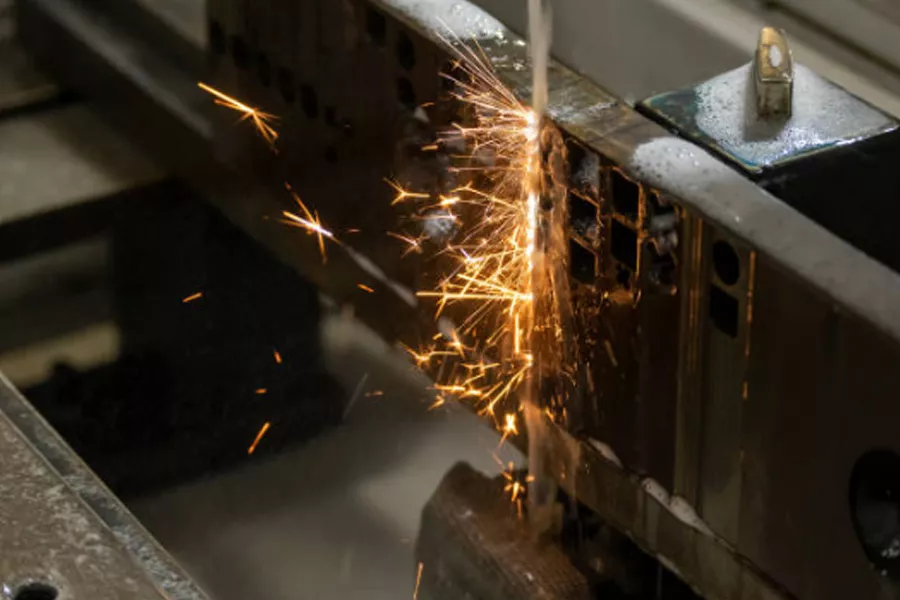
With core advantages such as contactless processing, compatibility with ultra-hard materials, and high-precision forming, electrical discharge machining (EDM) has become an essential technology in precision manufacturing. It is widely applied in five high-end fields including mold manufacturing, aerospace, medical equipment, semiconductors, and precision instruments, playing an irreplaceable role in the processing of core precision components across these fields, and driving the development of high-end precision manufacturing.
Mold Manufacturing Field: The Most Core Application Scenario: This is the primary and most mature application area of EDM (Electrical Discharge Machining) technology. It is mainly used to process complex cavities, cores, cutting edges, and irregular holes in molds such as injection molds, stamping dies, and die-casting molds. Mold manufacturing has extremely high requirements for machining accuracy and surface quality. Moreover, mold cavities are often complex curved surfaces made of quenched steel or hard alloys. EDM can accurately achieve precise forming of cavities, ensuring the accuracy and service life of molds, making it the core technology for precision mold manufacturing, without exception.
Aerospace field: Processing of complex structures in ultra-hard materials: Used for machining complex structures such as irregular holes, narrow slots, deep grooves, and cavities in core components of aerospace engines, such as turbine blades, turbine disks, and precision aerospace structural parts. Aerospace components often adopt ultra-hard materials like titanium alloys and high-temperature alloys, with complex structures and high precision requirements. Traditional cutting processes struggle to handle these, but electrical discharge machining can easily address the dual challenges of material and structure, ensuring precise forming of components and their practical performance.
Medical Device Field: High-Precision Micro-Sized Component Machining: Used for machining precision structures such as surgical instruments, implantable medical devices (artificial joints, dental implants), and core components of medical testing equipment. Medical device components require high precision and high surface quality. Some components are micro-sized and have complex structures. The dielectric discharge machining (EDM) technology, with its non-cutting force and ultra-precision machining characteristics, can achieve micron and nanoscale precision machining while ensuring the smoothness of the machined surfaces, thus meeting the usage requirements and biocompatibility of medical devices.
Semiconductor Field: Micro-Nano Precision Structure Machining: This technology is used to process micro-holes, micro-slits, and precision cavities in components such as semiconductor chip manufacturing equipment, wafer carriers, and precision connectors. The semiconductor industry requires machining accuracy at the sub-micron level, and the ultra-precision machining capability of electrical discharge machining (EDM) can precisely meet this demand, making it an important process for achieving micro-nano level structure machining in semiconductor precision manufacturing.
Precision Instrument Field: Machining of Micro and Complex Components: Used for machining micro and complex precision components of precision instruments such as optical instruments, measuring instruments, and watch movements, including micro gears, irregular shafts, precision hole systems, and micro cavities of the instruments. These components are small in size and have high precision requirements, making it difficult to achieve high-precision forming with traditional cutting processes. Electrical discharge machining can achieve deformation-free and high-precision processing, ensuring the measurement accuracy and operational stability of precision instruments.
Summary
In the current development of precision manufacturing towards 'ultra-precision, micro-nano, customization, and high-end', dielectric spark machining (EDM) has broken through many limitations of traditional cutting processes in terms of material hardness, structural complexity, and machining accuracy, thanks to its unique 'material erosion by electric discharge' processing principle. With core advantages such as non-contact machining, adaptability to ultra-hard materials, high-precision forming, and complex structure machining, EDM has become an indispensable key process in precision manufacturing.
From complex cavities in mold manufacturing to ultra-hard structural components in aerospace, and from micro-nano precision parts in semiconductors and medical devices, EDM plays an irreplaceable role in various high-end precision manufacturing fields, providing core technical support for achieving 'precision forming of difficult-to-machine materials and efficient machining of complex structures'. As numerical control technology, pulse power supply technology, and electrode material technology continue to upgrade, the machining accuracy, efficiency, and process flexibility of EDM will keep improving. Its application scenarios will also be further expanded, making it an important force driving the precision manufacturing industry towards more high-end and intelligent directions.