
How Five-Axis Machining Centers Process Complex Curved Surfaces and Titanium Parts?
Five-axis machine tools play a significant role in modern manufacturing, with their advantages prominently evident in machining accuracy and efficiency. However, they also have some drawbacks, such as higher costs and operational complexity. This article will conduct an in-depth analysis of the characteristics of five-axis machine tools, explore their application advantages across various industries, and provide you with comprehensive and practical reference information. Through comparison and evaluation, it aims to help you better understand this advanced equipment.
First, we need to understand the basic concept of a five-axis machine tool. A five-axis machine tool is an advanced machining device capable of performing machining operations simultaneously along five different axes. This technology enables workpieces to undergo high-precision machining in complex spatial orientations, meeting the demands of modern manufacturing for complex-shaped and high-precision components. As technology has evolved, five-axis machine tools have undergone a gradual transformation from early primitive models to today's efficient and intelligent devices.
We can trace back to the 1970s when five-axis technology began to take shape. At that time, with the development of electronic computers and servo control systems, this technology gradually matured. After entering the 21st century, with the rapid popularization of CAD/CAM software and continuous optimization of manufacturing processes, five-axis machine tools have been widely applied. In fields such as aerospace, automotive, and medical equipment, they are renowned for their speed, efficiency, and high precision.
In the future, as artificial intelligence and Internet of Things technologies develop, five-axis machine tools will undoubtedly further enhance their level of intelligence and improve production efficiency. Through this development process, we not only witness the changes brought about by technological progress but also deeply understand why five-axis machine tools still hold an important position in modern manufacturing.
Why choose a five-axis machining center?
Main Application Fields of Five-Axis Machine Tools
In modern manufacturing, five-axis machine tools are widely used in multiple key areas. Firstly, in the aerospace industry, five-axis machine tools are highly favored for their ability to handle complex geometric shapes. The machining of precision components such as turbine blades and fuselage parts relies on five-axis machining technology to ensure high-quality standards. Secondly, in automotive manufacturing, these machine tools also play an important role, especially during the production of engine parts and chassis components. Their efficient and precise machining capabilities help companies achieve shorter production cycles and lower scrap rates. Additionally, in the medical device field, five-axis machine tools demonstrate their unique advantages by providing high-precision machining solutions for complex products such as surgical instruments and implants. We also see five-axis machine tools in industries like mold manufacturing and precision instrument production, where their versatility and flexibility allow them to adapt to different product requirements. It is clear that these application areas benefit from the advantages brought by five-axis technology, significantly improving production efficiency and machining quality.
Evaluating the Advantages of Five-Axis Machining Centers
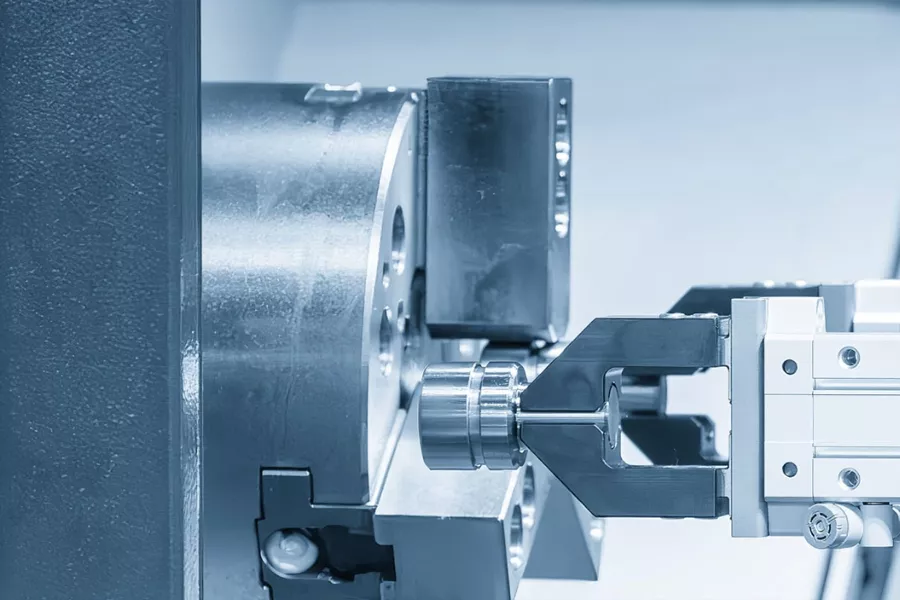
In modern manufacturing, the advantages of five-axis machining centers are significant. Firstly, these machines excel in machining accuracy. Compared to traditional three-axis machines, five-axis machines can machine workpieces simultaneously from multiple directions, greatly enhancing the manufacturing precision of complex parts and ensuring higher quality results. Additionally, five-axis machining centers significantly improve machining efficiency. By consolidating multiple processes into a single clamping operation, they reduce the time spent on workpiece changeovers and adjustments, which is crucial for shortening production cycles.
Furthermore, five-axis machining centers improve material utilization. Thanks to their flexible tool cutting paths, they enable more efficient material removal, making production processes more cost-effective. This not only helps reduce waste and enhance economic viability but also contributes to environmental sustainability. Moreover, these machines can flexibly handle parts with various shapes and structural complexities, demonstrating their unique advantages across industries such as aerospace, automotive, and medical.
Overall, we consider five-axis machining centers, with their precision, efficiency, and flexibility, to have become an indispensable important equipment in today's manufacturing field.
Analyzing the Disadvantages of Five-Axis Machining Centers
Although five-axis machining centers have demonstrated numerous advantages in modern manufacturing, we cannot overlook some significant disadvantages they face. Firstly, the higher costs of equipment procurement and maintenance often pose a major barrier for companies deploying five-axis machining centers. Compared to traditional three-axis machines, five-axis equipment requires more technical support and investment, which can be a considerable burden for small and medium-sized enterprises with limited funds.
Secondly, the complexity of operating five-axis machining centers is another key issue. Operators not only need a solid technical foundation but also must master corresponding software programming skills. For beginners, the learning curve is steep, which necessitates increased investment in talent training by companies to ensure operators can fully utilize the machine's capabilities.
Additionally, five-axis machining centers may encounter insufficient machining accuracy in certain situations. This is often closely related to cutting tools, material properties, and machining strategies. Therefore, in practical applications, we need to exercise greater caution in selecting machining parameters to minimize potential issues.