
CNC Milling Machine: The Core Tool of Modern Precision Manufacturing
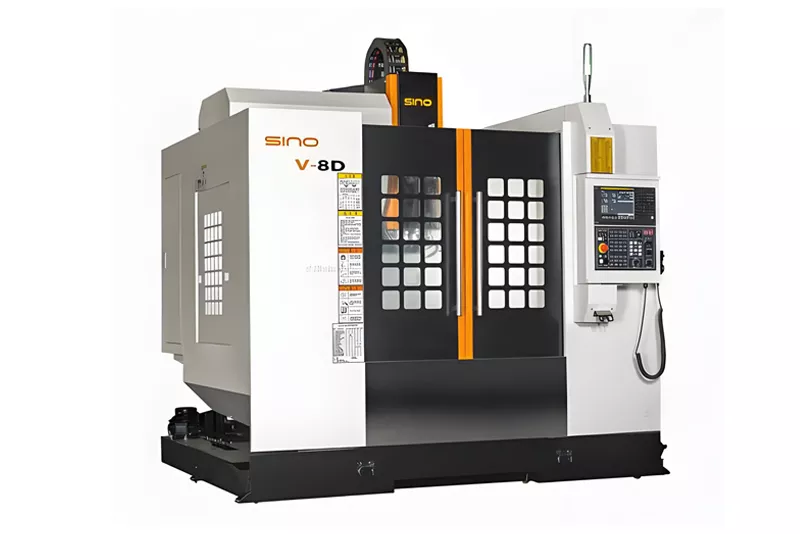
In today's rapidly evolving manufacturing industry, CNC milling machines have become an indispensable key equipment for precision machining. By precisely controlling the rotation of milling cutters and the relative displacement of workpieces through computer numerical control systems, they transform metal blanks into precision parts that meet design requirements. Whether it's complex structural components in the aerospace field, precision parts in the automotive industry, or fine features in mold manufacturing, CNC milling machines can complete machining tasks with astonishing precision and efficiency. This technology not only represents the pinnacle of modern manufacturing but also serves as a significant manifestation of a nation's industrial strength. As the concepts of smart manufacturing and Industry 4.0 are deeply advanced, the functions and performance of CNC milling machines continue to improve, injecting strong momentum into production across various industries. Why have CNC milling machines stood out among numerous machining equipment to become the preferred choice for precision machining? Behind this is the revolutionary change brought about by digital control technology, which makes the machining of complex curved surfaces and the carving of minute features possible, while ensuring the high quality and consistency of products.
1、The Core Value and Functional Features of CNC Milling Machines
The core value of a CNC milling machine lies in its ability to convert digital information into precise physical movements. By controlling the motion paths of the machine tool's coordinate axes, spindle speed, feed rate, and other parameters through pre-programmed instructions, it enables automated machining processes. Compared to traditional milling machines, CNC milling machines offer unparalleled machining accuracy and stability. Their pulse equivalent can reach 0.001mm, and high-precision systems can even achieve levels as fine as 0.1μm, which is difficult to match with traditional manual operations. This precision ensures excellent uniformity of part dimensions in batch production, significantly improving product quality reliability.
The functional diversity of CNC milling machines is also a key reason for their popularity. A single machine integrates the functions of a milling machine, boring machine, and drilling machine, enabling highly concentrated processes. After a workpiece is clamped once, multiple machining operations can be completed, effectively reducing cumulative errors caused by multiple clamping. Additionally, both the spindle speed and feed rate of CNC milling machines can be infinitely variable, facilitating the selection of optimal cutting parameters to fully utilize the cutting performance of tools. This not only ensures machining quality but also enhances production efficiency.
For manufacturing enterprises, introducing CNC milling machines represents a fundamental transformation in production models. They can not only machine complex curved and three-dimensional surface parts that are difficult to handle with conventional machine tools but also quickly adapt to product modifications by modifying programs, greatly enhancing the enterprise's responsiveness to market demands. Especially in small-batch, multi-variety production models, the advantages of CNC milling machines are more pronounced. They significantly shorten production preparation cycles, reduce the cost of dedicated fixtures and jigs, and provide a technical foundation for flexible manufacturing in enterprises.
2. Technological Evolution and Current Level of CNC Milling Machines
The technological development of CNC milling machines can be regarded as a condensed history of modern manufacturing evolution. Since the world's first CNC milling machine was developed in 1952 through a collaboration between the Parsons Company of the United States and the Massachusetts Institute of Technology, this technical field has undergone earth-shattering changes. From the initially bulky equipment controlled by electron tubes to today's intelligent systems integrated with artificial intelligence and Internet of Things technologies, CNC milling machines have always stood at the forefront of manufacturing technology innovation. Currently, CNC milling machines are developing vigorously towards intelligence, high precision, integration, and green environmental protection.
In terms of intelligence, modern CNC milling machines, by introducing artificial intelligence and big data technologies, have achieved advanced functions such as automatic programming, adaptive machining, and intelligent fault diagnosis. Adaptive machining technology can automatically adjust machining parameters according to the real-time status of the workpiece, ensuring the stability of the machining process and the consistency of machining quality. Meanwhile, intelligent fault diagnosis systems can quickly locate problems and provide solutions when the equipment encounters abnormalities, effectively shortening maintenance time and improving the overall operating efficiency of the equipment.
High precision is another important development trend. The application of new materials and new processes provides strong support for the machining accuracy of CNC milling machines. High-precision key components such as guides and lead screws, along with advanced heat treatment technologies, effectively reduce thermal deformation and wear of the equipment, thereby elevating machining accuracy to the micron or even nanometer level. At the same time, the application of error compensation technology further improves machining accuracy by real-time detection and compensation of errors generated during the machining process, meeting the stringent machining requirements of high-end fields such as aviation, aerospace, and precision instruments.
Composite machining capabilities have also become an important indicator for measuring the technical level of CNC milling machines. Modern CNC milling machines have evolved from single milling functions towards multi-functional and integrated directions. By integrating various machining functions such as milling, turning, and grinding, they can complete multiple process machinings with a single clamping. The addition of advanced functions such as five-axis linkage allows CNC milling machines to machine more complex curved surfaces and irregular parts, providing convenient and efficient solutions for the machining of complex parts in fields such as automobiles, molds, and aerospace.
3. How to Select Suitable CNC Milling Machine Equipment
Faced with the vast array of CNC milling machine products on the market, manufacturing enterprises must make a key decision on how to choose the appropriate equipment based on their own needs. During the selection process, multiple factors such as the dimensions of the workpieces to be machined, precision requirements, machining characteristics, and production batch size should be comprehensively considered. A correct choice not only meets production needs but also maximizes investment returns, while an incorrect decision may lead to low equipment utilization or even affect product quality.
The size of the workpiece is the primary factor determining the specifications of the CNC milling machine. Smaller-specification knee-type CNC milling machines, with worktable widths typically below 400mm, are most suitable for machining medium and small parts and contour milling of complex surfaces. Larger-specification gantry-type milling machines, with worktables usually 500-600mm or more, can address the machining needs of large-sized complex parts. For large tube-plate type parts, gantry high-speed CNC drilling and milling machines, due to their high rigidity structure and large machining range, are the preferred choice, especially suitable for heat exchangers and pressure vessel manufacturing in industries such as chemical, petroleum, and power.
The machining precision requirements directly determine the grade selection of the CNC milling machine. China has established precision standards for CNC milling machines, where the linear motion coordinate positioning accuracy of CNC vertical milling machines (knee-type) is generally 0.04/300mm, and the repeat positioning accuracy is 0.025mm. It is worth noting that the factory precision of machine tools usually has a reserve of about 20% compared to the allowable deviation values of national standards. Therefore, general CNC milling machines can meet the machining needs of most parts. For parts with higher precision requirements, precision CNC milling machines or even imported high-end equipment should be considered.
Different machining characteristics also directly influence the selection of CNC milling machine models. For machining areas that are rectangular planes or steps of unequal heights, a point-to-line system CNC milling machine can be selected. If the machining area is a curved surface contour, the choice between a two-coordinate联动 or three-coordinate system depends on the geometric shape of the curved surface. For special parts such as spiral grooves and blades, a CNC indexing head or CNC rotary table can be added to a conventional CNC milling machine to achieve four-coordinate联动 machining. Production batch size is also an important reference factor for selection. For mass production, dedicated milling machines can be considered. For medium and small batch production with frequent periodic re-production, CNC milling machines are the best choice because the fixtures and programs prepared in the initial batch can be stored and reused.
4. Practical Applications of CNC Milling Machines in Various Industries
The application scope of CNC milling machines covers almost all major industrial fields, making them an indispensable basic equipment in modern manufacturing. In the aerospace industry, CNC milling machines play an irreplaceable role; the machining of critical components such as aircraft engine blades and fuselage structural parts relies on high-precision multi-axis CNC milling machines. These parts often have complex curved surfaces and strict tolerance requirements, which can only be efficiently and precisely machined by five-axis CNC milling machines. The special needs of the aerospace industry have also driven the continuous development of CNC milling machine technology, such as advancements in high-speed cutting and cutting of difficult-to-machine materials.
The automotive industry is another important field for CNC milling machine applications. From engine parts to body molds, CNC milling machines play a crucial role in every link of the automotive manufacturing chain. The automotive industry has extremely high requirements for production efficiency and consistency, which are perfectly met by CNC milling machines through automated machining and precise control. In particular, with the rise of new energy vehicles, the demand for machining new parts such as motor housings and battery boxes has further expanded the application space of CNC milling machines in the automotive field.
Mold manufacturing is also a traditional area of advantage for CNC milling machines. The cavities of various molds such as injection molds, die-casting molds, and stamping molds mostly have complex geometric shapes, which are difficult to handle with conventional machine tools. Through three-axis or multi-axis, CNC milling machines can precisely and efficiently machine various complex curved surfaces, greatly shortening the mold manufacturing cycle. At the same time, the good consistency of CNC machining ensures the quality stability of molds, providing a guarantee for mass production of products.
In emerging industries such as energy equipment, electronics and communications, and medical devices, CNC milling machines also play important roles. For example, the machining of large parts such as heat exchanger tube plates and power station boiler tube plates in the chemical industry requires the high-precision and high-efficiency machining capabilities of gantry high-speed CNC drilling and milling machines; high-precision connectors in the communications industry and precision implants in the medical industry rely on the micro-machining capabilities of high-speed and high-precision CNC milling machines. As the requirements for part accuracy and complexity continue to increase across various industries, the breadth and depth of CNC milling machine applications will further expand.
5. Domestic and International Brand Landscape and Technical Differences of CNC Milling Machines
The global CNC milling machine market exhibits a distinct multi-tiered competitive landscape, with brands from different countries focusing on product positioning, technical features, and market strategies. The first tier is dominated by established companies from Germany, Japan, Switzerland, and other nations, such as Germany's DMG Mori and Trumpf, Japan's Mazak, Okuma, and Makino, and Switzerland's GF Machining Solutions. These enterprises, leveraging their deep technical accumulation and continuous innovation investment, hold a dominant position in the high-end CNC milling machine market. Their products are renowned for high precision, high reliability, and advanced functionality, albeit at relatively higher prices, primarily serving high-end markets such as aerospace and precision molds.
The second tier includes American Haas, some brands from Taiwan, China, and leading domestic CNC milling machine manufacturers in China, such as Shenyang Machine Tool, Beiying Machine Tool, and Wuhan Heavy Machine Tool. These companies' products offer advantages in cost-performance and have formed strong competitiveness in certain niche markets. In particular, in recent years, Chinese CNC milling machine enterprises have made significant progress in technological research and development and product quality, gradually narrowing the gap with international advanced levels. However, due to a late start and insufficient technical accumulation, domestically produced CNC milling machines still mainly concentrate in the mid-to-low end segments, with a high degree of reliance on imports for the high-end market.
From a technical perspective, international premium brands maintain clear advantages in CNC systems, spindle technology, precision retention, and reliability. High-end technologies such as five-axis linkage, high-speed cutting, and composite machining are primarily controlled by a few international giants. In contrast, domestic CNC milling machines still have shortcomings in basic theoretical research, core technology development, and key component manufacturing, particularly in critical components like high-performance CNC systems, high-precision grating rulers, and high-speed electric spindles, which remain dependent on imports. This technological gap directly affects the market competitiveness of domestic high-end CNC milling machines.
Nevertheless, this landscape is quietly changing. Domestic enterprises, through increased R&D investment and introducing, digesting, absorbing, and re-innovating, are gradually breaking through technical bottlenecks. Some leading domestic enterprises have already launched high-end CNC milling machine products with independent intellectual property rights and achieved application breakthroughs in key areas such as aerospace and automobiles. Meanwhile, national policy support for the high-end equipment manufacturing industry has created a favorable environment for the development of the CNC milling machine industry. In the future, with the gradual narrowing of the technological gap and the continuous upgrading of market demand, domestically produced CNC milling machines are expected to achieve greater breakthroughs in the high-end market.
6. Future Development Trends and Investment Value of CNC Milling Machines
Looking ahead, numerical control (CNC) milling machine technology will continue to develop deeply in the directions of intelligence, integration, and greenness. Under the tide of intelligent manufacturing, CNC milling machines are transforming from mere processing equipment into important components of intelligent manufacturing units. Through Internet of Things (IoT) technology, they enable device connectivity and data collection, providing a foundation for digital and transparent management of production processes. Meanwhile, the application of artificial intelligence (AI) will endow CNC milling machines with self-learning and adaptive capabilities, allowing them to optimize parameters in real-time based on processing conditions, further enhancing machining efficiency and quality.
The concept of green manufacturing will also profoundly influence the technological development path of CNC milling machines. Energy conservation, emission reduction, noise reduction, and other environmental performance metrics are increasingly becoming key evaluation criteria. By adopting energy-efficient motors, optimizing equipment structures to reduce material waste, and integrating low-noise technologies, CNC milling machines are achieving more environmentally friendly and low-carbon operation modes. The application of new technologies such as eco-friendly cutting fluids, minimal quantity lubrication, and dry machining further reduces environmental impact during the machining process, aligning with the trend of sustainable development.
From a market perspective, the demand for CNC milling machines will continue to grow. On one hand, the upgrading and transformation of traditional manufacturing industries create strong demand for high-end CNC milling machines. On the other hand, the rapid development of emerging industries such as new energy vehicles, aerospace, high-end equipment, and medical devices injects new momentum into the CNC milling machine market. Particularly, as China's industrial upgrading deepens, the demand for high-precision, high-efficiency, and highly reliable high-end CNC milling machines will continue to expand.
For investors and enterprises, the CNC milling machine industry still holds broad development prospects and investment value. However, it is important to note that industry competition is shifting from price competition to technology and brand competition. Only enterprises that master core technologies and possess independent innovation capabilities can remain invincible in future market competition. Additionally, the importance of services is increasingly prominent; transitioning from pure equipment suppliers to solution providers has become a new industry trend. For forward-thinking enterprises, increasing R&D investment, perfecting product lines, and enhancing service capabilities will be key to grasping the future development of the CNC milling machine industry.
As a cornerstone equipment of modern manufacturing, the technological level and development status of CNC milling machines directly relate to a country's manufacturing competitiveness. Against the backdrop of the deep integration of industrialization and informatization, CNC milling machines will continuously break through technical bottlenecks, expand application boundaries, and provide an endless source of power for the innovative development of manufacturing. For manufacturing enterprises, accurately grasping the technological development trends of CNC milling machines and rationally planning equipment investment and talent cultivation will be crucial strategic measures to enhance core competitiveness.