
CNC machining technology continues to empower the development of a modern industrial system.
The second item of the Outline of the National Economic and Social Development Plan for 2025 explicitly proposes to develop new quality productive forces in a way suited to local conditions and to accelerate the building of a modern industrial system. Specific contents include promoting the large-scale application of industrial internet, implementing digital transformation of manufacturing, continuously fostering and expanding emerging industries, and deepening pilot programs for the integrated development of advanced manufacturing and modern services.
Computer Numerical Control (CNC) technology uses digital information to control the movement of machine tools and the machining process, making it one of the core technologies for the digital transformation of manufacturing and advanced manufacturing. Machine tools that use CNC technology (machine tools equipped with CNC systems) are called CNC machine tools. The CNC system includes main components such as the CNC unit, programmable controller, spindle drive, and feed mechanism. Parameters related to the relative motion between the tool and the workpiece and process information (such as feed rate, spindle speed, spindle forward/reverse rotation, tool change, coolant on/off, etc.) are written into programs according to specified formats and stored. These programs are then read by the machine tool's CNC system (or input via communication methods). After decoding, the machine tool operates according to the predetermined program to process parts.
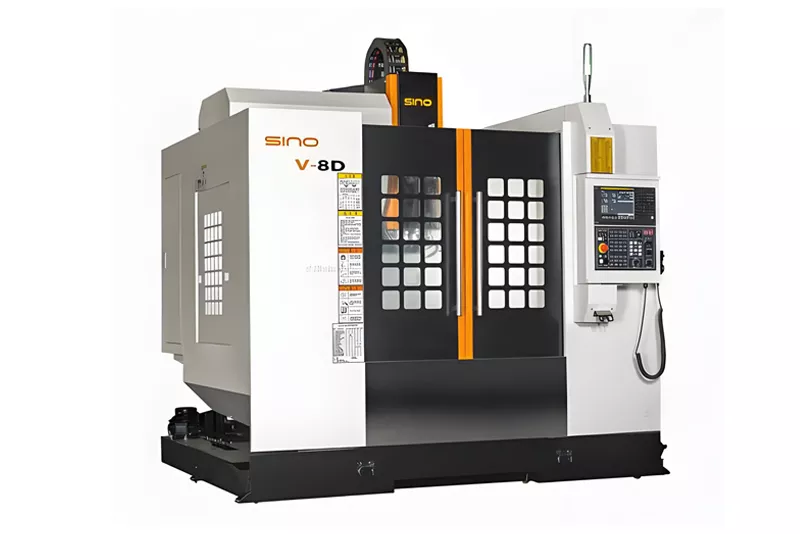
Numerical control (NC) technology and equipment are enabling technologies and the most fundamental equipment for developing emerging high and new technology industries and advanced industrial sectors. Modern NC machine tools are typical products of mechatronics integration, serving as the foundation and important components of new-generation production technologies, computer-integrated manufacturing systems, etc. A NC machining center is a type of NC machine tool equipped with a tool magazine that can automatically change tools, capable of performing various machining operations on workpieces within a certain range. Its main characteristics: after a workpiece is clamped once, the NC system controls the machine tool to automatically select and change tools according to different processes. The spindle speed of the machine tool, feed rate, relative motion trajectory of the tool with respect to the workpiece, and other auxiliary functions can all be automatically adjusted, enabling continuous multi-process machining such as drilling, countersinking, reaming, boring, tapping, and milling on various machining surfaces of the workpiece. Machining centers can concentrate on automatically completing multiple processes, avoiding human operational errors, reducing workpiece clamping, measurement, and machine tool adjustment times, as well as workpiece turnover, handling, and storage times, thereby significantly improving machining efficiency and accuracy. As a result, they offer good economic benefits. Machining centers can be divided into two major categories based on the spatial position of the spindle: vertical machining centers and horizontal machining centers.
As the manufacturing industry undergoes transformation and upgrading, the demand for high-precision, high-efficiency, and intelligent machining is growing increasingly. This has driven CNC technology to continuously break through traditional boundaries, reflecting not only enhanced technical capabilities but also a precise response to diverse customer needs. Beyond machining accuracy, technological innovation lies in the construction of intelligent production processes. By integrating advanced numerical control systems, sensor technology, and artificial intelligence algorithms, CNC machining achieves full-chain intelligent control from design to production, significantly improving production efficiency and product quality. Meanwhile, with downstream customer demands becoming increasingly diversified, customized production has emerged as a new industry trend. Machining enterprises must possess rapid response capabilities, utilizing modular design, flexible production lines, and other methods to enable personalized product customization, meeting specific needs across various fields and industries. Additionally, the CNC machining industry makes significant contributions to sustainable development through green manufacturing technologies. In response to environmental pressures and resource constraints, green technologies such as dry cutting, low-temperature cutting, and minimal/no cutting fluid machining are widely applied, effectively reducing environmental pollution and resource consumption during the machining process.
Numerical control (NC) technology has developed alongside the advancement of information technology, microelectronics technology, automation technology, and testing technology. Its development trends include high speed, high precision, multi-function integration, and intelligence. The level of NC technology is closely related to a country's overall national strength, particularly in the fields of key NC technologies and equipment with 'high precision, high-end, and cutting-edge' characteristics. Currently, countries around the world widely adopt NC technology in industries such as information technology, biotechnology, automotive manufacturing, and electronics to enhance manufacturing capabilities and levels, as well as their adaptability to the market and competitiveness. Its applications mainly cover numerous sectors including automotive manufacturing, aerospace equipment manufacturing, shipbuilding, mold manufacturing, power generation equipment manufacturing, metallurgical equipment manufacturing, and communication equipment manufacturing. Therefore, vigorously developing advanced manufacturing technologies centered on NC technology has become an important way for countries worldwide to accelerate economic development, improve comprehensive national strength, and enhance national status.
China's 14th Five-Year Plan outlines that to promote the optimization and upgrading of the manufacturing sector, it is essential to foster advanced manufacturing clusters, cultivate leading and pillar industries, and drive the integrated, clustered, and ecological development of strategic emerging industries, with their added value accounting for over 17% of GDP. Advanced industries such as automobiles, integrated circuits, and robotics (19.290, 0.00, 0.00%) rely on CNC machine tools for precision supporting production. As the variety of China's advanced manufacturing sectors continues to expand, the demand for CNC machine tools is steadily increasing.
It is estimated that by 2029, the market size of China's CNC machining will exceed 600 billion yuan.