
CNC Machine Tools Full Revelation: Diverse Types Driving Manufacturing Innovation
In the vast landscape of modern manufacturing, CNC machine tools shine like brilliant stars, illuminating the path of precision machining. With their diverse types, each possessing unique functions and advantages, they are widely applied in various fields, serving as the core driving force propelling the manufacturing industry toward high precision, high efficiency, and intelligent development. Today, let us continue to explore the diverse world of CNC machine tools.
CNC Machining Center: The All-in-One Manufacturing Master
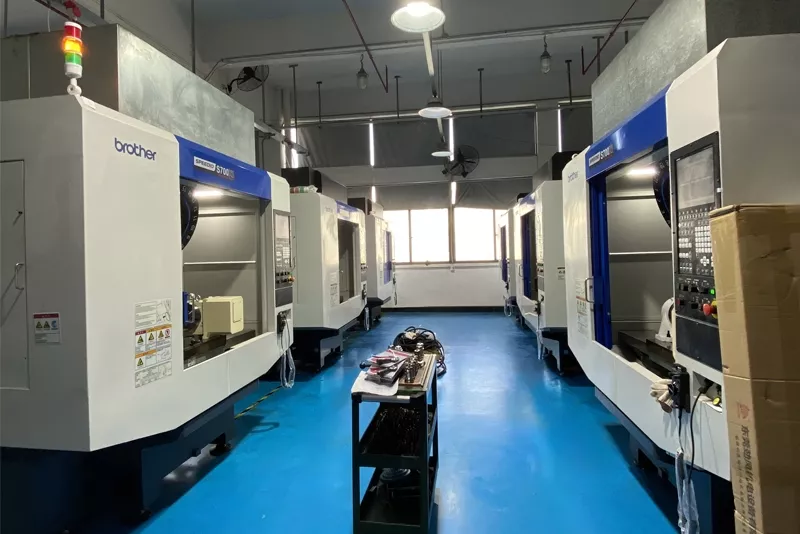
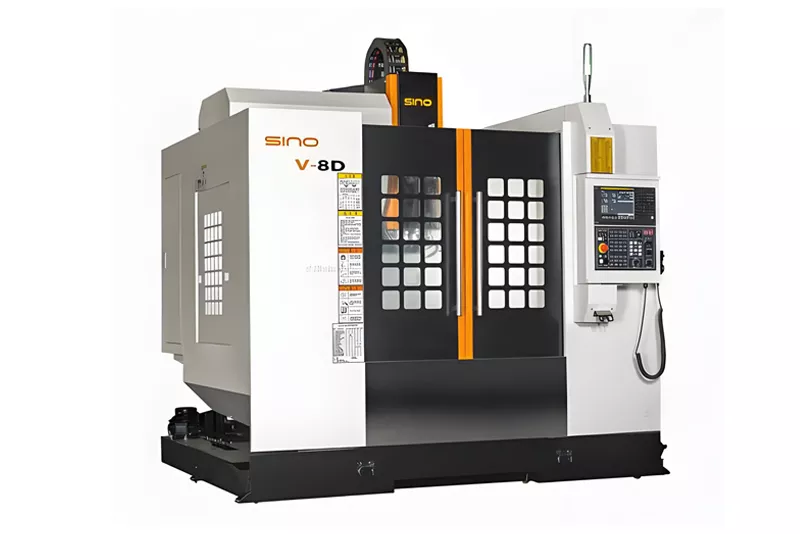
CNC machining centers are often regarded as the "all-rounders" of the machine tool industry, integrating multiple processing functions such as milling, boring, drilling, and tapping. Equipped with a tool magazine and an automatic tool changer, they can perform a variety of operations in a single setup, significantly improving production efficiency and machining accuracy while reducing the number of workpiece clamping steps and associated errors.
From a structural type perspective, machining centers can be divided into vertical machining centers, horizontal machining centers, and gantry machining centers. Vertical machining centers have a compact structure, small footprint, and are easy to operate, making them suitable for processing medium and small-sized parts. They are widely used in industries such as mold manufacturing and electronic equipment manufacturing. For example, in the processing of mobile phone back cover molds, vertical machining centers can quickly switch tools and precisely mill various complex shapes and fine textures on the mold surface, ensuring the appearance quality and dimensional accuracy of the mobile phone back cover. Horizontal machining centers have their spindles in a horizontal position, offering high rigidity and stability, and are suitable for processing large and complex parts, such as engine blocks and box-type parts. They can process multiple surfaces by rotating the worktable, reducing secondary clamping of the workpiece and improving processing accuracy and efficiency. Gantry machining centers are known for their massive structure and powerful processing capabilities, mainly used for processing large and heavy parts, such as aircraft beams and ship decks. Their crossbeam and ram structure can provide stable cutting force, ensuring the smoothness and high precision of the machining process.
In the aerospace field, parts such as turbine wheels and blades of aircraft engines have complex shapes and extremely high precision requirements. CNC machining centers can control the machining accuracy of these parts at the micron level through precise programming and automated machining, ensuring the performance and reliability of the engine. In the automotive manufacturing industry, the machining of engine cylinder blocks requires processing multiple hole systems, planes, and curved surfaces. CNC machining centers, with their advantage of multi-process integration, can efficiently and accurately complete the machining of cylinder blocks, improving the production efficiency and quality of automobiles.
CNC Laser Processing Machine: The Sculptor of Precision Light
A CNC laser processing machine is a device that processes materials using a high-energy-density laser beam. It demonstrates strong competitiveness in many fields due to its unique advantages such as high precision, high speed, and non-contact processing.
The principle of laser processing is to generate a high-energy laser beam through a laser generator. After being transmitted through an optical path and focused by a focusing lens, the laser beam is irradiated onto the workpiece surface, causing the material on the workpiece surface to melt, vaporize, or sublimate instantaneously. This enables machining operations such as material removal, cutting, welding, and drilling. CNC laser processing machines have extremely high machining accuracy, capable of reaching micrometer or even sub-micrometer levels, making them particularly suitable for processing small and precision parts. For example, in the electronics industry, tiny metal parts in mobile phone camera modules have extremely high requirements for dimensional accuracy and surface quality. CNC laser processing machines can achieve high-precision cutting and drilling through precise laser beam control, ensuring the performance of the camera module.
CNC laser processing machines have high processing speed and efficiency. Taking laser cutting as an example, for some thin-plate materials, the cutting speed can reach several meters per minute or even higher, greatly improving production efficiency. Moreover, laser processing is a non-contact process, which does not cause mechanical stress or deformation to the workpiece, making it suitable for processing some easily deformable materials such as thin-walled parts and brittle materials. In the automotive manufacturing industry, laser welding technology for car bodies has been widely applied. Through CNC laser processing machines, various components of the car body are precisely welded together, not only improving the strength and rigidity of the car body but also reducing the number of weld points and enhancing the appearance quality of the car body.
In the field of medical device manufacturing, some precision medical device components, such as coronary stents and dental implants, have extremely strict requirements for accuracy and surface quality. CNC laser processing machines can meet the high-precision machining needs of these parts through fine laser processing technology, ensuring the safety and effectiveness of medical devices.
CNC Punch Press: The High-Efficiency
CNC punch presses are mainly used for stamping processing of plates. By applying pressure to the plates through molds, they cause plastic deformation or separation of the plates, thereby obtaining the required part shapes. They have the characteristics of high degree of automation, high processing accuracy, and high production efficiency, and play an important role in industries such as sheet metal processing, electrical appliance manufacturing, and automobile parts manufacturing.
The working principle of a CNC punch press is to place the sheet metal on the worktable, and control the movement trajectory and punching force of the punch through the CNC system, so that the punch performs punching processing on the sheet metal according to a preset program. Compared with traditional punch presses, CNC punch presses have higher processing accuracy and flexibility. They can achieve various complex shape punching processing through programming without the need for frequent mold changes, greatly shortening the processing cycle. For example, in the electrical manufacturing industry, the outer shell of distribution boxes is usually made of metal sheet metal. CNC punch presses can quickly and accurately punch various hole shapes, groove shapes, and bending lines on the sheet metal according to design requirements, improving the processing efficiency and quality of the distribution box outer shell.
CNC punching machines have a high degree of automation and can achieve continuous processing with unattended operation. They can be equipped with automatic loading and unloading devices to realize automatic feeding of plates, positioning, and automatic unloading after punching processing, reducing manual intervention and improving production efficiency and the stability of processing accuracy. In the field of automotive parts manufacturing, many parts such as body panels and structural components of cars are formed by plate punching. CNC punching machines can ensure the dimensional accuracy and consistency of parts in large-scale production, meeting the requirements of efficient and high-quality automobile production.
In addition, CNC punching machines can be combined with other equipment to form automated production lines. For example, when used in conjunction with CNC bending machines, laser cutting machines, and other equipment, they can achieve fully automated production of sheet metal processing, further improving production efficiency and reducing production costs.
CNC machine tools are classified in a rich and diverse manner, with each category of machine tool playing an irreplaceable key role in its respective area of expertise. Whether it is pursuing high precision and high efficiency in large-scale production, or meeting the processing needs of complex shapes and special materials, CNC machine tools can provide perfect solutions. In today's increasingly competitive manufacturing industry, enterprises should carefully select the most suitable CNC machine tool based on their own processing requirements, workpiece materials, precision requirements, and other factors. By fully leveraging its advantages, they can enhance production competitiveness, take the lead in the field of precision manufacturing, and create even more brilliant achievements.