
CNC four-axis machining tools lead the new era of intelligent manufacturing!
CNC four-axis machining is an advanced machining method developed on the basis of traditional three-axis machining. Traditional three-axis machining includes three linear axes: X, Y, and Z, which represent movement in the left-right, front-back, and up-down directions respectively. Four-axis machining adds a rotational axis to this foundation, typically referred to as the A, B, or C axis.
The principle of CNC four-axis machining is not complicated, yet it embodies strong technical power. First, professional computer-aided manufacturing (CAM) software is used for programming. Designers plan the tool path and cutting parameters precisely based on the shape, size, and machining requirements of the workpiece. During the programming process, full consideration must be given to the coordinated movement of the four axes, and the cooperation between the rotational axes and linear axes should be arranged reasonably to achieve efficient machining of complex-shaped parts.
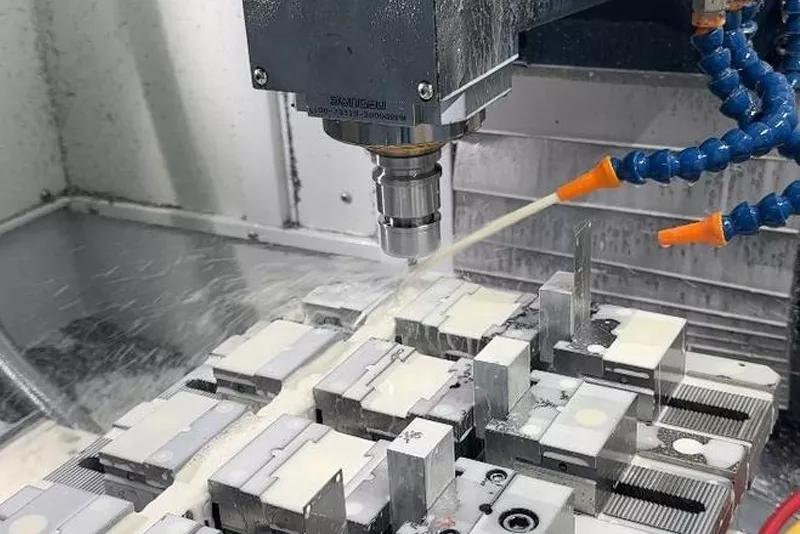
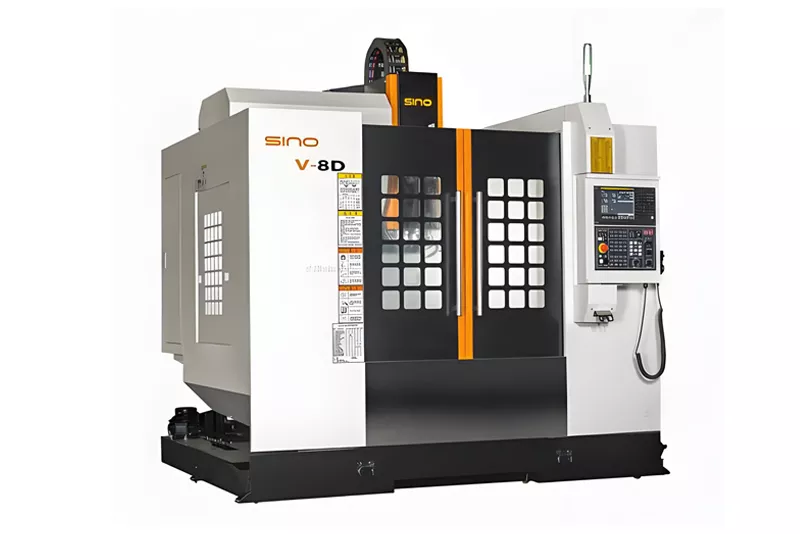
In the actual machining process, the workpiece is fixed on the worktable and the movement of four axes is precisely controlled by a computer numerical control (CNC) system. The tool cuts the workpiece along a predetermined path. The addition of rotational axes allows the tool to approach the workpiece from different angles, making it possible to machine parts with complex curved surfaces, inclined surfaces, and spiral shapes.
CNC four-axis machining has many significant advantages
Improve machining accuracy.
By reducing the number of workpiece clamping times, errors caused by multiple clamping are minimized. At the same time, the precise control system ensures the stability of the tool during the machining process, reducing vibration and errors, which makes the machined parts have more accurate dimensions and higher surface quality.
Increase processing flexibility.
It can easily handle the machining of various complex-shaped parts, such as impellers, propellers, and complex curved surface molds. The presence of rotational axes makes the machining angles more diverse, enabling the machining of parts with different design requirements and providing designers with a larger creative space.
Improve production efficiency.
One setup can complete machining of multiple surfaces, greatly reducing processing time and auxiliary time. Multi-axis linkage also enables high-speed cutting, increasing machining speed and thereby significantly improving production efficiency.
CNC four-axis machining has a wide range of applications in many fields
1. In the aerospace field, the machining of complex parts such as aircraft engine blades and impellers relies on CNC four-axis machining technology. These parts typically have complex curved surfaces and high precision requirements, and four-axis machining can accurately process these parts to ensure the performance and safety of the aircraft. At the same time, precision mold manufacturing in the aerospace field also cannot do without four-axis machining, such as aircraft fuselage molds and wing molds, which can meet the high-difficulty design and manufacturing requirements.
2. In the automotive manufacturing field, CNC four-axis machining can efficiently and with high precision process complex components such as engine blocks and cylinder heads of automobiles, improving the quality and performance of automotive parts. The manufacturing of automotive molds also benefits from four-axis machining technology, such as automotive body panel molds and interior component molds, which can produce more complex and precise molds, enhancing the appearance and interior quality of automobiles.
3. In the medical device field, high-precision medical device parts such as artificial joints and dental instruments have extremely high requirements for machining accuracy and surface quality. Four-axis machining can meet these strict requirements, ensuring the safety and reliability of medical devices.
4.In the field of electronic communications, CNC four-axis machining can process the casings and internal structural components of electronic products such as mobile phones and computers, meeting the development trend of lightweight and miniaturization of electronic products. For example, parts such as the metal frames of mobile phones and the heat sinks of computers can all achieve high-precision manufacturing through four-axis machining.
In the field of handicraft manufacturing, four-axis machining can produce exquisite sculptures, ornaments, and other items. Complex curved surfaces and intricate patterns can be easily achieved through four-axis machining, adding artistic value to handicrafts.