
Basic Components of a CNC Lathe
Numerical control machine tools are the mainstream equipment with the largest production volume and the most widespread application in modern manufacturing. They are essential equipment for precision CNC machining, featuring multiple advantages such as high processing efficiency and high precision. So do you know which components make up a CNC lathe?
First, we must understand that a CNC lathe is an automated machine tool equipped with a program control system. This control system can effectively process various programs according to specified instructions and decode them, enabling the machine tool to accurately machine parts. Also known as a numerical control lathe, in Hong Kong, China and the Pearl River Delta region, it is also called a computer-controlled lathe.
CNC lathes are divided into turret lathes and live tooling lathes according to their movement methods. The overall structural composition of CNC lathes is basically the same as that of conventional lathes, which also have basic components such as the bed, spindle, tool post, saddle, and tailstock. However, conventional lathes do not have special CNC machine tool components such as CNC operation panels and display monitors.
P.S.: A lathe machine is a high-performance, high-precision, low-noise automatic lathe that is an automatic machining machine controlled by cam to control the machining program; while a walking heart machine, fully known as a walking heart type CNC lathe, is a precision machining equipment that can complete composite machining such as turning, milling, drilling, boring, tapping, and engraving at the same time. Both of these are CNC lathes.
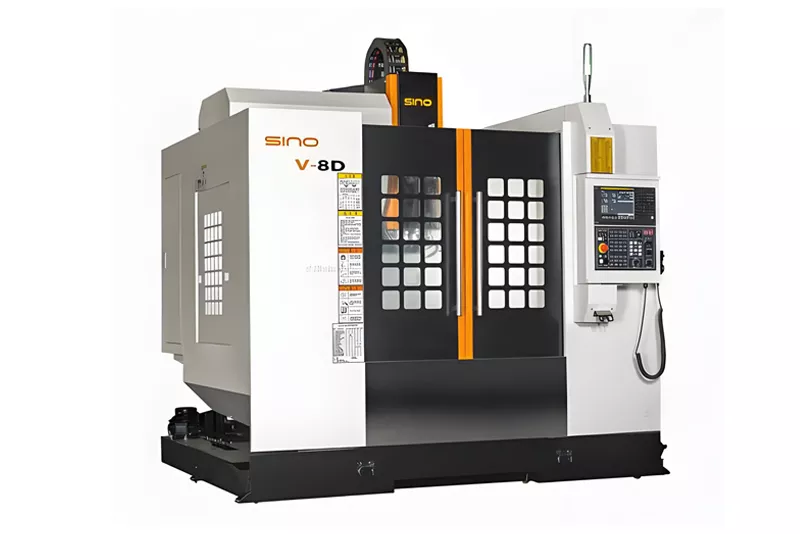
Currently, the vast majority of CNC machine tools on the market generally consist of the following four parts: the machine body, the control part, the drive unit, and the auxiliary devices.
I. Machine Tool Body
The machine tool body is the mechanical part of a CNC lathe, mainly including the bed, base, column, crossbeam, slide seat, worktable, spindle box, feed mechanism, tool post, and automatic tool changing device. It is the mechanical part that automatically completes various cutting processes on CNC machine tools.
Adopt new machine tool structures with high stiffness, high seismic resistance, and minimal thermal deformation. Typically, the rigidity and seismic resistance of the machine tool host are improved by methods such as increasing the static stiffness of the structural system, adding damping, adjusting the mass and natural frequency of structural components, etc.
The methods to improve the rigidity and anti-vibration performance of machine tool host usually include: 1. Increasing damping; 2. Adjusting the mass of structural components; 3. Adjusting the natural frequency; 4. Improving the static stiffness of the structural system; where static stiffness (The static stiffness) is the ability of the structure to resist deformation under specific static excitation.
Modern CNC machine tools widely use high-performance spindle servo drives and feed servo drive units, which shorten the transmission chain and simplify the structure of the machine tool's mechanical transmission system.
II. Control Section
The control section is the core of a CNC lathe, generally including a dedicated computer, liquid crystal display, control panel, and strong electrical control system (which contains machine tool printed circuit boards, screen displays, keyboards, paper tape TAPE, magnetic tapes, drive circuits, etc.). The program instructions input into the control section are recorded on information carriers and received by the program input device, or directly manually input through the keyboard of the control section.
Here, the term 'paper tape TAPE' refers to a medium for storing programs. Programs were recorded on the paper tape using a punch machine, and then the programs recorded on the paper tape were input into CNC machine tools. However, with the development of storage technology, paper tapes are no longer used to record programs. Nowadays, programs are mostly recorded using fast flash memory or disks. 'Tape' and 'disk' are components that have evolved from 'paper tape' and are commonly equipped in modern machine tools.
III. Drive Unit
At present, the commonly used drive devices in CNC machine tools are mainly divided into four types: servo motor drive devices, stepper motor drive devices, DC motor drive devices, and AC servo motor drive devices.
Servo motor drive device. It has characteristics such as simple structure, high positioning accuracy, high power output, and a wide speed regulation range. It is widely used in CNC machine tools with higher processing quality requirements and more frequent actions, especially CNC milling machines, CNC lathes, etc.
Stepper motor drive devices have many advantages such as high precision and stable low-speed driving. This drive device achieves the position and control speed of the machine tool axis by controlling the distance and frequency of each motor step, thereby accurately controlling the movement state of the machine tool. Stepper motor drive devices are commonly used in CNC machine tools with high precision requirements and low rotational speeds (such as printing machines and winding machines).
DC Motor Drive Device. It has advantages such as simple structure and excellent speed regulation performance. It usually achieves motor speed and torque control by converting DC voltage. It is suitable for CNC machine tools with large speed variation and high precision requirements, such as CNC drilling machines and CNC boring machines.
AC Servo Motor Drive Unit. This is a drive unit that integrates a servo motor and a frequency converter. It features compact structure, fast response speed, and smooth operation. The AC servo motor drive unit achieves motor speed and position control by regulating the power supply frequency and phase difference. It is suitable for high-precision, high-speed motion CNC grinders, CNC machining centers, etc.
IV. Auxiliary Devices
Auxiliary devices refer to some supporting components of CNC lathes, including tool presetters (full name: tool pre-adjustment instruments, which are measuring instruments used to measure and/or adjust the radial and axial dimensions of cutting edges of various machining centers and CNC machine tools with spindles outside the machine), lubrication systems, hydraulic and pneumatic devices, cooling systems, and chip removal devices, etc.
Auxiliary devices for CNC machine tools are essential supporting equipment required to fully leverage the functions of CNC machines. Commonly used auxiliary devices include startup devices, hydraulic devices, chip evacuation devices, cooling devices, lubrication devices, rotary worktables, CNC indexing heads, protective enclosures, lighting, and other various auxiliary devices. A CNC machine tool is an automated machine equipped with a program control system, capable of executing movements and processing parts according to a pre-programmed instruction set.
The main sensors applied on CNC machine tools include photoelectric encoders, linear gratings, proximity switches, temperature sensors, Hall sensors, current sensors, voltage sensors, pressure sensors, level sensors, resolvers, induction synchronizers, and speed sensors. They are mainly used to detect position, linear displacement and angular displacement, speed, pressure, temperature, etc.