
"Robots" are booming, and machine tool automation is set to reach new heights.
Smart manufacturing is on the rise, and China is also undergoing the pain of upgrading and transforming from a major manufacturing country to a manufacturing power. Although many manufacturing enterprises encounter obstacles in the process of upgrading and transformation, for the overall manufacturing industry, only by vigorously improving the technical level of manufacturing can Chinese manufacturing gain stronger voice and influence on the world stage.
Under the impetus of 'Made in China 2025', the development of numerical control machine tools, industrial robots, and 3D printing has now shown a steady upward trend. Today, let's talk about the development prospects of these three industries.
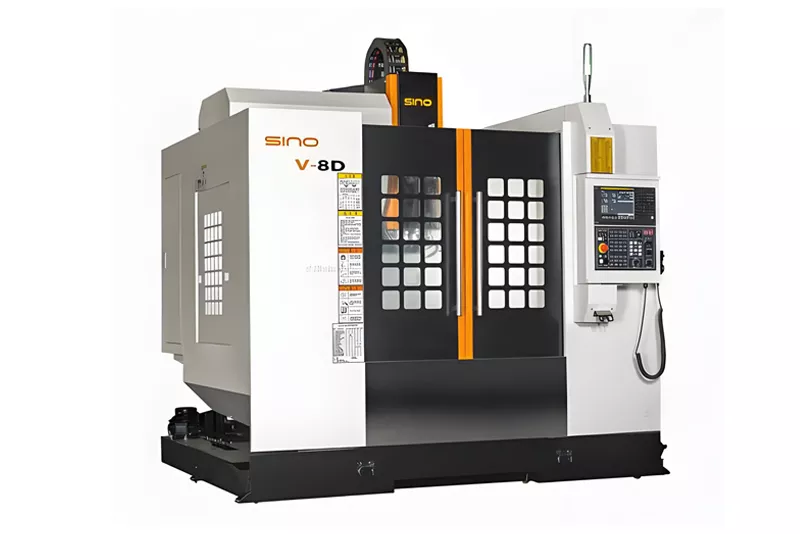
When it comes to the core part of current manufacturing development, I believe machine tools are indispensable. As the 'mother machine' of industry, machine tools hold a dominant position in manufacturing that cannot be replaced in the short term. In the metalworking industry, the key factor determining product quality is still 'machine tools'. Only by improving the quality and technical content of machine tools can the overall strength of manufacturing be further enhanced.
In 2017, 'robots' were the most talked-about topic in manufacturing. For the manufacturing industry, robots are no longer a foreign concept, but why did they become a 'hot term' only in 2017? To get to the root of it, we need to start by talking about the development environment of China's manufacturing industry.
As China's demographic dividend fades and labor costs rise, more and more enterprises are choosing to purchase industrial robots to replace manual labor and reduce production costs. Recently, an article on this website about technical workers, titled 'Why Do Many People Reluctant to Become Technical Workers? Listen to What Netizens Have to Say', sparked heated discussions among a large number of netizens. Due to various reasons mentioned in the article (which the author will not list one by one here), China's technical workforce has temporarily encountered a situation of 'a shortage of successors'.
Not only is there a shortage of labor, but the long-term low-level competitive landscape of China's manufacturing industry has not changed. The decline in overall social demand has led to fierce market competition, making 'survival or death' an unavoidable and serious choice for every enterprise. In such a scenario, improving production efficiency and reducing production costs have become new urgent needs, and 'robots' naturally become a means of competition.
The popularity of 'robots' will gradually fade as automation replaces manual labor in an increasingly deepening manner. Once the degree of automated production reaches a certain proportion, people will inevitably refocus their attention on the machine tool industry. This is because only when the manufacturing level of machine tools catches up with those of manufacturing powerhouses can the relevant upstream and downstream industries of machine tools develop better.
After talking about machine tools and robots, let's discuss 3D printing. Although 3D printing technology has only become popular in recent years as a manufacturing method, its development history is not short. The reason it suddenly became popular again is that there have been significant advancements in 3D printing technology in Europe and America, and major progress has been made in practical manufacturing applications.
Although 3D printing can still be considered a new thing so far, it will inevitably follow the development rhythm of new things, that is, slow development in the initial stage, but once there is a technological breakthrough, the situation will open up quickly. At present, the key factor restricting 3D printing technology is materials. With the breakthrough in material technology, 3D printing will exert immeasurable power and greatly rewrite the landscape of manufacturing.
At present, China still has a significant gap in 3D printing technology compared to foreign countries, and can only hope that top domestic scientific researchers will achieve greater breakthroughs in the field of materials science.
In conclusion, the path of intelligent manufacturing in China is still long, but no matter how we look at it, this path must be taken. It is not only necessary to walk it well but also to do so brilliantly, so that all 'Made in China' products become admirable works.