
Automated Shell Production Line: The Core Engine of Smart Manufacturing
As manufacturing enters the era of Industry 4.0, automated shell production lines for machining centers have become an indispensable core component of modern intelligent manufacturing systems. By integrating robotic technology, IoT sensors, and intelligent control systems, these production lines achieve full-process automation for shell machining, from raw materials to finished products. Compared to traditional machining methods, automated production lines not only significantly improve production efficiency but also demonstrate notable advantages in machining accuracy, quality stability, and resource utilization. Particularly noteworthy is that modern automated shell production lines have moved beyond the stage of simply \"replacing human labor\" and are evolving toward higher-level adaptive machining and data-driven optimization. They can dynamically adjust parameters based on real-time collected machining data to address uncertainties such as material property fluctuations and tool wear. This intelligent characteristic makes them particularly suitable for flexible production needs involving a variety of products and small batch sizes. With the continuous emergence of new materials and processes, and the growing market demand for personalized product customization, the technical connotations and application scenarios of automated shell production lines continue to be enriched and expanded, becoming a key tool for manufacturing enterprises to enhance their competitiveness.
1、Core Components and Technical Advantages of Automated Shell Production Lines
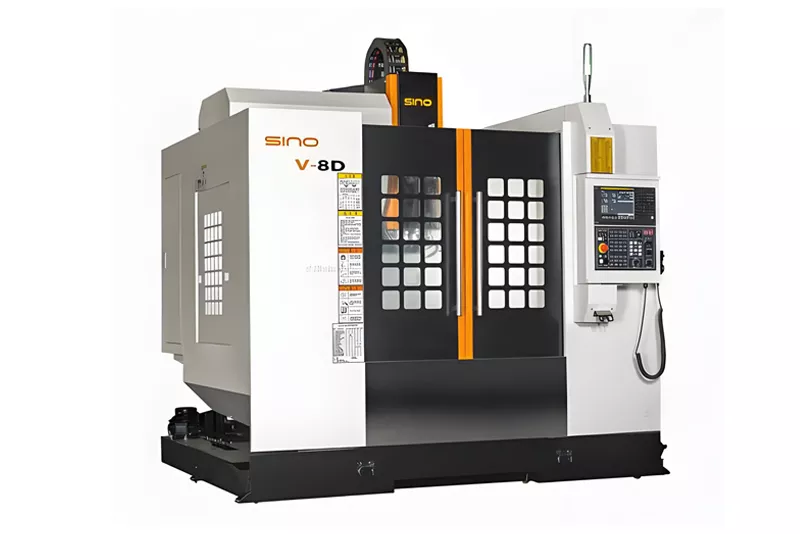
A complete automated shell production line is organically integrated from multiple functional modules. First, there is the machining center main body, which includes core machining equipment such as CNC milling machines and turning-milling composite centers, responsible for executing specific machining processes like cutting, drilling, and tapping. Next is the material handling system, covering automatic loading and unloading devices, AGV transport vehicles, and Three-dimensional warehouses (stacked warehouses), enabling the automatic flow of raw materials, semi-finished products, and finished products within the production line. Then there is the inspection and monitoring system, which uses laser measuring instruments, visual recognition systems, and other tools to monitor the machining process in real time and control quality. Finally, there is the centralized production line
2、Key Technological Features of Intelligent Shell Production Lines
The intelligent characteristics of modern automated shell production lines are primarily reflected in several key aspects. Adaptive machining capability is the core manifestation of intelligence. By integrating sensors on machine tools to monitor parameters such as cutting force, vibration, and temperature in real time, the system can automatically adjust machining parameters like feed rate and spindle speed to ensure the machining process remains in an optimal state. For example, when the system detects increased cutting force due to tool
wear, it will automatically compensate for the corresponding deviation or prompt for tool replacement. This function is crucial for maintaining quality consistency in batch machining.
Data-driven decision optimization is another prominent feature. Modern automated production lines, through industrial internet platforms, comprehensively collect and analyze machining data, equipment status information, and quality data. These data are not only used for real-time monitoring but also enable machine learning algorithms to uncover inherent correlations between process parameters and machining quality, thereby continuously optimizing machining strategies. For instance, by analyzing historical machining data, the system can predict tool life, optimize cutting parameters, and even issue early warnings for potential equipment failures, facilitating a shift from reactive maintenance to predictive maintenance.
Flexible production configuration is also an important characteristic of intelligent production lines. Through modular design and reconfigurable manufacturing systems, the same production line can quickly adapt to different specifications and batch sizes of shell machining tasks. For example, the adoption of zero-point positioning systems and quick tool change devices significantly reduces adjustment time when switching product types. This flexibility is particularly suitable for the current market trend of multiple varieties and small batches.
3. Main Challenges and Countermeasures in Building Automated Production Lines
Although automated shell production lines offer significant advantages, they still face numerous challenges during construction and operation. The complexity of technical integration is the primary challenge; seamlessly integrating equipment, control systems, and software platforms from different manufacturers into a collaborative system is no easy task, requiring the resolution of numerous interface compatibility and data exchange standard issues. Particularly for the automation retrofitting of existing production facilities, achieving a smooth transition without disrupting normal production requires careful planning and a phased implementation strategy.
Another major bottleneck is the shortage of talent. Automated production lines require operators to possess multidisciplinary knowledge in mechanical processing, electrical control, programming, and debugging, yet such composite technical talents are relatively scarce. Addressing this issue requires companies to strengthen internal training and establish a multi-level skills development system, while also demanding that equipment suppliers provide more user-friendly operating interfaces and more comprehensive technical support.
The investment return period is also an important consideration for enterprise decisions. Automated production lines involve substantial upfront investments, including costs for equipment procurement, system integration, and personnel training. To mitigate risks, companies can adopt a progressive implementation strategy, prioritizing the automation of bottleneck processes or labor-intensive sections. Once positive results are achieved, the scope of automation can be gradually expanded. Additionally, by optimizing the entire production process through lean manufacturing methods, ensuring that the capabilities of automated equipment are fully utilized, maximum investment returns can be realized.
4、Future Development Trends of Automated Shell Production Lines
As technology advances and markets evolve, automated shell production lines are moving toward greater intelligence, flexibility, and sustainability. Human-robot collaborative operation modes will become more widespread. Traditional industrial robots typically require working within safety enclosures, whereas the new generation of collaborative robots can share workspaces with operators. By integrating vision guidance and force control technologies, they enable more flexible and efficient working methods. This mode is particularly suitable for complex assembly and fine adjustment tasks in shell processing, enhancing operational flexibility while ensuring safety.
The application of digital twin technology will profoundly transform the design and operation of production lines. By establishing real-time connections between physical production lines and virtual models, enterprises can simulate, test, and optimize production lines in the digital space, significantly shortening debugging time and reducing trial-and-error costs. In the future, digital twin technology will also be used for predictive maintenance and production optimization. By simulating the effects of different production strategies, it will provide a scientific basis for decision-making.
Green manufacturing concepts will be more deeply integrated into automated production lines. By optimizing cutting parameters and machining strategies, energy consumption and material waste can be reduced; adopting dry cutting or minimal lubrication technologies can minimize the environmental impact of coolants; developing lightweight design technologies for shells can reduce carbon emissions throughout the product lifecycle. These sustainable manufacturing practices not only meet environmental requirements but also bring significant economic benefits to enterprises.
Personalized customization capabilities will become an important competitive advantage of automated production lines. As consumer demands become increasingly diverse, shell production is shifting from large-scale standardization to small-batch customization. Automated production lines, through flexible manufacturing systems and parametric design platforms, can quickly respond to different customers' personalized needs and achieve mass customization. This capability will be a key differentiating advantage for manufacturing enterprises to stand out in intense market competition.