
The application of aluminum alloy in automobiles
As environmental pollution and energy crises become increasingly severe, reducing vehicle weight and lowering fuel consumption have become important directions for the green development of the automotive industry. According to relevant statistics, a 10% reduction in the weight of passenger cars will result in a 6% to 8% decrease in fuel consumption. It can be seen that automotive lightweighting can not only alleviate the energy crisis to a certain extent but also contribute to the control of environmental pollution. Therefore, the topic of automotive lightweighting has extremely significant practical importance.
The first people to apply aluminum materials to cars were Indians. According to relevant records, in 1896, Indians pioneered the use of aluminum to make car crankcases. In the early 20th century, aluminum began to be used in luxury cars and racing cars, such as the Ford Model T, which had an aluminum body. Since the body accounts for about 30% of the total weight of the car, lightweighting the body holds a crucial position.
Replacing steel sheets with aluminum alloy sheets on the inner and outer panels of a car can reduce the body weight by about 40%-50%; if aluminum alloy body panels are used for the entire vehicle, the weight reduction can reach 10%-15%. It can be seen that using aluminum alloy body panels has a very significant weight reduction effect.
The entire body of the German Audi A8L luxury sedan is made of aluminum, as shown in the figure below. The frame adopts a three-dimensional frame structure, and the covering parts are formed by stamping aluminum plates. Compared with steel body frames, this aluminum body reduces weight by 30-50% and lowers fuel consumption by 5-8%.
The following figure shows the classification of aluminum alloys. The classification and grades of aluminum alloys are relatively complex. Aluminum alloys used in automobiles can be divided into two major categories: casting aluminum alloys and deformation aluminum alloys. Among them, casting aluminum alloys account for approximately 80% of the usage.
Cast aluminum alloys have excellent casting properties. Suitable alloys and casting methods can be selected based on requirements such as usage purpose, part shape, dimensional accuracy, quantity, quality standards, mechanical properties, and economic benefits. They are mainly used to manufacture non-engine components such as engine cylinder blocks, clutch housings, steering gear housings, gearboxes, wheels, engine frames, brake calipers, cylinders, and brake discs.
Deformed aluminum alloys include plates, foils, extrusions, forgings, etc. They are generally used in automobiles mainly for manufacturing structural components such as body panels (including doors, trunk lids), bumpers, engine hoods, wheel spokes, wheel hub covers, brake assembly protective covers, body frames, seats, and floorboards of the passenger compartment, as well as decorative components such as instrument panels.
Below, we will introduce several main application areas of aluminum alloys in automobiles:
I. Aluminum Cylinder Block, Cylinder Head
Cylinder blocks and cylinder heads for engines require materials with good thermal conductivity and high corrosion resistance, which aluminum alloys can perfectly meet. Therefore, many automotive companies use fully aluminum cylinder blocks and cylinder heads in their engines. For example, General Motors in the United States uses fully aluminum cylinder liners, while French vehicles have achieved a 100% adoption rate for aluminum cylinder liners and a 45% adoption rate for aluminum cylinder blocks. Aluminum castings are also used for engine components such as pistons, piston rings, and connecting rods. The use of aluminum castings for pistons and connecting rods reduces weight, thereby decreasing engine vibration, lowering noise levels, and improving fuel efficiency—aligning well with the development trends in the automotive industry.
II. Engine Hood
The hood is a critical component that affects pedestrian head injuries. To ensure pedestrian safety in unexpected incidents, there are high requirements for the performance of the materials used in the hood's manufacturing. It needs to have high energy absorption capability and low strength, among other characteristics.
Aluminum plate energy absorption is twice that of steel plates, which helps reduce the injury to pedestrians' heads during collisions and provides strong protection for pedestrians. Now, many high-end cars have adopted aluminum alloys, and all-aluminum SUVs have also emerged. Using aluminum alloys to manufacture engine hoods is also relatively widespread.
Aluminum alloy engine hoods have gradually become a development trend in the automotive industry. After being adopted by high-end cars, they have also been further applied to mid-to-low-end vehicles. The Mazda RX-8 sports car uses a conical impact-absorbing aluminum alloy engine hood designed to protect pedestrians' heads. The use of this engine hood not only significantly reduces the risk of head injury to pedestrians but also lightens the vehicle's weight. More importantly, this design concept has also become a major highlight in marketing.
III. Aluminum Body
The essence of the automotive industry lies in the manufacturing of car bodies, which accounts for nearly 60% of the total investment of automobile manufacturing companies. Statistics show that the weight of a car body makes up about 30% of the total weight of the vehicle, making reducing the body weight crucial for the overall lightweighting of the vehicle.
In 2006, the total global demand for aluminum alloys used in body manufacturing in the entire automotive industry reached 2.05 million tons. The main aluminum alloys used for vehicle bodies are the 2000 series, 5000 series, 6000 series, and 7000 series. Now, almost all major car companies around the world are competing to develop aluminum alloy body parts or all-aluminum bodies, and have achieved significant results recently.
In 2003, Jaguar's sixth-generation XJ made its debut with a fully aluminum body, officially ushering in a new era of lightweight and high-efficiency vehicles across the global automotive industry. In 2009, the seventh-generation Jaguar XJ was born, built on the second-generation Premium Lightweight Architecture (PLA). By applying aluminum-magnesium alloys, it continuously enhanced body rigidity and lightweight performance, making it the most 'lightweight master' among its peers at that time.
The new Range Rover by Land Rover also adopts an all-aluminum body structure, as shown in Figure 5. It uses aluminum alloy materials to replace all the steel in the body. The riveting of the vehicle's body meets high standards. Compared with the previous un-painted body (white body), the all-aluminum white body reduces weight by approximately 180kg, with a weight reduction rate as high as 39%. The entire vehicle extensively employs lightweight technologies, resulting in a total weight reduction of 420kg.
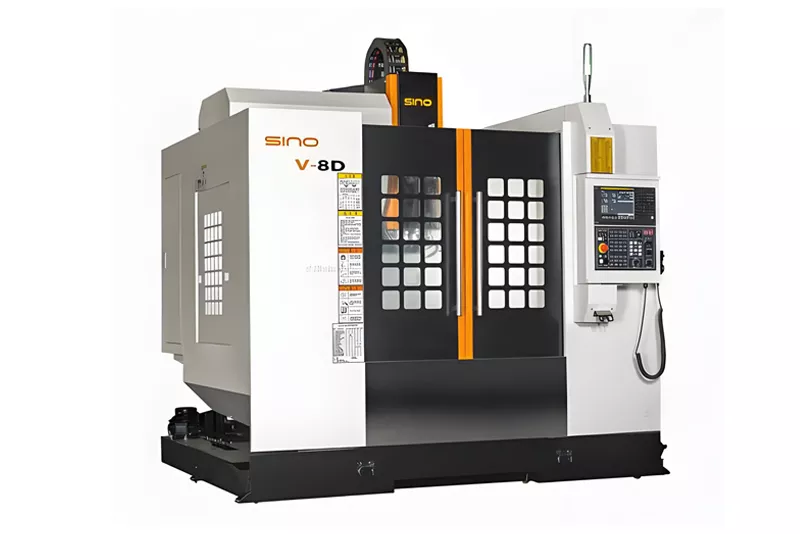
In addition, let me elaborate on the processing technology of the aluminum window track. It adopts fully automated four-axis rotating machining to ensure processing accuracy.