
Putting 'Flexible Armor' on Titanium Alloys
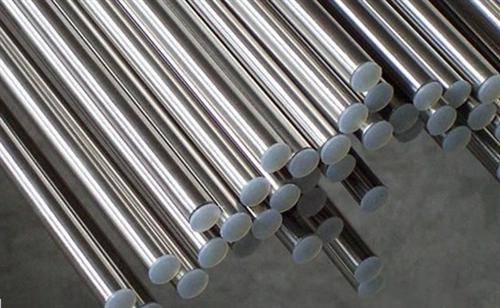
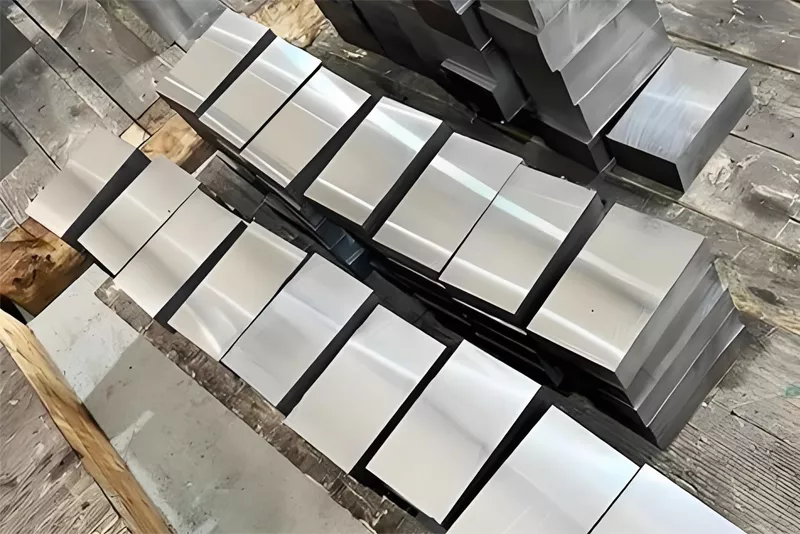
Titanium alloys, due to their characteristics such as low density, high specific strength, and strong corrosion resistance, have become important materials for key components such as aircraft engine parts and blade hubs. However, they tend to adhere to molds during processing, which reduces the surface quality and machining accuracy of the workpieces and limits their widespread application in fields such as fighter jets.
Recently, the 'Titanium Lubrication Technology' college student startup team from the School of Metallurgy at Xi'an University of Architecture and Technology has focused on the key role of high-end lubricating media in titanium alloy processing. The black phosphorene green lubricating medium product they developed forms a continuous and dense protective layer in titanium alloy processing, equipping the titanium alloy with a 'flexible armor' to ensure the processing accuracy of titanium alloys.
Black phosphorus, a layered two-dimensional material obtained by exfoliating black phosphorus, can be used as a lubricant due to its low shear resistance and high load-bearing capacity. Supported by platforms such as the National-Local Joint Engineering Research Center for Functional Materials Processing and the Academician Studio of Luo Jianbin at Xi'an University of Architecture and Technology, as well as the research project titled "Surface Functionalization Regulation of Black Phosphorus Nanosheets and Their Tribology-Induced Lubrication Mechanism", the team further modified two-dimensional materials like black phosphorus to optimize their antioxidant and lubricating properties. This has enabled performance regulation of lubricant products, contributing to new breakthroughs in the lubrication of titanium alloy processing.
At present, the team has applied for 15 patents for this innovative achievement, published 13 high-level academic papers at home and abroad, and won multiple honors such as the Silver Award in the Main Competition of the 14th 'Challenge Cup' Qinchuangyuan China College Students' Entrepreneurship Plan Competition, and the Gold Award in the Higher Education Main Track of the National Final of the 2023 China International College Students' Innovation and Entrepreneurship Competition.
According to reports, in October 2021, Zhang Ruoyun, a senior undergraduate student majoring in Metal Materials Processing Engineering at Xi'an University of Architecture and Technology, founded the 'Titanium Run Technology' team with the support of Professor Wang Wei from the School of Metallurgy. The team is dedicated to researching and developing titanium alloy machining lubricants to improve the efficiency of titanium alloy processing.
After years of arduous efforts, the three major technical challenges in titanium alloy processing have been overcome: the difficulty of lubrication materials in withstanding loads, easy failure at high temperatures, and difficulty in forming lubrication films.
In August 2022, the team made a major breakthrough in solving the problem of lubrication failure under high load. By modifying the surface of black phosphorus and bridging hydrophilic molecular groups, they addressed the challenge of titanium alloy dispersion. After fine-tuning over 3,000 process parameters, they broke through the load-bearing bottleneck of titanium alloy processing lubricants. The modified black phosphorus achieved a load-bearing limit exceeding 1.8 GPa, thus conquering the first major difficulty.
To address the challenge of lubricating media being prone to oxidative degradation at high temperatures, the team embarked on a new round of scientific research. They decided to explore a core-shell structural chemical synthesis approach, using surface-treated two-dimensional materials to "capture" nanoscale inorganic substances and form a protective shell on the surface. This barrier prevents oxygen from penetrating into the interior and reacting with the primary lubricant, thereby enhancing the antioxidant properties of the lubricating medium. However, during the process, the encapsulation efficiency of the target product was far below expectations, significantly hampering experimental progress and compromising data reliability. “We tried modifying solvents, adjusting reaction temperatures, extending reaction times, and other reaction conditions, while closely monitoring each step,” Zhang Ruoyun explained. After screening and refining over a hundred sets of process parameters, they ultimately achieved an encapsulation rate of 95%, successfully overcoming this second major technical hurdle.
After solving the above two challenges, the team went to the enterprise for pilot-scale testing. However, during the forming process of titanium alloy, new surfaces are constantly formed, and the lubricating medium struggles to form a continuous and stable lubrication film on these new surfaces, leading to poor lubrication effect and product quality. To successfully form a continuous lubrication film on the titanium alloy surface, the team repeatedly adjusted the proportion of multi-component ingredients. After more than 300 attempts, in March 2024, based on the principle of tribocatalytic reaction, the team developed a multi-component gradient efficient lubrication technology for lubrication films, successfully enabling the formation of a continuous and stable lubrication film on the new surfaces of titanium alloy forming, thus solving the third major technical challenge.