
Precision Control and Technological Innovation Pathways for High-Precision Shell Machining
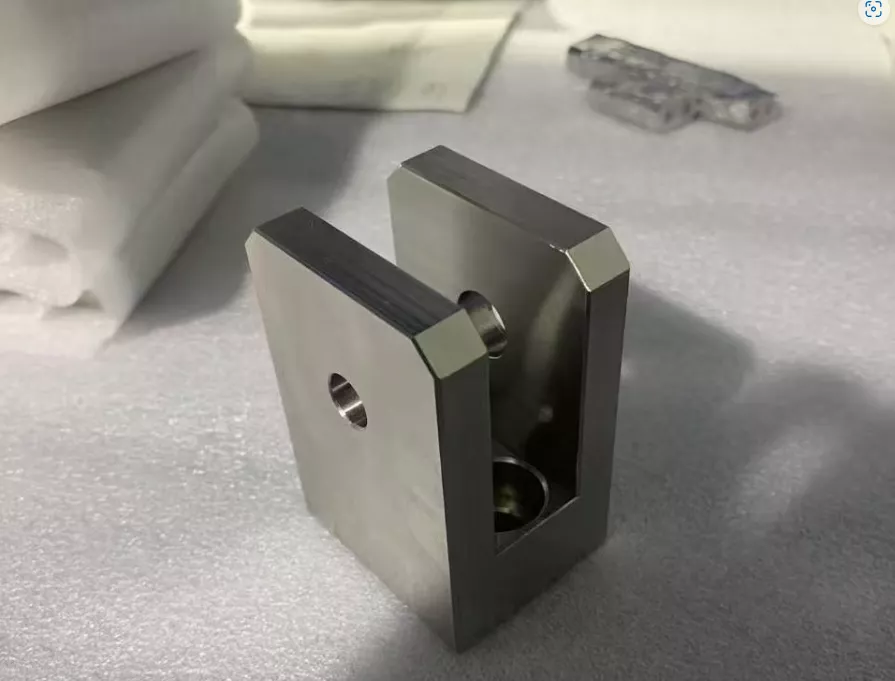
In today's manufacturing industry, high-precision shell machining technology has become a key indicator of a company's technical strength, especially in fields such as energy equipment, electronics, and aerospace. The precision of the shell directly affects the overall performance, reliability, and service life of the entire device. As industrial products move towards miniaturization, lightweight design, and high performance, the precision requirements for shell machining have been upgraded from millimeter-level to micrometer-level and even higher. This shift presents unprecedented challenges to machining processes, equipment, and technical personnel. High-precision shells not only need to meet strict dimensional and geometric tolerances but also ensure good surface finish and structural stability. Even the slightest deviation can lead to assembly difficulties, performance degradation, or premature failure. Why is high-precision shell machining so important? Because it acts as the product's 'outerwear'—it needs to be both aesthetically pleasing and functional. More importantly, it serves multiple critical functions such as protecting internal components, facilitating heat dissipation, and providing electromagnetic shielding. In the current highly competitive market environment, companies can only gain customer trust and occupy an industry-leading position by mastering high-precision shell machining technology. This article will delve into the technical challenges, key processes, and quality control methods of high-precision shell machining, providing valuable references for related enterprises.
1、Main Technical Challenges in High-Precision Shell Machining
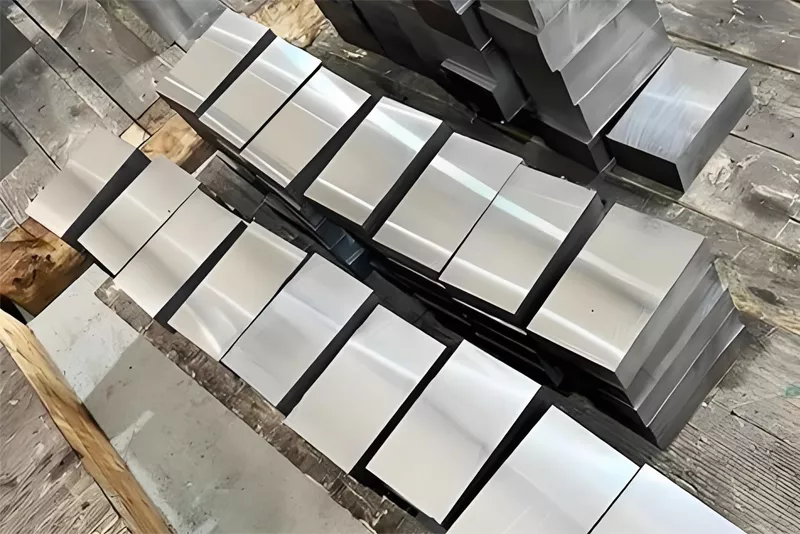
The primary challenge in high-precision shell machining is material deformation, particularly when processing thin-walled or large shells. The internal stresses of the material and cutting forces generated during machining can easily cause workpiece deformation. For example, when machining high-strength materials like ultra-hard aluminum, even minor temperature changes can lead to dimensional variations. The dimensions of the workpiece immediately after finishing machining may differ from those after being left for some time; this discrepancy mainly arises from temperature changes in the workpiece post-machining and environmental temperature influences. Another challenge is the control of form and position tolerances, such as the coaxiality of internal holes in shells and the runout of end faces, which often require control within a few tenths of a millimeter. Using traditional machining methods, it is difficult to achieve such precision requirements due to excessive tool overhang or insufficient machine rigidity.
Fixture design is also a key challenge in high-precision shell machining. Inappropriate fixtures can lead to inaccurate workpiece positioning or clamping-induced deformation. Especially when machining irregularly shaped shells or thin-walled components, specialized fixtures are needed to ensure machining stability. Thermal deformation during machining is also significant; cutting heat can raise the local temperature of the workpiece, causing dimensional changes, an effect that is particularly pronounced during finishing operations. Furthermore, machining characteristics vary greatly among different materials. Light materials such as aluminum and magnesium alloys are easy to machine but have poor rigidity and are prone to tool deflection. In contrast, materials like ultra-hard aluminum, while strong, cause significant tool wear and require special machining strategies.
2. Key Technical Means for Achieving High Precision
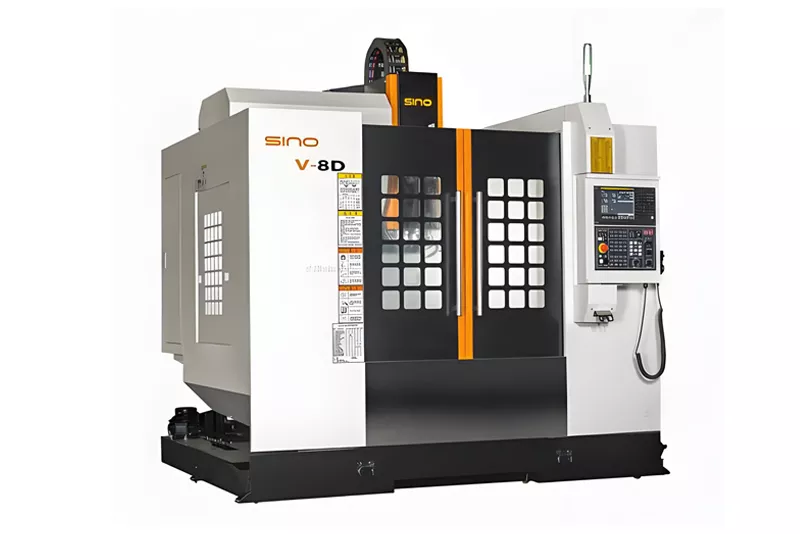
Numerical Control (NC) machining technology is the core method for high-precision shell processing. Among these, CNC machining centers achieve micrometer-level machining accuracy through digital programming and control. Detailed modeling and programming are required before machining, including process setup, tool selection, optimization of parameters such as spindle speed and feed rate. A reasonable machining path planning can significantly improve both precision and efficiency. For example, hole machining can be performed using equal-height (equal-height entry interpolation), or conical holes can be machined using a ball-nose end mill combined with spiral interpolation. Tool selection is equally crucial: for rough machining, tools with high strength and durability should be chosen, while for finish machining, tools with high precision and good wear resistance are necessary. Carbide tools or coated tools are currently more ideal choices.
Temperature control is another key technology to ensure machining accuracy. Effective reduction of thermal deformation during machining can be achieved by using cutting fluids and cooling systems. During finish machining, strict control of environmental temperature fluctuations is required, and machining operations are preferably conducted in a temperature-controlled workshop. For particularly precise shells, multiple aging treatments may sometimes be necessary to release internal material stresses and reduce subsequent deformation risks. Innovative fixture design can also significantly enhance machining accuracy; for instance, spring-loaded locating fixtures can accommodate workpieces of different sizes, reducing clamping deformation. Now, some advanced enterprises are beginning to adopt modular fixture systems, which can quickly adapt to high-precision machining needs for a variety of small-batch products.
3. Precision Control and Quality Assurance System
Quality control in high-precision shell machining requires strict standards throughout the entire production process, from material intake to final inspection. Before machining, precise design simulation using CAD models is fundamental to ensuring machining accuracy, as it helps identify potential process issues in advance. During machining, a multi-stage inspection system must be implemented, with dimensional checks scheduled between rough machining, semi-finish machining, and finish machining stages to promptly detect and correct deviations. The use of high-precision measurement equipment such as coordinate measuring machines enables micrometer-level dimensional control.
Surface quality control is also a critical component of precision assurance. Requirements for surface smoothness, absence of scratches, and burrs on the shell must be achieved through strict process control. For surface treatment processes such as anodizing and spraying, precise parameter standards must also be established. In actual production, establishing a comprehensive quality traceability system helps enterprises quickly locate the root cause of problems and continuously improve process flows. This all-around quality control system not only ensures the precision of individual products but more importantly guarantees the consistency of precision across all workpieces in batch production, which is of decisive significance for modern large-scale manufacturing.
With the development of intelligent manufacturing technologies, high-precision shell machining is moving towards digitalization and intelligence. Personally, I believe that future improvements in shell machining precision will rely more on data-driven approaches and process optimization rather than solely on equipment precision. Enterprises need to establish complete machining parameter databases and use big data analysis to identify optimal process solutions. Additionally, the application of composite materials and the emergence of new machining technologies may open up new possibilities for high-precision shell machining, such as combining 3D printing technology with traditional machining, which can ensure precision while enabling the machining of complex structures. These technological innovations will drive shell machining precision to higher levels, meeting the increasingly growing demand for precision in future industrial products.