
How Self-Healing Materials Are Reshaping the Future of Machining
In today's machining industry, which is constantly striving for higher efficiency and longer equipment lifespan, a technology that seems to come straight from science fiction is quietly changing the game—self-healing shell materials. Imagine a machine tool enclosure automatically repairing scratches after being hit by chips, or a precision spindle self-healing when micro-cracks appear. This is no longer a distant concept but a reality gradually taking shape. Self-healing materials, through their unique self-repairing capabilities, significantly extend the service life of mechanical components while reducing maintenance costs, offering the machining industry the possibility of disruptive transformation. So, how do these materials function in scenarios such as cutting and grinding? What practical application challenges do they face? This article will delve into these core questions.
1、Basic Principles and Types of Self-Healing Materials
The core of self-healing materials lies in their ability to mimic the self-repair mechanisms of living organisms, automatically identifying and completing the repair process when damaged. These materials are primarily divided into two categories: extrinsic self-healing and intrinsic self-healing. Extrinsic self-healing materials typically pre-embed healing agents (such as liquid bicyclo[2.2.1]heptadiene encapsulated in microcapsules) and catalysts. When cracks propagate and rupture the capsules, the healing agent flows out, contacts the catalyst, and undergoes a polymerization reaction to fill the cracks. In contrast, intrinsic self-healing relies on dynamic reversible chemical bonds within the material (such as hydrogen bonds, disulfide bonds, or metal coordination bonds). When damaged, these bonds can break and recombine, enabling autonomous structural recovery. For mechanical processing applications, intrinsic materials may be more attractive because they do not require pre-embedded healing agents and can undergo multiple repairs. For example, certain elastomers can achieve over 95% self-healing efficiency within hours at room temperature.
Why can self-healing materials repeatedly repair damage? This hinges on the reversible nature of dynamic bonds—these chemical bonds temporarily break and re-form under thermal or pressure stimuli, allowing the material to achieve 'regeneration' at the molecular level. Different types of self-healing mechanisms are
2. Specific application scenarios in mechanical machining
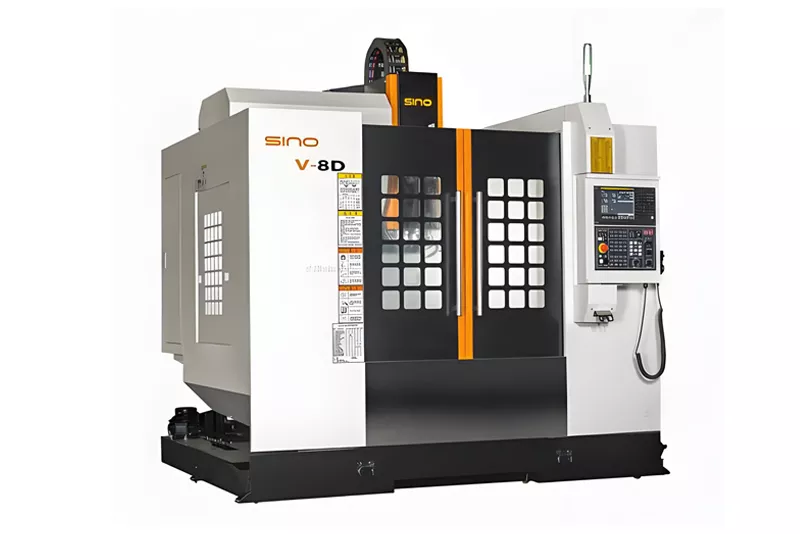
In the field of mechanical machining, self-healing shell materials are moving from laboratory to practical applications. Firstly, in machine tool protection, traditional metal or plastic shells are prone to dents from chip impacts or falling tools. Shells with self-healing elastomer coatings can restore their original shape when triggered by heat (such as the temperature generated during equipment operation), reducing downtime for replacement. Secondly, for core components like precision spindles and guideways, surface coating with self-healing ceramic matrix composites can effectively inhibit the expansion of micro-cracks, especially in environments with vibrations and thermal stresses from high-speed machining. The material maintains dimensional stability by reorganizing internal dynamic bonds, preventing accuracy degradation caused by wear.
Another key application is the protection of cutting tools and molds. Cutting tools develop micro-wear on their edges over prolonged use. If the coating contains self-healing components (such as metal coordination polymers), a simple heating process during machining breaks can activate the repair mechanism, extending tool life and ensuring consistent machining quality. Additionally, injection molds with self-healing technology applied to their cavity surfaces can resist friction damage from plastic filling, reducing the frequency of polishing and maintenance. For purchasing companies, this directly translates to improved production efficiency and reduced spare part costs.
3. Core Advantages for the Manufacturing Industry
The most immediate advantage of self-healing materials is the significant extension of equipment lifespan. Traditional mechanical components often require complete replacement after accumulating damage, whereas self-healing properties enable localized repair, thereby multiplying the service life of components by several times. This is particularly suitable for high-value equipment such as CNC machine tool protection systems, where the concept of 'one-time investment for long-term benefits' is realized. On the other hand, self-healing materials reduce unplanned downtime—downtime in manufacturing enterprises often means substantial losses. The material's autonomous repair capability allows equipment to perform 'self-maintenance' during brief intervals (such as shift changes), reducing the need for active intervention.
From a cost perspective, although self-healing materials may have a higher initial procurement price, their total lifecycle cost is more competitive. This is because they cut direct expenses from frequent replacement of casings and components, as well as associated labor costs. More profoundly, they enhance safety: self-healing capabilities ensure that critical structures (such as press machine guards) maintain integrity after accidental impacts, avoiding failure risks from crack propagation. This is crucial for both corporate compliance and employee safety.
4、Challenges and Considerations in Practical Applications
Despite the promising prospects of self-healing materials, they still face multiple challenges in processing environments. Firstly, durability issues: most self-healing mechanisms require specific conditions (such as temperature and pressure) to activate. In the coupled thermal-mechanical environment of continuous processing, repair efficiency may be compromised. For example, while certain dynamic bonds heal well at room temperature, the high temperatures during machine operation can accelerate material aging, affecting the reliability of self-healing. Secondly, cost factors: introducing self-healing technology often involves complex material synthesis processes (such as melt polymerization or chemical vapor infiltration), which increases initial manufacturing costs. For small and medium-sized processing enterprises, this may require a careful evaluation of the investment return period.
Compatibility is also a practical barrier. Existing processing equipment is mostly designed based on traditional materials, and direct replacement with self-healing casings may encounter issues with installation interfaces or mismatched thermal expansion coefficients. Additionally, the coordination between healing speed and processing rhythm needs optimization. If self-healing takes several hours to complete, but production breaks are only tens of minutes, the practical value is limited. This requires material suppliers to develop faster-response formulations, such as supramolecular materials in some studies that can heal within 10 minutes.
5. Future Development Trends and Personal Insights
The evolution direction of self-healing materials in the manufacturing industry will focus on intelligence and environmental adaptability. In the short term, we may see more hybrid materials emerge, such as 'dual-mode' systems combining microcapsules and dynamic bonds to address complex damage scenarios. In the long term, with advancements in 3D printing technology, self-healing functions may be directly integrated into part manufacturing, enabling a seamless 'design-to-repair' experience. Personally, manufacturing enterprises should focus on material scalability—for example, flexible self-healing elastomers may be more suitable for protective covers, while rigid ceramic matrix composites could be used for high-load components, avoiding a one-size-fits-all approach.
Will self-healing technology revolutionize the manufacturing industry chain? I believe it is more likely to promote specialized division of labor: material suppliers will focus on formula innovation, while manufacturing enterprises optimize integration processes, ultimately forming a collaborative ecosystem. For procurement decision-makers, it is recommended to start with small-scale pilots at this stage, such as testing self-healing coatings on vulnerable parts, gradually accumulating data before expanding applications. After all, any innovation requires a process