
7 Major Advantages of CNC Machining
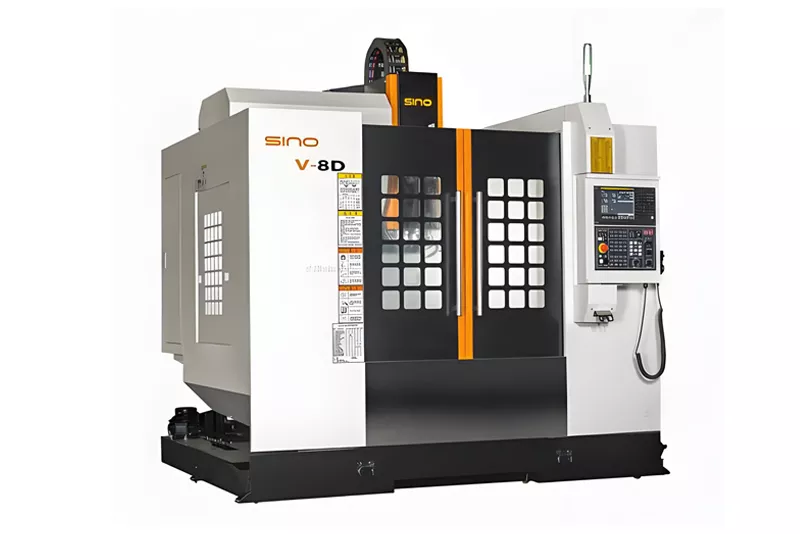
The Fourth Industrial Revolution is about faster speeds, higher efficiency, and better sustainability. In this context, automated CNC precision machining will continue to play a key role in manufacturing activities and drive innovation in modern machining equipment such as CNC lathes.
As the climax of such a high-paced activity, precise CNC machining methods will provide enterprises with a competitive advantage. Let's take a look at the various advantages it offers:
1 – Zero defects and higher accuracy
Since precision CNC machining equipment can operate autonomously without any human intervention, they can avoid the possibility of human errors seeping into the manufacturing process and causing defects. Through advanced management processes and software programs, CNC machining equipment can provide higher accuracy with no defects.
In addition, the program remains almost unchanged throughout the entire production process, with cycle after cycle running repeatedly, which also maintains the consistency of the final product. Moreover, machines can operate for long periods without any interruptions, without affecting the quality of the parts being produced.
2 – Faster and More Efficient Production
When using high-speed CNC equipment such as CNC lathes and machining centers, we can operate at the maximum speed allowed by the equipment. These machines can run continuously 24 hours a day, 7 days a week without getting tired, taking breaks, or making any compromises. Such equipment, combined with the machine's ability to maintain high accuracy and not waste any material resources, makes CNC machining one of the best ways for fast, efficient, and scalable production.
3 – Safer Production
CNC machining equipment isolates machines from humans, significantly reducing the risk for operating employees compared to manual operation. These machines can automatically run according to programs without direct operator intervention, thereby limiting the possibility of accidents and reducing risks to the operator's life and limbs. Modern CNC machine tools are highly capable, featuring automatic tool changing. Even if design changes occur, they can be initiated by modifying the software without requiring contact with the machine or humans. Therefore, human intervention is limited to a supervisory role, where operators can monitor the execution of software programs through a protective shield and prevent potential issues, thus minimizing the need for involvement and making the operator and the workplace safer.
4 – CNC Machining Reduces Production Costs
Using CNC machining equipment to perform precision machining on parts can significantly reduce production costs. This is because, first, it improves the efficiency and scalability of production and assembly without causing material waste. Similarly, it reduces energy consumption and saves on these recurring operational costs. At the same time, it also substantially lowers any financial risks arising from accidents. In summary, CNC turning and milling can greatly reduce the costs of machining factories.
5 – Faster Assembly
Various automated CNC machining equipment can significantly reduce the number of frontline operating staff. A single worker can operate 3-5 machining devices simultaneously, allowing machine shops to reallocate human resources to assembly lines to improve the efficiency of manufacturing units. It is well known that manual assembly lines are more efficient in high-production environments, and product assembly is very complex and must rely on workers for manual assembly. In addition, high-precision parts allow seamless assembly between components, enabling assembly lines to operate quickly.
6-CNC machining generates almost no waste
CNC machine tools operate on iteratively optimized software programs to develop the best method for rotating components with no waste. Such code can also be simulated to check the effectiveness of the control program before implementation. Additionally, since all precision milling machines run on repeatable software programs that use fixed tools along fixed paths, available raw materials can be utilized efficiently. Therefore, most highly advanced machining centers can help machine shops significantly reduce waste.
7- Reduce energy consumption
The oil and gas, petrochemical, aerospace, automotive, and other industries have been known as energy-intensive sectors. However, CNC machining can enable parts in these industries to have extremely high precision and reliability, which can significantly reduce the energy consumption of these energy-intensive industries' operations, thereby saving more energy.
Conclusion
Clearly, precision parts produced by various CNC machining are far superior to those made manually. More importantly, CNC precision machining offers a series of additional advantages that can provide a competitive edge for machine shops, helping them maintain a leading position by leveraging differentiation benefits such as high quality, zero defects, and low environmental impact.