
Precision Release: Wire EDM Technology Revolutionizes Modern Mechanical Machining
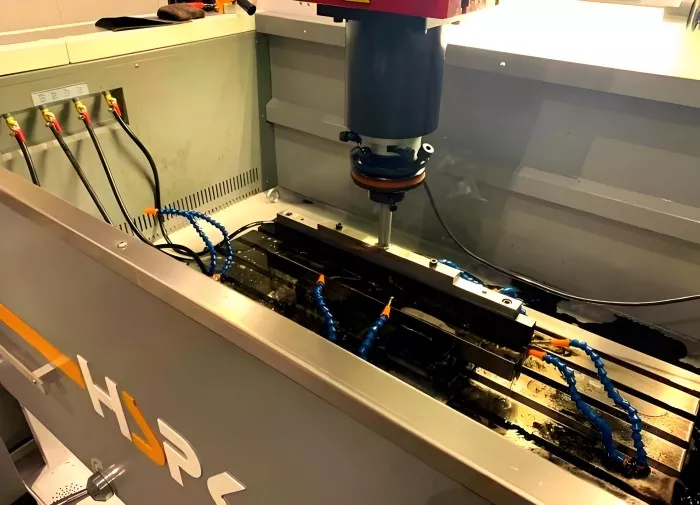
lectrical Discharge Machining (Wire EDM) is the cornerstone of precision manufacturing. This non-traditional process cuts conductive materials with ±0.002 millimeter-level accuracy using controlled electric spark erosion technology—it excels at complex geometries, hardened alloys, and micro-features that traditional tools cannot machine. At its core is a thin cutting electrode wire (typically brass or coated wire), which performs the cutting while dielectric fluid flushes away swarf and cools the workpiece. Unlike traditional mechanical machining, Wire EDM's zero-contact-force characteristic completely eliminates the risk of deformation in thin-walled parts.
Fast Wire EDM vs Slow Wire EDM: A Technical Deep Dive
Fast Wire EDM:
Utilizes a molybdenum wire moving back and forth at high speed (8-12 meters per second). Offers significant cost-effectiveness, but vibration limits precision to ±0.02 millimeters and surface roughness to Ra 1.6-3.2μm. Widely used in general tool manufacturing and prototyping in China.
Slow Wire EDM:
Employs disposable brass wire (<0.2 meters per second) in conjunction with deionized water and constant tension systems. Achieves cutting accuracy of ±0.005 millimeters and surface finish of Ra <0.4μm through multiple passes. The preferred solution for aerospace and medical applications.
Hybrid Medium-Speed Systems:
Combines high-speed roughing with low-speed finishing to maintain near-Slow Wire EDM precision while enhancing efficiency—ideal for mold inserts and gear machining.
The Core Value of Wire EDM Electrode Wires
Wire EDM electrode wires (wire edm wire) require dedicated materials for specific applications:
Diameter Range: 0.10–0.30 millimeters (commonly used 0.20–0.25 millimeters)
Tensile Strength: 900–1,180 Newtons per square millimeter to prevent breakage
Electrical Conductivity: 22–25% IACS to ensure efficient discharge
Advanced materials such as zinc diffusion coated wires can further reduce the breakage rate during precision cutting.
Wire Cut Fixtures: The Foundation of Precision Stability
Achieving strict 5-micron tolerance control relies on wire cut fixtures:
Material: Non-conductive composite material to prevent arcing
Clamping: Low-stress vise to avoid deformation from prolonged machining
Modularity: Enables quick tooling change for batch processing of electrodes/medical components
Supports high-difficulty operations such as turbine blade taper cutting or machining workpieces up to 1000mm thick.
Wire EDM Tolerances and Surface Treatment Essentials
Wire EDM tolerances depend on machine grade and process control:
| Capability | Fast Wire EDM | Slow Wire EDM |
|------------------|---------------|---------------|
| Positioning Accuracy | ±0.015 mm | ±0.002 mm |
| Surface Roughness | Ra 1.6–3.2 μm | Ra < 0.4 μm |
| Minimum Kerf Width | 0.20 mm | 0.15 mm |
EDM surface finishing significantly improves with a multi-tool strategy: nano-powder additives (e.g., Al₂O₃) can reduce roughness by 35% and accelerate machining.
lectrical Discharge Machining (EDM) Machines: From Benchtop to Portal
Modern wire EDM machines cover a range of options:
Portable units: Such as the SFX-4000B (800W–3000W), allowing broken drills to be removed within 5 minutes without disassembly.
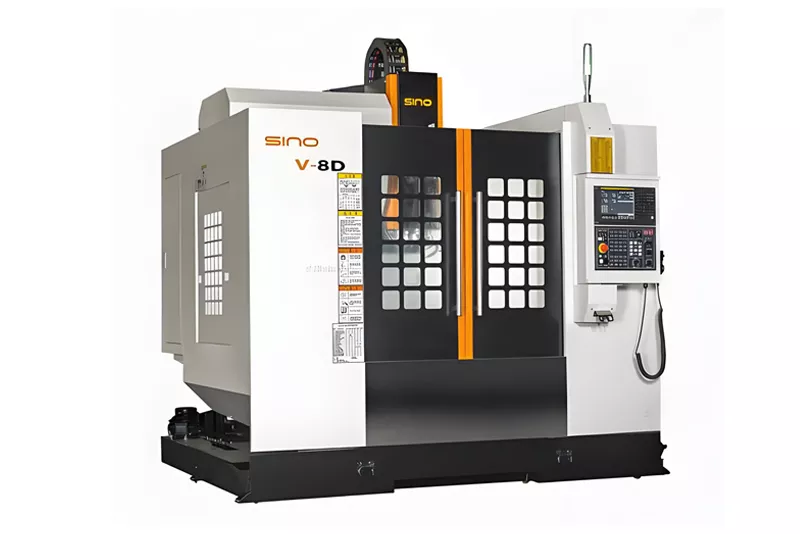
CNC portal systems: Multi-axis enables three-dimensional contour cutting using G-code (G0-G3, M3/M30).
Dielectric fluid is crucial – Macron EDM 110 is specifically designed for non-ferrous metals, with high purity and low conductivity to prevent electrolytic corrosion.
The Pinnacle Applications of Wire Cutting Machines
The exceptional performance of wire cutting machines is demonstrated in:
Mold Manufacturing: Processing carbon steel punches and injection mold cores with conical errors <5μm
Medical Devices: Machining biocompatible cutting edges of stainless steel bone saw blades
Aerospace: Cutting 0.10mm ultra-fine wires for nickel alloy turbine disk slots
Laser-assisted systems (e.g., Laselec ILC) have enabled composite processing of cable stripping and electric engraving
nnovation: Automation and Artificial Intelligence
Self-Winding Thread Technology: Continuous Cutting with Automatic Thread Replenishment for Hours
Adaptive Discharge Control: AI Real-Time Adjustment of Voltage/Pulse Frequency Ensures Unbroken 0.10mm Threads
Eco-Friendly Dielectric Fluid: Recyclable Synthetic Oil Reduces Waste Liquid Treatment Costs by 40%