
Would China really be in a difficult situation without Japanese machine tools?
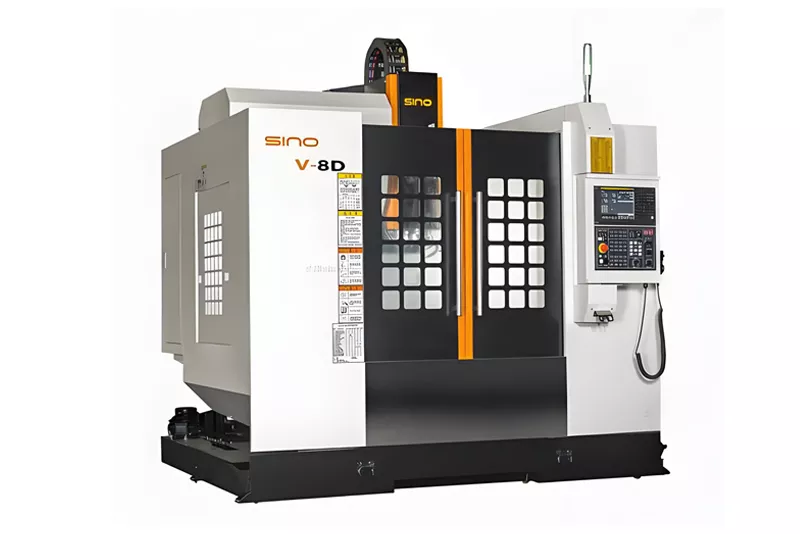
As the cornerstone of the equipment manufacturing industry, the machine tool sector plays a crucial role in the modernization of the national economy. Would China really be at a standstill without Japanese machine tools? A numerical control machine tool, also known as a CNC machine tool, is an automated machine tool equipped with a program control system. Depending on their performance and grade, CNC machine tool products are categorized into high-end, medium-end, and low-end CNC machine tools. High-end CNC machine tools refer to those with functions such as high speed, precision, intelligence, integration, multi-axis linkage, and network communication.
Current Status of Domestic Machine Tools in China
Due to a late start, the development of China's machine tool industry initially relied heavily on imitation and introduction. Compared with more maturely developed countries such as Germany, the United States, and Japan, China's process technology remained relatively backward, struggling to escape the awkward situation of being 'low-end'. Despite having a vast market, foreign products still held a significant share in machine tool applications for many key industries.
01In recent years, driven by innovation and development, China's numerical control (CNC) technology has made substantial progress. Alongside the expansion of industrial scale, technological development has also achieved numerous advancements. Shenyang Machine Tool introduced the world's first i5 system with network intelligence functions, causing quite a stir in the industry. It not only optimized machine tool performance but also integrated new network technologies, supporting data collection and analysis on cloud platforms, becoming a representative of high-end domestic CNC machine tools.
Similarly, companies such as Guangzhou CNC, Huazhong CNC, and Dalian Kogane have continuously pushed the boundaries of domestic CNC technology through innovative technologies. This indicates that China has already possessed world-class technical capabilities.
02 Insufficiencies of Domestic Machine Tools
Industrialized countries such as Europe, America, and Japan have successively completed the industrialization process of CNC machine tools. Compared with foreign products, the main gap of domestic CNC machine tools lies in their high-speed, high-efficiency, and precision aspects.
The machining accuracy, positioning accuracy, and other performance metrics of numerous medium and small-sized machine tool enterprises fail to convince users. In terms of equipment maintenance, domestic products do not perform as well as foreign ones, leading to greater post-purchase maintenance pressure. From a full lifecycle perspective, domestic products still need improvement.
The production and development of domestic CNC functional components are slow, with limited varieties and low industrialization levels. Both their precision indicators and performance indicators are not yet up to standard.
PS: CNC functional components include CNC systems, spindle units, CNC chucks and turntables, ball screw nuts and rolling linear guides, tool magazines and manipulators, and high-speed protective devices. They are important components of CNC machine tools. Their technical level, performance quality, and overall social supporting level directly determine and influence the technical level and performance of the entire CNC machine tool.
03 Japanese Machine Tools
Japan is the world’s third major powerhouse in machine tool industry, manufacturing and industrialization, following the United States and Germany. In 1889, Japan’s Ikegai Iron Works was established and began producing its first machine tool, marking the embryonic stage of Japan’s machine tool industry. Boasting a wealth of talent, sound management, qualified product quality, and most importantly, a pioneering spirit of innovation, Japan overcame various key technological bottlenecks and component configuration challenges, and its machine tool technology swiftly rose to a world-class level.
There are approximately 200 machine tool manufacturers in Japan. Some of the most renowned brands include DMG MORI, Yamazaki Mazak, Okuma, and FANUC. In 2014, six of the world’s 11 largest machine tool manufacturers were from Japan.
Japan’s FANUC Corporation holds a 65% global market share in the CNC system sector. The company was listed among the Top 100 Global Innovators in both 2011 and 2012.
Numerous companies in Japan’s machinery industry possess considerable strength, with long histories and profound market accumulation. For instance, Nippon Steel Corporation was founded in 1907, Yamazaki Mazak in 1919, Mori Seiki traces its roots back to 1948, and FANUC dates to 1958.
ostscript 04
In recent years, China's manufacturing industry has been developing well, with continuously upgrading market demands. The transformation and upgrading of the machine tool industry is imperative; China must accelerate its development to avoid being eliminated.
After decades of development, China's CNC machine tool industry has become the world's largest producer and seller, with rapid technological and production capacity growth. It now has the foundation to respond to the national manufacturing sector's transformation. In the future, China's demand for CNC machine tools will shift from medium-to-low-end to high-end, meaning that high-end CNC machine tools will have significant potential for replacing imports.
Today's China is not the China of 50 years ago or even 20 years ago. We already have a solid material, technical, and financial foundation. With a spirit of self-reliance and strength, and the same determination as when we developed the \"Two Bombs and One Satellite\" and more recently sent the \"Shenzhou\" spacecraft into space, I believe many challenges can be overcome. To make Japanese and Americans less \"arrogant\" in front of the Chinese people, it ultimately depends on ourselves.